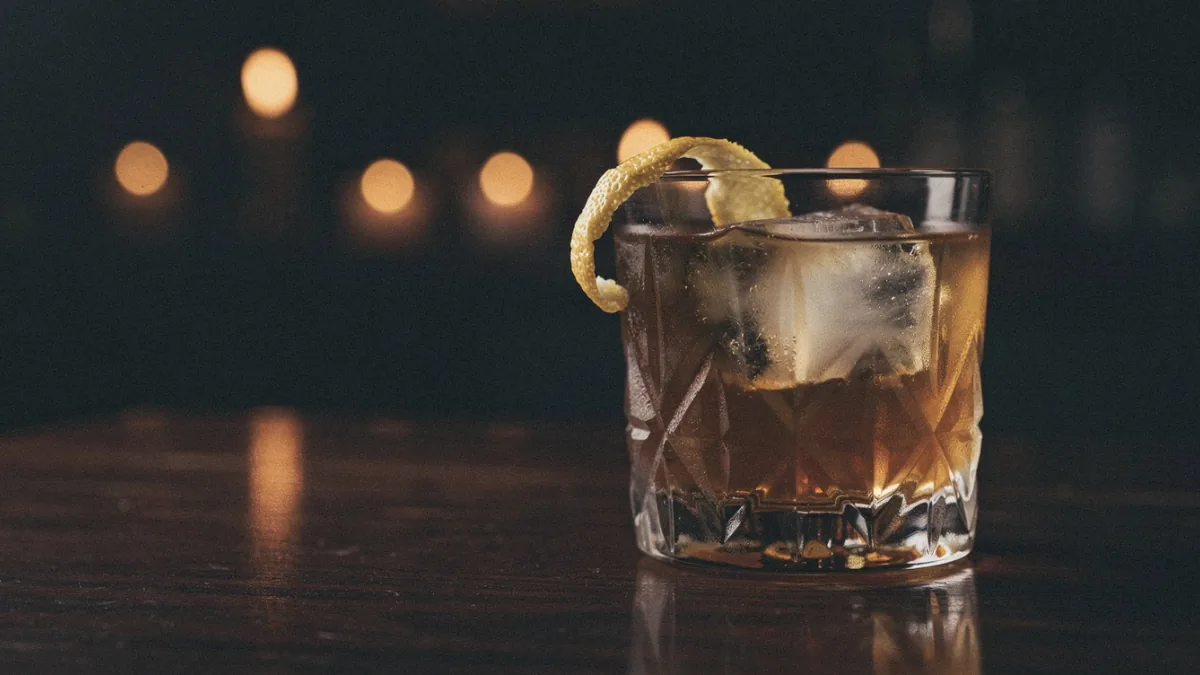
Preparation
- Fill the serving glass with solid ice cubes.
- Add the measured ingredients.
- Stir gently until the drink is cold and the ingredients have combined. Leave some room at the top for the garnish.
- Finish with a garnish: lemon zest.
What does it taste like?
Sweetness arrives right away. The Drambuie brings honey and herbs along with its own sweetness. Underneath, the Scotch keeps working: cask notes, more or less bold depending on the bottle, and a clear pull of alcohol. You don't need to add any sugar — the liqueur takes care of that. The glass holds 45 ml of whisky to 25 ml of liqueur, so 70 ml of spirit without a drop of juice. The drink tastes correspondingly dense and warm as a result. As the ice melts, it softens and becomes a touch lighter. The lemon zest adds a fresh aroma on top.
When does it work best?
The Rusty Nail suits after dinner and late evenings. It's a sipping drink, not a long thirst-quencher. Newcomers often enjoy it because the liqueur's sweetness rounds off the whisky's edges. If you drink whisky neat, you might find it too sweet. In that case, it helps to use a bit more Scotch and a bit less Drambuie.
What matters
Drambuie already brings honey, herbs and sweetness with it. No extra sugar or syrup belongs in the base recipe. The rest depends on your Scotch: the bolder the bottle, the more clearly it stands up against the sweetness. Use large, solid ice cubes and stir only until the drink is cold. Small cubes melt fast and water it down.
Where the drink comes from
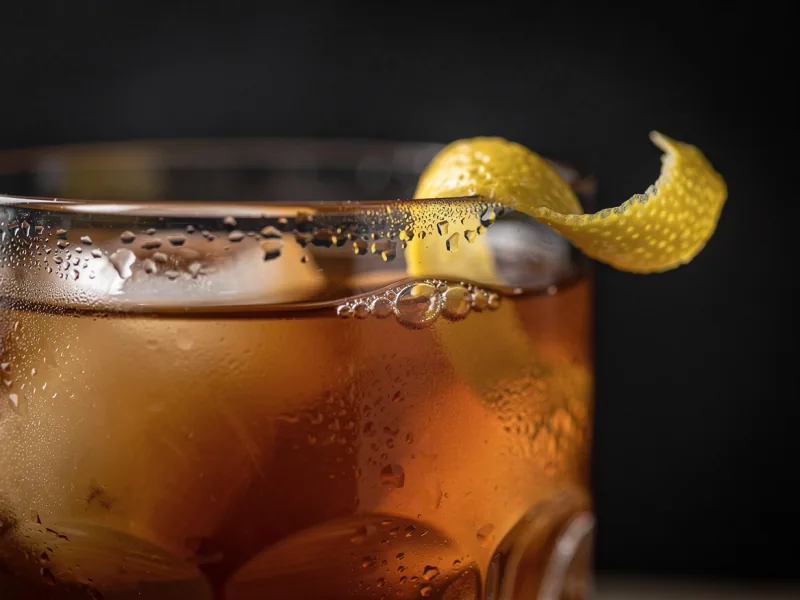
Scotch paired with Drambuie existed before the name Rusty Nail became well known. Who first called the mix that is unclear. Several stories name different bars and decades. None of them are confirmed. The drink stands less for a single moment of invention than for a combination that simply caught on. That's also down to the recipe: whisky and whisky liqueur come from the same family. Their flavors naturally suit each other, only the sweetness levels differ greatly.