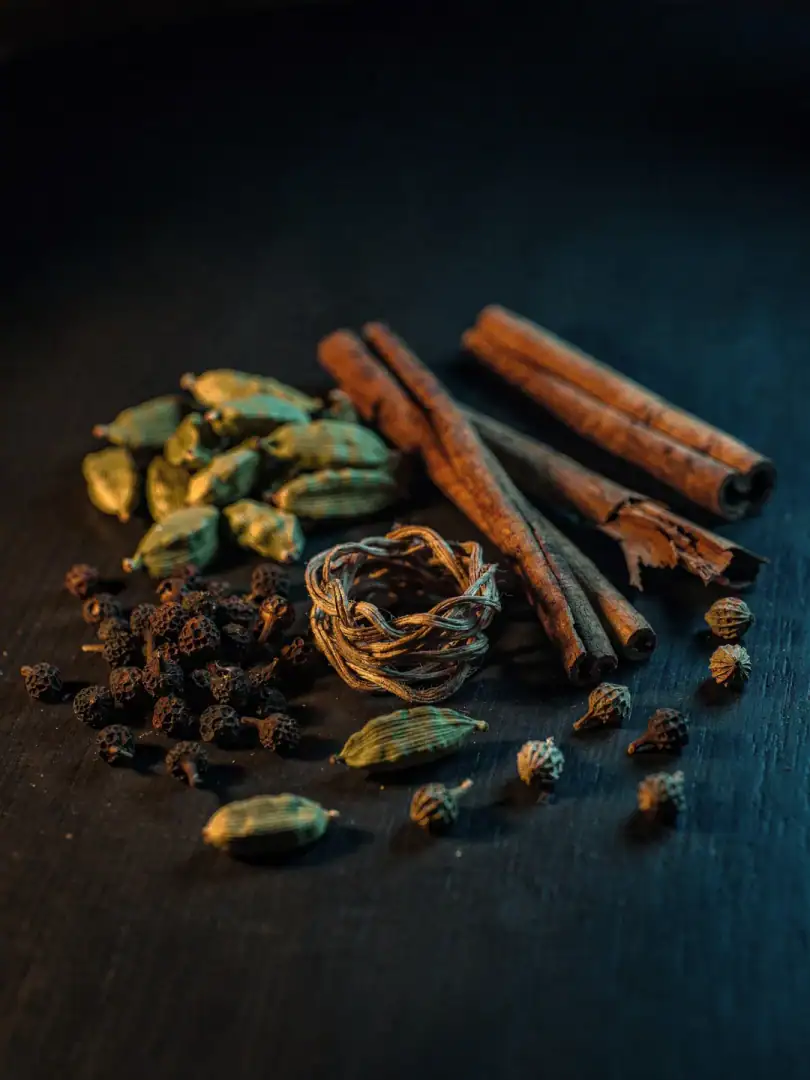
Warmth in gin
Spices
Cardamom, cubeb, cinnamon, licorice and grains of paradise bring warmth and depth to a gin. These spices originally came from the spice trade between Asia, Africa and Europe, and found their way into juniper spirits centuries ago.
What does cardamom contribute to a recipe?
Cardamom is one of the most expensive spices in the world and delivers an intense, slightly eucalyptus-like aroma with a sweetish sharpness. The pods come mainly from Guatemala and India and are usually used whole or lightly crushed, so the essential oil can dissolve in the still without releasing the bitter compounds from the husk. Freshly ground cardamom also loses its aroma within a few days, which is why distilleries usually grind it only shortly before use.
In gin recipes, cardamom often acts like an amplifier for other spices: even a small amount makes cinnamon or grains of paradise rounder and more complex, rather than sharp and one-dimensional. Too much cardamom, on the other hand, quickly pushes to the forefront and can overpower the juniper, which is why experienced distillers use it sparingly and deliberately, often in quantities of just a few grams per entire batch.
What is cubeb and how does it taste?
Cubeb, also known as Java pepper, is the dried, unripe-harvested berry of a pepper plant from Indonesia. Visually it resembles black pepper, but its flavor is woodier and slightly bitter, with a cool, almost menthol-like finish reminiscent of allspice that lingers longer than classic pepper — which also earned it the nickname "tailed pepper," named after the small stem on each berry.
Historically, cubeb was already a popular spice in genever, the Dutch forerunner of gin, but later fell somewhat into obscurity. In modern gin recipes it appears more frequently again, because it delivers a spicy sharpness without being as fiery as black pepper, making it easy to blend into finely tuned recipes.
What role do cinnamon, cassia and licorice play?
Cinnamon and its stronger relative, cassia bark, bring warm, slightly sweet spice into a gin, often paired with a hint of heat. Licorice root, on the other hand, provides virtually no heat at all, but natural sweetness and a soft, almost syrupy mouthfeel that smooths out hard edges in the recipe and makes the transition to more bitter botanicals gentler.
Together, these botanicals create a round, warm base tone that's especially popular in colder seasons. Some recipes deliberately rely on this combination to craft a gin better suited to sipping neat or in a winter cocktail than a very citrus-forward style, which fits better in summer.
What are grains of paradise, and why are they special?
Grains of paradise come from a ginger-family plant native to West Africa and taste peppery-hot with a hint of ginger and cardamom. Before duties were imposed on real pepper, they served as an affordable substitute in Europe and were already used in medieval spiced wines, long before anyone was even thinking of gin.
Today, grains of paradise are considered something of a rarity in the gin world, one that makes a recipe truly distinctive. Their heat differs noticeably from black pepper or chili, since it feels warm rather than fiery and pairs well with cinnamon or cardamom instead of competing with them — making them a popular ingredient in historically inspired recipes.
Guatemala today supplies the largest share of the world's cardamom. The country has been deliberately cultivating cardamom since the 1920s. Cubeb comes almost exclusively from the island of Java. There, the climbing plant grows wild in humid forests. Cinnamon usually comes from Sri Lanka or Indonesia. Sri Lanka is considered the birthplace of true cinnamon. Cassia, by contrast, grows mainly in China and Vietnam. Licorice root is harvested primarily in Turkey. Grains of paradise come from Ghana and Guinea. There, farmers still gather the seed pods by hand. Each of these origins leaves its own distinct mark on the flavor.