Freshness in gin
Citrus
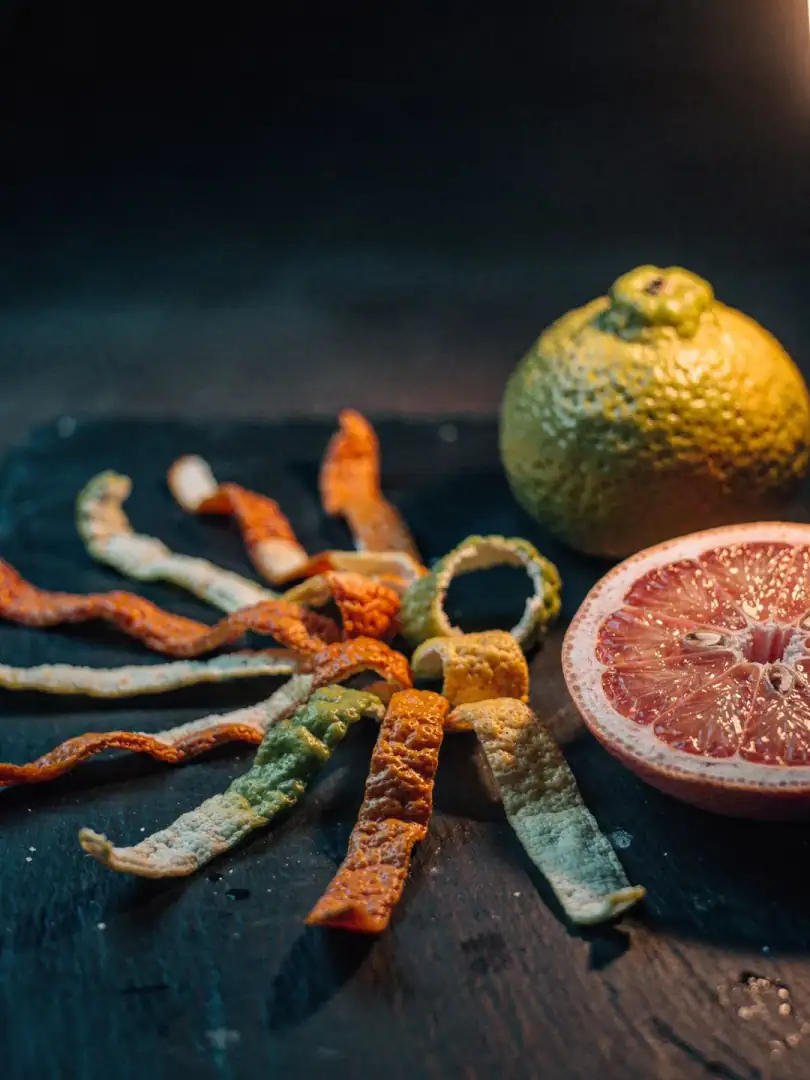
Citrus peels give many gins their bright, fresh side. Lemon and orange are among the oldest additions of all, while bergamot, yuzu and grapefruit are more recent additions. Almost always, only the peel with its essential oils is used, not the juicy flesh of the fruit.
Why the peel and not the fruit?
The aromatic oils of a citrus fruit sit almost entirely in the outer peel, in tiny glands that burst open when grated or pressed. The flesh, by contrast, consists mostly of water, sugar and acid — substances that would either remain behind during distillation or cloud the gin, rather than adding extra aromatics. That's why distilleries usually slice the peel thinly, keeping as little as possible of the bitter white pith attached.
That's why distilleries typically work with dried or fresh peels without the bitter white pith beneath, known as the albedo. This tastes bitter and would mask the delicate citrus note if it ended up in the still. Some recipes also rely on cold-pressed citrus oil, extracted directly from the peel and particularly intense in aroma, often added only after distillation, since the delicate oil notes would otherwise be lost in the hot still.
Which citrus fruits are classic?
Lemon and orange are among the botanicals that already appeared in early gin recipes of the 18th and 19th centuries. Lemon peel brings a sharp, clear citrus hit, while dried orange peel feels warmer and slightly sweet, often with a hint of marmalade and candied fruit.
Bergamot, a cross between bitter orange and lemon, grows almost exclusively in Calabria in southern Italy and is best known from Earl Grey tea. Its peel delivers a floral, tart citrus aroma that feels more refined than plain lemon, which is why it tends to appear in somewhat more complex gin recipes, usually in smaller amounts than the more robust classics, since its delicate scent would otherwise quickly be overshadowed by stronger lemon or orange aroma.
Which citrus fruits came later?
Yuzu, a citrus fruit native to Japan and East Asia, has in recent years also found its way into European gins. Its peel smells like a blend of mandarin, grapefruit and lime, bringing recipes an unusual, slightly exotic freshness that differs clearly from classic lemon.
Grapefruit is another more recent addition, often found in more modern, less traditional gin styles. Its peel delivers a tarter, slightly bitter citrus note that pairs well with juniper, since both share a certain bitterness rather than working against each other. Such recipes often target drinkers looking for a less sweet, more bitter style of gin.
How does citrus affect a gin and tonic?
Citrus-forward gins often show their strength particularly clearly in a gin and tonic, because the quinine in tonic water carries its own bitterness, which pairs well with bright citrus notes. A gin with plenty of bergamot or grapefruit in its recipe adds extra freshness to the finished drink without coming across as sweet.
That's exactly why bartenders often reach for a matching citrus peel as garnish: a lemon twist for classic, citrus-forward gins, an orange twist for warmer, more spice-driven styles. The citrus note in the recipe itself sets the direction, and a mismatched garnish can easily throw this finely tuned balance off.
Many citrus peels reach the market dried, since fresh peel spoils quickly. Distilleries therefore let them dry for days under controlled warmth. Lemons from Sicily and Amalfi are considered especially aromatic, their peel thin and rich in oil. Spanish oranges from Valencia, meanwhile, are the most common source of orange peel for gin. Bergamot is grown almost exclusively along a narrow coastal strip around Reggio Calabria, with the tree rarely thriving reliably anywhere else. This narrow geographic origin makes bergamot oil comparatively expensive and highly sought after.