Frenzy and Regulation
The Gin Craze: London in a Frenzy
In early 18th-century London, gin became the cheapest way to get drunk in the city. Within just a few decades, almost every household was drinking juniper spirit, and the state stepped in with a series of strict laws to curb the consequences.
Why Gin Became So Cheap in London
After 1688, the English government opened the market to domestic grain spirits while making it harder to import French brandy. Now anyone could produce and sell grain spirit without special permission, as long as they publicly declared their goods. Grain was plentiful after good harvests, and landowners in Parliament had a vested interest in securing demand for it. Out of this combination came a flood of cheap alcohol that had nothing to do with the slow, careful Genever from the Netherlands — it was distilled quickly and crudely.
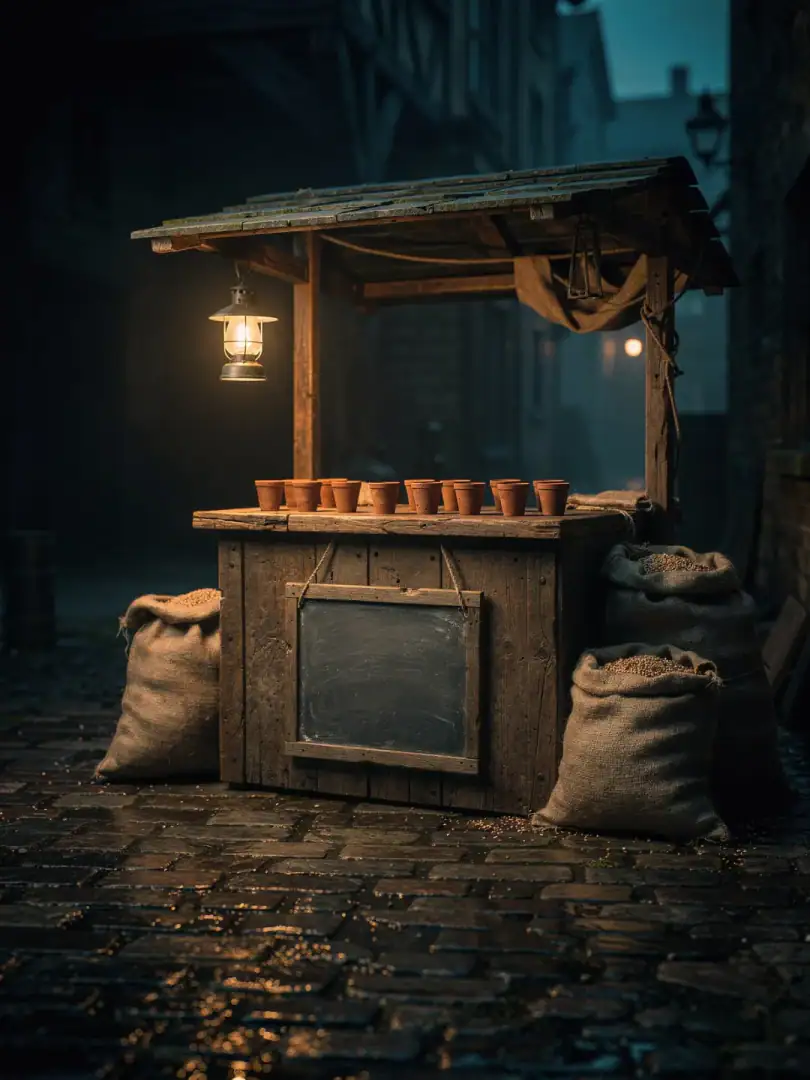
London was growing rapidly at the time. Tens of thousands of people moved from the countryside into the city, found work in factories and workshops, and often lived in grinding poverty. Gin cost less than beer or clean drinking water and worked faster. Estimates from the period suggest that the average London household drank several liters of gin a year, considerably more in poorer neighborhoods. Street vendors sold the spirit from stalls and carts, often with no control whatsoever over its purity or strength.
The Gin Acts: Five Laws Against the Frenzy
Between 1729 and 1751, Parliament passed five laws that went down in history as the Gin Acts. The 1736 Act demanded an annual license fee of fifty pounds — an unaffordable sum for most sellers — and imposed heavy additional taxes on sales. The public's response was open resistance. Smuggling flourished, informers were beaten in the streets, and the law remained largely ineffective, since hardly anyone bought a license and the authorities could not keep up with the sheer scale of violations.
In 1743, the failed law was replaced by lower fees, which encouraged consumption rather than curbing it. It was only the Act of 1751 that had a noticeable effect, as it forbade distillers from selling directly to unlicensed traders, making distribution through small street stalls far more difficult. Combined with rising grain prices following poorer harvests, consumption fell noticeably by the 1750s. The Gin Craze was thus not ended by a single ban, but by a series of interventions that gradually dried up the cheap distribution networks.
Mother's Ruin: How Art Portrayed Gin
In 1751, the artist William Hogarth captured this misery in his engraving Gin Lane, a grim counterpart to his simultaneously published Beer Street. Gin Lane shows a mother, lost in drunkenness, letting her child fall, alongside crumbling houses and despair, while Beer Street celebrates homegrown beer as a healthy, patriotic alternative. This image gave rise to the nickname Mother's Ruin, a term still occasionally used for gin today, even though it has long since shed any connection to the misery of those decades.
Contemporary estimates speak of several thousand official and unofficial gin outlets in London alone. Some calculations from the 1730s put the number at around seven thousand such places, ranging from official taverns to makeshift sales windows in private homes. At the time, gin also carried the nickname Madam Geneva, a corruption of the Dutch word Genever. The term appeared again and again in pamphlets, court records and caricatures of the period, showing just how deeply gin had embedded itself in the everyday language of London's lower classes. It was only when grain prices rose after several poor harvests in the 1750s that gin lost part of its price advantage over beer. This economic effect did more to help the 1751 laws succeed than any moral campaign ever could.
The Gin Craze left a lasting lesson for drinks policy: anyone seeking to control alcohol consumption must focus above all on distribution, not simply on prohibition. This lesson fed directly into English licensing legislation over the following decades and laid the groundwork for a new era, in which gin was no longer drunk out of desperation, but out of splendor. How a poor man's drink became a status symbol in magnificent halls is told in the next stop.