Medicine on Board
The Royal Navy, Quinine and the First Gin & Tonic
Gin & Tonic wasn't born in a bar, but as a defense against a tropical disease. British officers in India mixed bitter quinine water with sugar, lime and gin, simply to make a necessary medicine drinkable at all.
Quinine Against Malaria in the Colonies
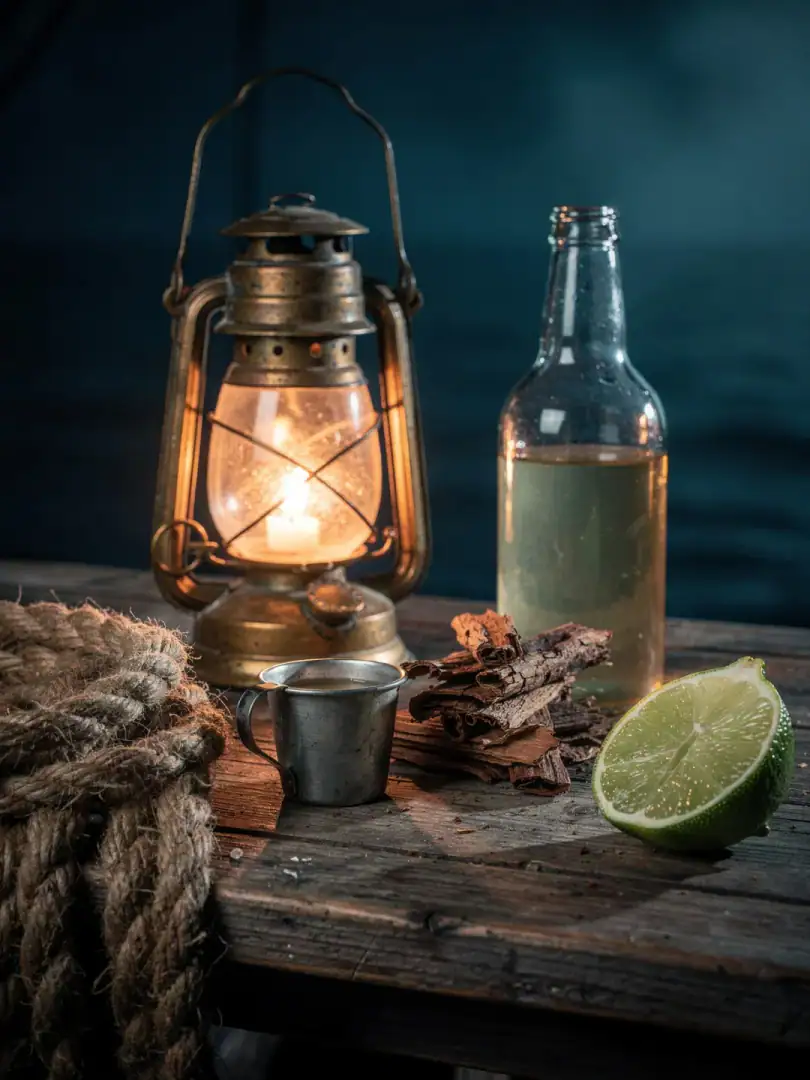
Malaria threatened British soldiers and officials in the colonies of India and other tropical regions more than any enemy ever could. The bark of the South American cinchona tree contains quinine, a compound that lowers fever and helps prevent the disease. Doctors prescribed it to the British in India as a daily dose. Pure quinine water, however, tastes extraordinarily bitter and was barely tolerable for many. Anyone required to take the medicine long-term needed a way to make it more bearable — and that's exactly where the daily life of the officers' mess came in.
Officers began mixing the bitter quinine water with sugar, lime juice and a dash of gin, which almost every British household overseas kept in its cupboard anyway. What had been a compulsory daily dose became a drink people actually enjoyed. The earliest known written mention of a gin-and-quinine mixture dates from 1868, in an Anglo-Indian sporting magazine. In the everyday life of the colonial administration, the mixture was likely common even earlier.
From Quinine Water to Commercial Tonic Water
The breakthrough to industrially produced tonic water came with Erasmus Bond, who patented a method for producing carbonated quinine water in 1858. A few years later, the company Schweppes entered production, selling its drink from 1870 onward under the name Indian Tonic Water — a clear nod to the product's colonial origins. Tonic water thus went from a field hospital remedy to a commercially available bottle that could be bought at any grocer's.
The British Navy itself had a favored gin supplier too. Since the 19th century, the distillery Plymouth Gin had officially supplied the Royal Navy, and was deliberately located close to the naval base at Devonport for that very reason. Officers often mixed their gin with a few extra drops of Angostura Bitters, a strongly bitter herbal extract that had itself originally been intended as a remedy for stomach complaints. This mixture gave rise to Pink Gin, named for the pink hue the bitters create in clear spirit. Pink Gin remained popular in British officers' clubs well into the 20th century, long before tonic water became the more familiar mixer.
At the same time, gin itself was deeply tied to the Royal Navy. Aboard British warships, alcohol had been part of the daily ration for centuries, usually as rum, but in many stations equally as gin. This rationing officially continued until 1970, when the Royal Navy finally scrapped the daily alcohol allowance for good. Gin's reputation as a drink of sailors and colonial officials endured long after this practice ended, and it still shapes the names and labels of many brands today.
Why Gin & Tonic Still Works Today
What began as a medical stopgap turned out, by taste, to be a stroke of luck. The bitter compounds in tonic water, rounded out by cinchona bark and often citrus peel, meet the juniper and citrus notes in gin in a way that is hard to improve upon. That's precisely why the Gin & Tonic has remained, at its core, essentially the same drink for over a century and a half, while so many other fashionable drinks of its era have long since been forgotten.
The colonial origins of the drink are now history, not a model to follow. But they explain why gin and tonic works almost the same way everywhere in the world today. From the very beginning it was designed for hot climates and simple ingredients. It was never intended for the elaborate bar craft that would emerge in the following century. That bar craft, with the Martini as its most famous example, is the next stop on this journey through the history of gin.