Juice from Volcanic Soil
Sugarcane & Molasses
What is rum made from? On Basse-Terre, mostly from freshly pressed sugarcane juice, not molasses. This juice is called vesou; it still contains the sugar unchanged and spoils within hours. That's why the cane must reach the mill shortly after cutting, and why the distillery sits close to the fields.
Longueteau farms more than 120 hectares near Capesterre-Belle-Eau, according to the house, and uses no purchased cane. The house says it avoids burning the fields and refrains from using herbicides. Bologne, according to its own account, plants exclusively black cane, canne noire, a demanding variety that grows only on its own estate.
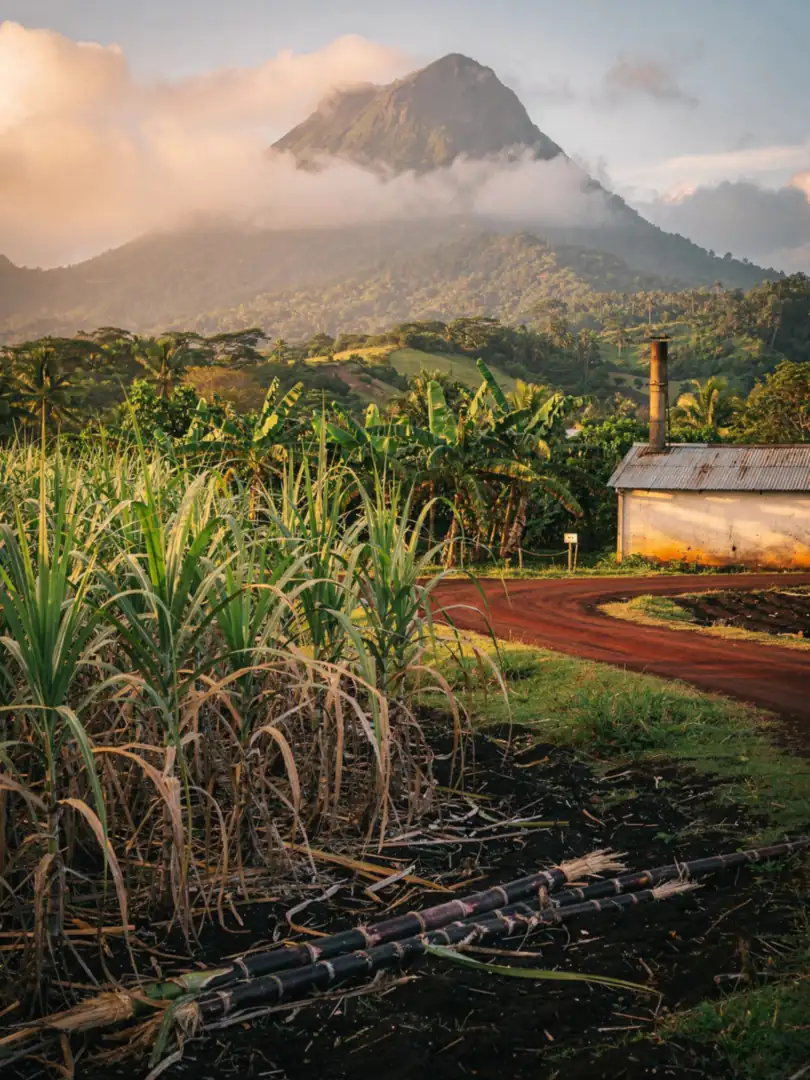
The soil is volcanic. Weathered rock and ash supply nutrients, while rainfall on the slopes of Basse-Terre provides the water. In the fields near Capesterre, banana plants grow alongside the sugarcane, both thriving in the humid east of the island. Montebello, in the house's own words, relies on a deliberate choice of cane varieties, since different varieties yield different flavors in the juice. Harvesting takes place in the drier half of the year, when the sugar content in the cane rises.
Molasses is the counterpart: the thick residue left behind in the sugar factory once the sugar has crystallized out. It can be stored and traded, so rum from molasses can be made year-round. Syrup is thickened juice, also stable for storage. The PGI distinguishes two paths: "agricole" forbids syrup, molasses, and added sugar, while "de sucrerie" requires syrup or molasses.
The sugar factory and the distillery are therefore two separate operations with different schedules. The factory wants crystals, the distillery wants juice or residues. On Basse-Terre, the distillery presses its own cane; at Reimonenq, electric mills handle this, and the juice flows from there into fermentation.