Jamaica's Fermentation Craft
Dunder, Muck, Cane Pit: Jamaica's Fermentation Secret Without the Myths
Dunder is the residue left in the still after distillation; in Jamaica it's returned to fermentation like a sourdough starter. Muck is a bacteria-rich brew from earthen pits that supplies acids for esters. Animal carcasses are not part of it—that's a myth.
What is Dunder in rum?
After each distillation run, a hot, acidic liquid remains in the still. It contains almost no alcohol anymore, but does contain dead yeast, acids, minerals, and molasses residue. In English it's called dunder, in French vinasse. Most distilleries treat it as waste, which is either disposed of at great effort or used as fertilizer.
Jamaican distilleries with a heavy style return part of it to the next fermentation. This principle is known from bourbon as sour mash. Dunder lowers the pH, provides nutrients for the yeast, and carries over microbes and acids from the previous batch. This way, a kind of house flora develops from fermentation to fermentation, carrying a distillery's style for years.
On Réunion too, residue is added to fermentation for Grand arôme. The basic idea is similar, but the legal rules differ. More on this in the entry on Grand arôme.
What is Muck—and what does Cane Pit mean?
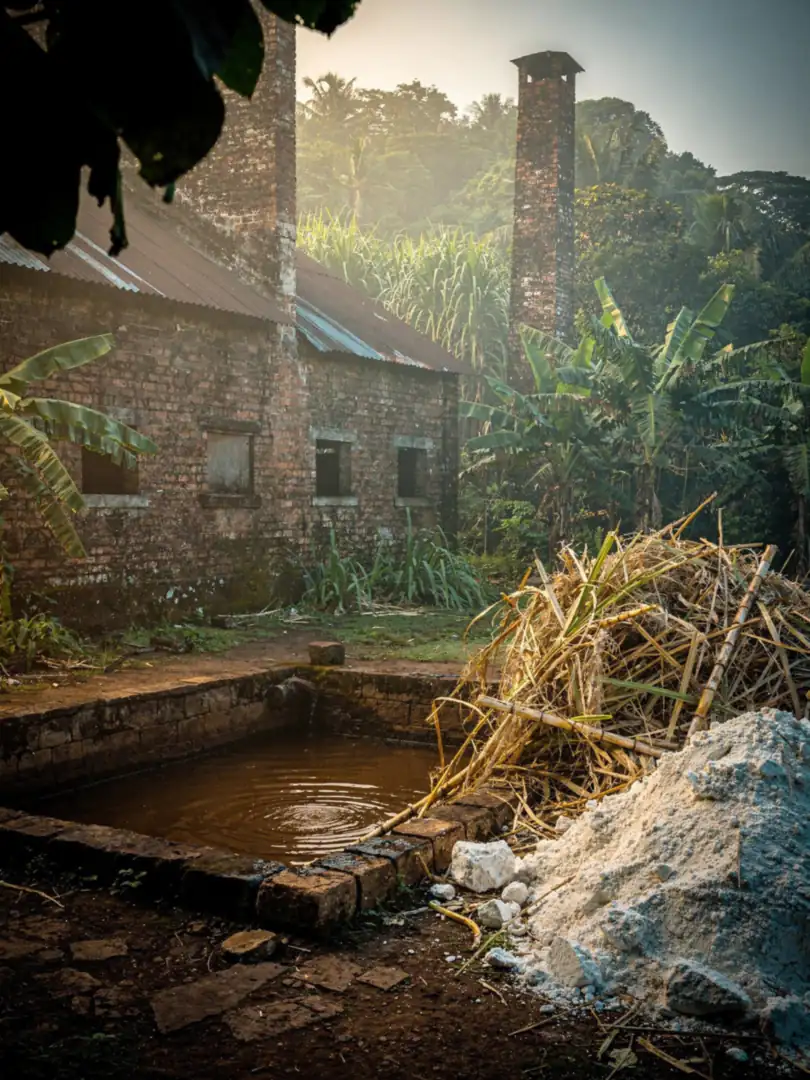
Muck takes it a step further. It matures in pits dug into the ground and consists of distillation residues, dunder, sugarcane waste, and whatever bacteria grow in it. To keep the brew from becoming too acidic and to keep the bacteria working, distillers keep the pH in the right range using limestone marl.
Muck itself is not fermented to produce alcohol. It serves as a source of acid. The bacteria within it form potent acids, such as butyric acid, whose raw smell recalls rancid butter. In the fermentation vat and later in the still, these acids combine with alcohol to form esters, which smell fruity, like pineapple or overripe fruit. For the pit itself, English texts sometimes use the term Cane Pit, though it's not used consistently.
Hampden: How Dunder and Muck Work Together
The best-known and best-documented example is Hampden Estate in Trelawny. According to a report from the distillery, Hampden mixes 11 parts fermented molasses with 7 parts of a blend of cane juice, water, dunder, and muck for certain fermentations. According to trade press reports, fermentation takes place in open cedar vats using wild yeast.
Important for the overall picture: far from every Jamaican distillery works this way. Worthy Park, for instance, has no dunder pit. The 2016 geographical indication "Jamaica Rum" permits pot still and column, and blends of the two, without mandating either dunder or muck. The only thing all distilleries share is that after distillation, only water and caramel color may be added. Dunder and muck are thus a method used by individual houses, not a law, and not a characteristic of every Jamaican rum.
Goat's Head and Bat: The Myth of the Dunder Pit
Few rum topics have spawned as many horror stories. Dead goats, bats, or even worse are said to lie in the pits to boost the flavor. Hampden's manager Vivian Wisdom considers these tales to be rumors, likely spread by competitors. There is no evidence of carcasses being used as an ingredient.
The truth is less gruesome, but more demanding. A muck pit is a living system that must be carefully maintained. Too much acid, too little replenishment, or the wrong bacteria, and the brew will yield putrid notes instead of fruit. It is true that such pits smell intense, however, and that's likely what fueled the rumors in the first place.
For drinkers, a simple rule helps. Anyone tasting a Jamaican rum with a very high ester count is tasting the result of this work, not its raw material. The muck itself never ends up in the bottle. Its residues stay behind in the still; only volatile substances pass into the distillate, including the esters it made possible.