Rules at the table
Rum with food: basic rules for pairing
Rum works with food when its weight, sweetness and alcohol suit the dish: fresh, light rums with fish and herbs, aged and bold ones with roasted flavors, cheese and dessert. Because rum is far stronger than wine, it belongs in small pours, lengthened with a mixer, or saved for dessert.
Rum with food: why is it trickier than with wine?
A glass of wine usually sits at 12 to 14 percent alcohol. Rum, by EU law, is at least 37.5 percent, often more. At that strength, the alcohol blankets delicate flavors in food, and the palate dulls faster. Then there's the heat: alcohol stimulates the same warmth receptors in the mouth as chili, so a spicy curry with neat rum burns twice as much.
That's why different measures apply to rum. Two centiliters in a small glass is plenty for a meal, with water always on the side. A few drops of water in the rum take off its edge and let the aroma open up. With a main course, rum often works better as a long drink, lengthened with soda, ginger ale, or tonic. Neat, it shows its best self with dessert or afterward.
Before the first attempt, it helps to check the label. If it says rum, the alcohol comes from molasses, syrup or juice of sugarcane, and flavorings are banned. If it says spirit drink, it could be a spiced rum with vanilla and spices. For pairing, this makes a big difference, since spice and sugar shift what works on the plate.
Weight to weight: which rum suits which dish?
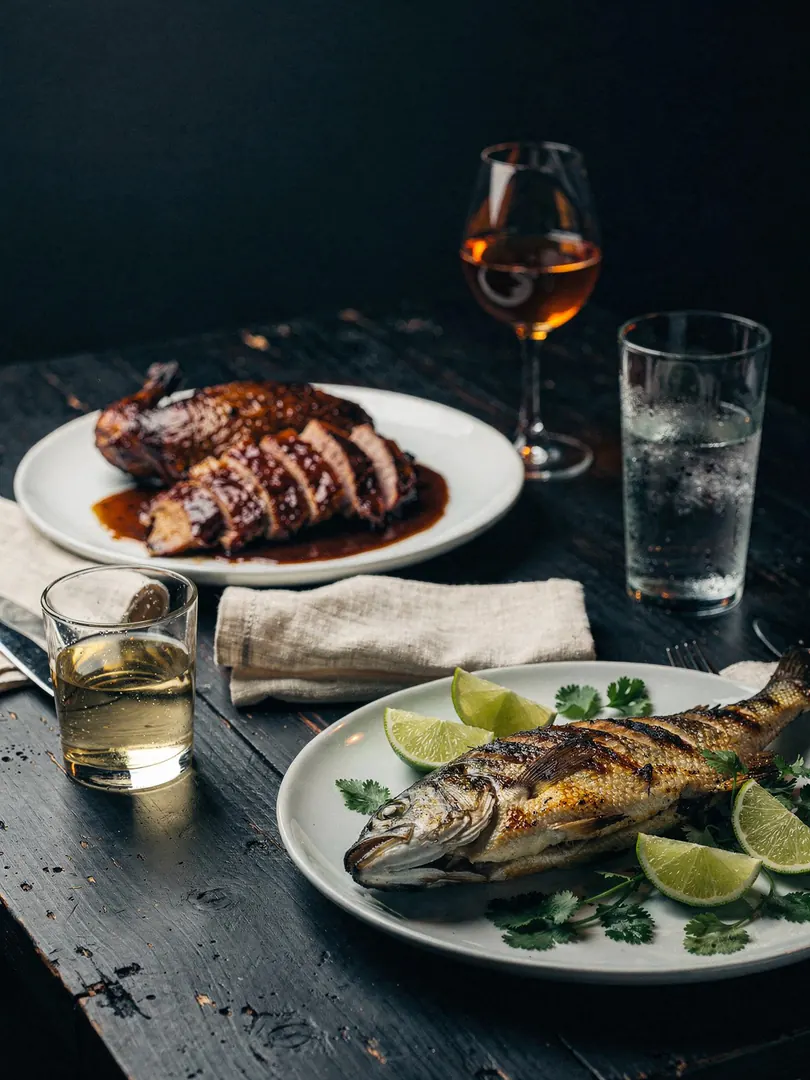
The first rule is familiar from wine: light with light, heavy with heavy. A light column-still rum, meaning continuous distillation with few congeners, tastes restrained. It suits grilled fish, ceviche, or a lime-dressed salad. A rhum agricole blanc made from fresh cane juice brings grassy, peppery notes and handles herbs, cilantro, and seafood well.
Aged molasses rums carry vanilla, caramel, and wood from the barrel. They sit well alongside dishes with roasted notes, like braised pork belly, glazed duck, or grilled meat with a sweet crust. Heavy pot-still rums, like those Jamaica produces after long fermentation, smell of banana and ripe pineapple. They need equally bold partners, such as spicy jerk chicken, blue cheese, or dark chocolate.
A rum that's too light gets lost next to hearty food, while one that's too heavy overwhelms delicate fish. If unsure, start in the middle. A three- to five-year-old rum without noticeable sweetness is the most versatile companion and forgives most mistakes.
Bridge or contrast: how to find the right note
There are two approaches. The bridge seeks shared flavors: caramel in the rum meets caramelized onions, vanilla meets vanilla sauce, tropical fruit meets a mango salsa. Contrast relies on opposites. A dry, fresh rum cuts through fat, while a touch of sweetness in the glass softens salt on the plate.
Fat is rum's good friend. Butter, cheese, nuts, or an oily fish coat the tongue and tame the alcohol's burn. Acidity is trickier. A salad with plenty of vinegar can make an aged rum taste bitter and woody. Here, a rum with lime in the glass helps, since the acidity then balances on both sides.
Salt gets along with rum as long as it doesn't dominate. Salted almonds, air-dried ham, or salted caramel bring out the sweet side of an aged rum beautifully. Smoke is a special case: smoked fish or grilled meat harmonizes with rums that have seen heavily charred barrels.
Sweetness in the rum and on the plate: the trickiest rule
With dessert, a wine rule applies here too. The drink should taste at least as sweet as the plate. A dry rum next to a sweet cake suddenly tastes sharp and thin. In the EU, rum may contain up to 20 grams of sugar per liter for rounding off, a limit in effect since May 25, 2021. Many bottles use that leeway, while Jamaica rum with protected origin status stays unsweetened.
The sugar content isn't listed on the label, since spirits in the EU are exempt from ingredient lists and nutrition tables. Sweetened rum can work well with dessert, but with a main course it quickly turns sticky. Labels like agricole and traditionnel on protected-origin rums hint at dryness, since both exclude sweetening.
To close, a principle that outranks all the rules: rum with food is companionship, not a dare. Small pours, water on the side, and for anyone driving, pregnant, or underage, an alcohol-free pairing like ginger ale, iced tea, or water with lime.