Sweet pairings
Rum with chocolate, pineapple and crème brûlée
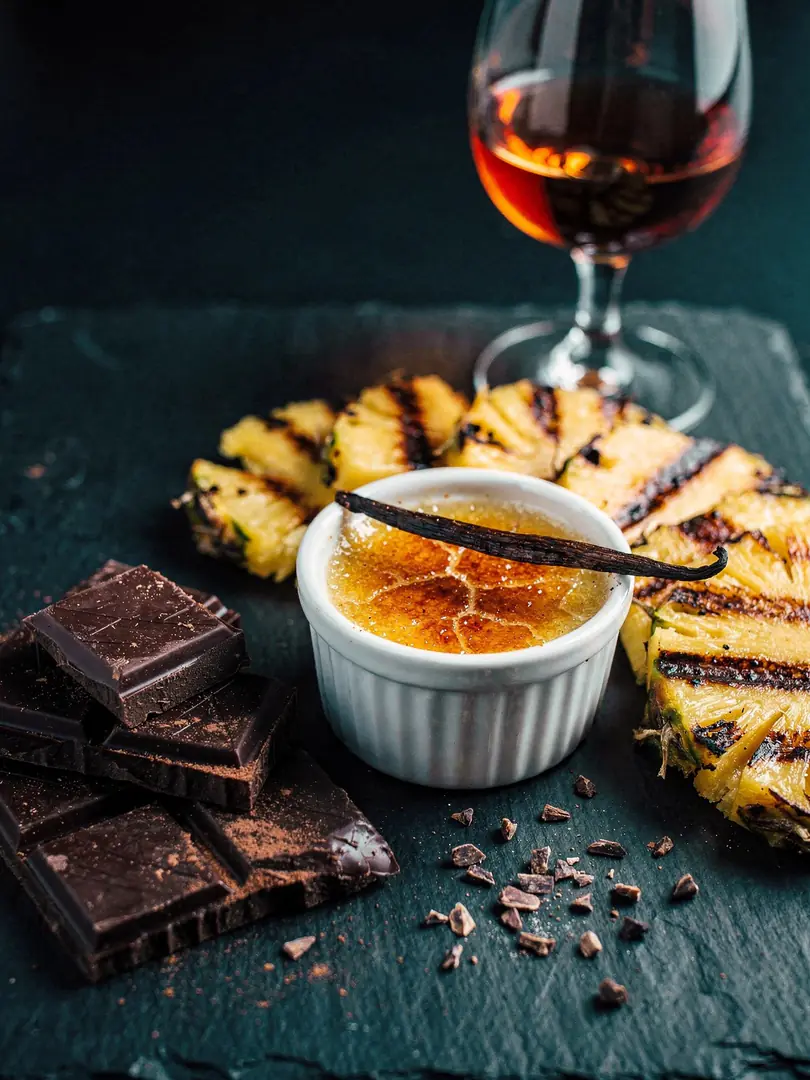
Dark chocolate calls for an aged, not-too-sweet rum with caramel and wood, while milk chocolate wants something round and soft. Fresh pineapple pairs with fruity Jamaica rum or agricole. Crème brûlée calls for a rum with barrel-aged vanilla, so the caramel in the glass meets the caramel on the crust.
Which rum pairs with dark chocolate?
Cocoa and sugarcane often grow in the same countries, from Venezuela to the Dominican Republic to Trinidad. Flavor-wise, they share roasted notes, dried fruit, and a slight bitterness. Dark chocolate with 70 percent cocoa or more contains plenty of polyphenols, tannins that mildly dry out the mouth. A young, sharp rum amplifies this effect, while an aged one with vanilla and caramel balances it.
A simple order works well. Let a piece of chocolate melt on the tongue first, then take a small sip of rum. The cocoa fat coats the palate and takes the edge off the alcohol. Very bitter bars at 85 percent and above can even handle a rum with a bit of sweetness, since they bring little sugar of their own.
Be careful with chocolate that has fruit fillings or chili. Raspberry and other tart fruits can make the wood in the rum taste bitter. Chili burns even more fiercely alongside alcohol. Fans of such bars should reach for a young, light rum or lengthen it with a splash of water.
Milk chocolate, white chocolate and rum pralines
Milk chocolate is sweeter and creamier. A dry, bold rum feels sharp and boozy next to it. Rounder rums with notes of toffee and raisin, found in many aged molasses rums from Central and South America, work better. Here the sweetness rule applies: when rum and chocolate are similarly sweet, the flavor steps forward and the alcohol fades back.
White chocolate is made from cocoa butter, sugar, and milk, with no cocoa solids at all. It needs freshness as a counterpoint. A rhum agricole vieux from Martinique, aged at least three years in oak barrels under appellation rules, brings citrus, spice, and wood. That keeps the sweetness in check without masking it.
With rum-filled pralines, it's worth checking the ingredient list, which is mandatory for confectionery. If it says rum, real rum is inside. If it says flavoring, aroma compounds were used instead. The difference shows mainly in the finish, which runs longer and more layered with real rum.
Rum and pineapple: why do they work so well together?
Pineapple and certain rums share a group of aromatic compounds called esters, formed from acids and alcohol, which smell fruity. In pot-still Jamaica rums, long fermentation produces them in large quantities, which is why tasters often note pineapple and banana there. The fruit on the plate amplifies these notes in the glass.
Raw pineapple contains the enzyme bromelain, which breaks down protein and gives a slight tingle on the tongue. Grilled or caramelized in a pan, this effect disappears because heat destroys the enzyme, and roasted notes appear instead. Raw pineapple pairs with a fresh, light rum or an agricole blanc. Grilled pineapple calls for an aged rum with caramel.
A simple dessert shows this well. Sauté pineapple slices in butter and brown sugar, deglaze with a splash of rum, and serve with grated lime zest. The alcohol only partly evaporates here, worth keeping in mind with guests.
Crème brûlée and rum: vanilla meets the barrel
The crust of crème brûlée is burnt sugar, sitting atop a vanilla custard. Both show up in aged rum: caramel from molasses and barrel, vanilla from the wood. As oak barrels are charred, the wood compound lignin produces vanillin, the same primary aroma compound that defines the vanilla pod.
Bourbon vanilla takes its name from Île Bourbon, today's Réunion Island. Rum with its own protected origin is also made there. An aged rum from Réunion or an agricole vieux from Martinique therefore fits both in flavor and in spirit. Molasses rums with bold caramel work just as well. Spiced rum with added vanilla also works, though it doubles down on sweetness and vanilla.
If adding rum directly into the custard, less is more. One tablespoon for four servings is enough. At the low temperature of a water bath, barely any alcohol evaporates, so more rum quickly tastes too sharp.