Look, smell, taste
Tasting Rum Like a Pro: Step by Step
Rum is tasted in four steps: look at the color, smell from a distance, spread a small sip across the mouth, and observe the finish. If you take each step slowly and jot down a quick note of what you find, you'll taste noticeably more by the third glass than you did with the first.
Tasting Rum: What Does the Color in the Glass Reveal?
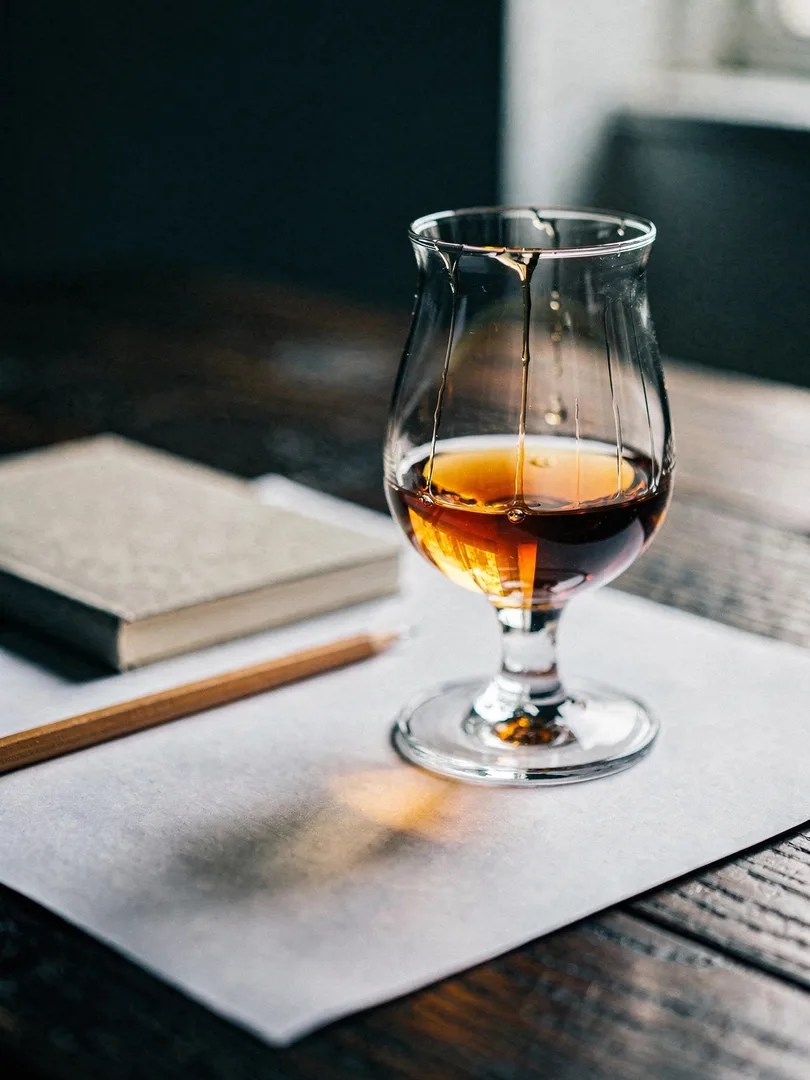
Hold the glass against a white sheet of paper and check whether the rum is clear and what tone it has. Straw yellow, amber, mahogany: these are the usual stages. What matters is what the color doesn't tell you. It's no proof of age, since the EU allows caramel coloring, meaning browned sugar used as a colorant, to adjust the color.
In Germany, drinks like this must carry the note "with coloring" on the label. Conversely, a pale rum can still be well-aged if it was filtered through activated charcoal after leaving the cask, which strips out color. So color is really a clue about cask, filtration, or coloring additives, nothing more.
Swirl the glass once and watch the streaks running down the sides. Many call them tears or legs. They form because alcohol evaporates faster than water, changing the surface tension at the edge. Thick, slow-moving streaks suggest high alcohol content or a lot of dissolved substances. They say nothing about quality.
How Do You Properly Nose Rum?
The most common beginner mistake is plunging your nose deep into the glass and inhaling forcefully. At 40 percent alcohol and above, this instantly overwhelms your sense of smell, leaving you with nothing but a sharp burn. Better approach: hold the glass at chin height, part your lips slightly, and then slowly bring it closer.
Smell first without swirling. This brings the most volatile compounds to the surface, often fruity esters, meaning compounds formed from acids and alcohol during fermentation. Then swirl gently and smell again. Now the heavier notes from the cask emerge: vanilla, wood, spice. Feel free to switch between nostrils, as they often pick up slightly different scents.
Give the nose more time than the mouth. A good rum changes in the glass over ten or twenty minutes. What smells like glue at first might smell like ripe pineapple later on. It helps to search by category rather than exact terms: fruit, floral, spice, wood, sweetness, earthiness.
The First Sip Doesn't Count: How to Taste Rum
The first small sip only serves to acclimate your mouth to the alcohol. It will burn almost every time, regardless of how good the rum is. Only from the second sip onward can you really taste something. Take a small amount, about half a teaspoon, and let it spread across your entire tongue before swallowing or spitting it out.
Pay attention to four things. Sweetness: the spirit itself contains no sugar, so any impression of sweetness comes from vanilla in the wood, fruity esters, or added sugar. Acidity, which makes the rum taste fresh. Bitterness and dryness, which usually come from the cask. And mouthfeel: thin, oily, creamy, or sticky.
Exhale gently through your nose while the sip is still in your mouth. This sends aromas up into the olfactory cavity from behind, what experts call retronasal perception. Many notes you couldn't find in the nose appear only now. For high-proof bottlings, a drop of water in the glass beforehand can help, more on that in the section about water and ice.
Finish, Empty Glass, and Notes: The Rest of the Tasting
After swallowing, the finish begins, also called the aftertaste. Roughly count how long the flavor lingers: a few seconds, half a minute, longer. A long finish with shifting notes points to an aromatic, complex rum. A finish that turns sweet and then suddenly empties out often suggests added sugar.
One trick professionals use is the empty glass. Let the finished glass sit for an hour or overnight, then smell it. The alcohol has dissipated, leaving behind the heavier aromas from the spirit and the cask. If the glass then smells of leather, dried fruit, and wood, there was real substance there. If it barely smells of anything, the earlier impression was probably mostly alcohol and sweetness.
Write three lines for each rum: nose, mouth, finish, plus a short overall note. After a few weeks you'll start recognizing patterns, for instance that you prefer juice rums from the French overseas territories to molasses-based rums. That's exactly why the effort is worthwhile. The in-depth tasting guide is available in the encyclopedia.