Origin in the Cane
Terroir in Rum: Can You Taste Where the Cane Grew?
Terroir does exist in rum, especially in rum made from fresh sugarcane juice. Martinique defines its AOC areas down to individual plots, while on Marie-Galante and Madeira, soils and sites shape the juice. For molasses rum, the origin of the cane matters less than the house's yeast, fermentation and still.
What Does Terroir Mean in Rum?
Winemakers use terroir to describe the interplay of soil, climate, site, variety and craft in a particular place. The same question arises with rum, but with two catches. First, the cane must actually come from that place. Second, its character must survive distillation—and the higher the proof, the more thoroughly aromas get stripped away.
That's why EU law requires two things at once for the term 'traditionnel': the raw materials must come exclusively from the place of production, and distillation must stay below 90 percent alcohol. A rum distilled almost to pure alcohol can barely show its origin. A juice rum from a creole column still at 65 to 75 percent, by contrast, retains much of what grew in the field.
AOC Martinique: Terroir as Law
No rum regulation takes soil as seriously as the AOC Rhum de la Martinique, recognized in 1996. It permits 34 communes on the island, and within these communes the growing area is defined down to individual plots. Excluded are areas with too much rainfall in the north and waterlogged soils. There are also maximum yields of 120 tons per hectare, varieties acclimatized on the island for at least four years, and cold-pressed juice.
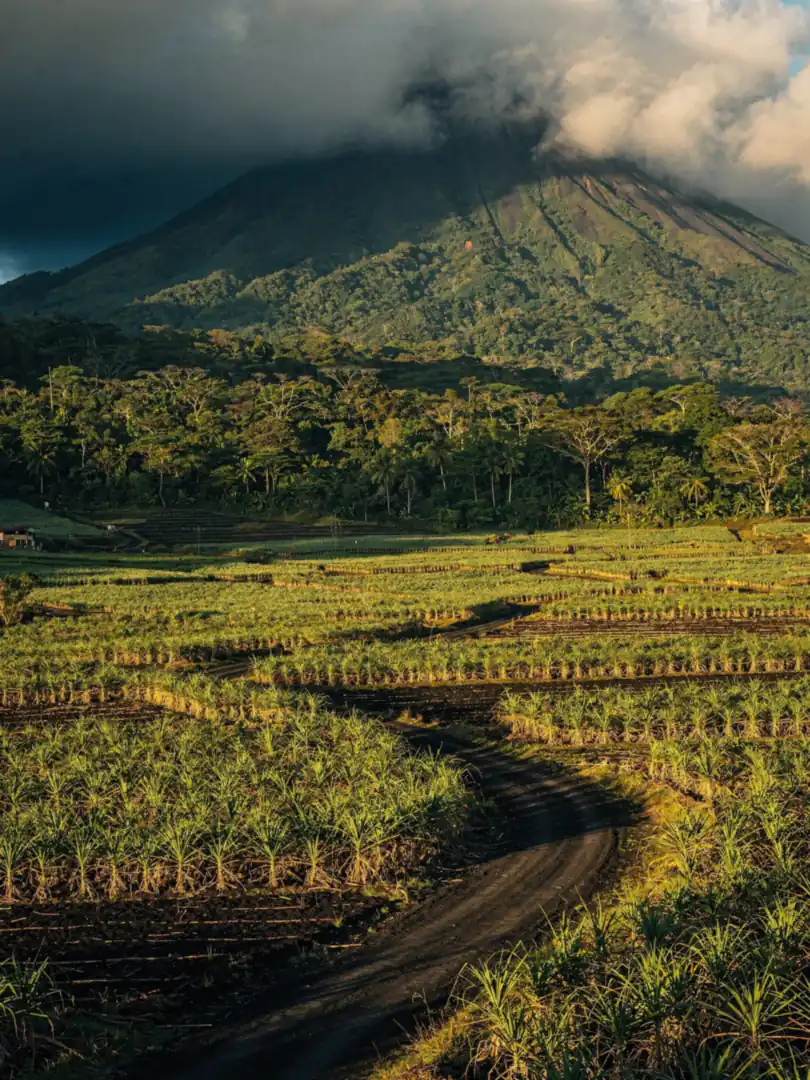
On this small island, very different sites lie close together. In the northwest, fields grow on the slopes of Montagne Pelée on young volcanic soil; in the south it's drier and flatter. The Depaz distillery, for instance, sits in Saint-Pierre at the foot of the volcano. How strongly soil and site come through in the glass is hard to measure. But the AOC at least ensures the question can be asked at all.
Guadeloupe, Marie-Galante and Madeira: Soil and Site
Guadeloupe consists of very different landscapes. Basse-Terre is volcanic and rain-soaked, Grande-Terre rests on limestone. The neighboring island of Marie-Galante also sits on a limestone base with flatter soils, and its cane grows under different conditions than on the volcanic slopes. Bielle, Poisson and Bellevue distill their Rhum agricole there. Guadeloupe has no AOC, but the g.i. Rhum de la Guadeloupe requires pure juice for agricole.
On Madeira, cane grows on terraces along the steep coastline, mainly around Calheta, Porto da Cruz near Machico, and Ponta do Sol. It's harvested by hand, the plots are small, and the sites range from sea level to mid-elevations. Some producers, especially in the French Antilles, bottle rums from single plots or varieties. What they claim about the resulting flavor are producer statements, but the idea comes straight from winemaking.
Does Molasses Rum Have a Terroir?
With molasses rum, the origin of the cane becomes blurred. Molasses is traded, blended and transported long distances, and many distilleries buy it in. Even so, molasses-producing countries also promote their raw material. Cuba's specification describes its own molasses as thin, sugar-rich and almost free of sulfur compounds. These are claims from the applicant, not independent measurements.
More often, terroir shifts from the field to the distillery. The protected designation Demerara Rum defines an area along the coastal plain of Guyana, between the Boeraserie River and Abary Creek, and prohibits blending with foreign rum. A draft regulation for Barbados called for aging on the island using Barbados water, but it never came into force. What makes such rums unique is above all yeasts, dunder, stills and the climate of the warehouse. That's why some experts prefer to speak of house terroir in this context.