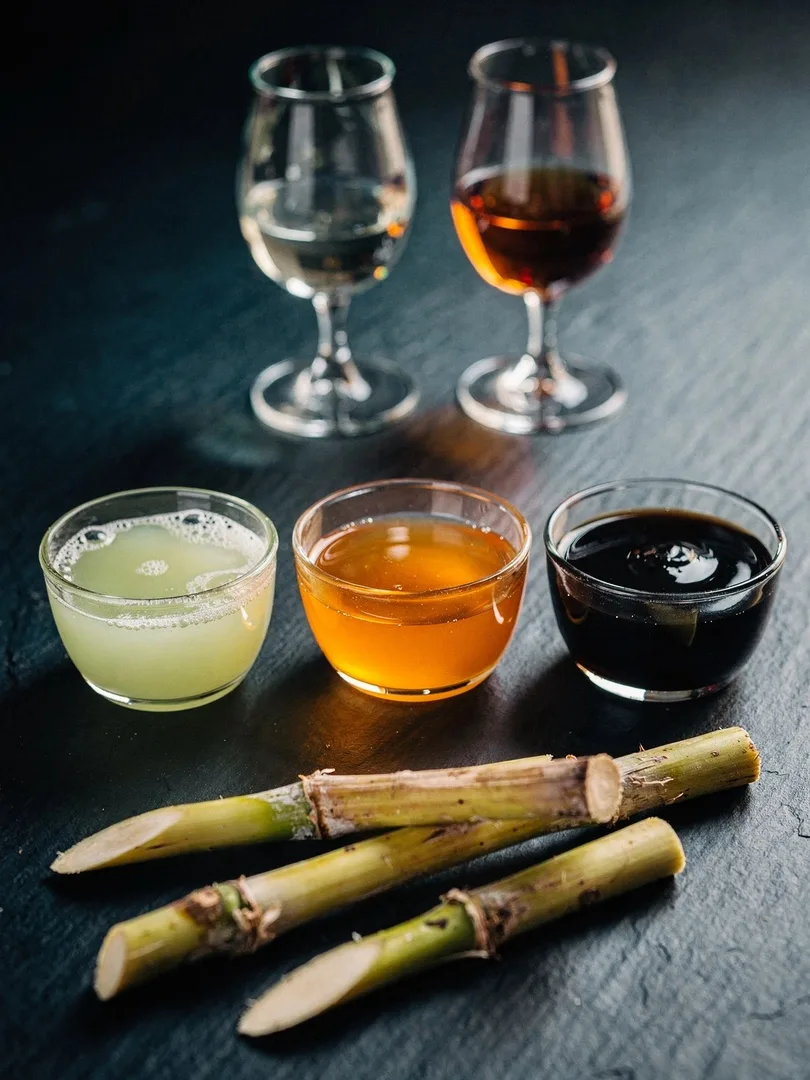
Raw Material in the Glass
Molasses, Cane Juice or Syrup: What Do You Actually Taste in Rum?
Rum made from fresh sugarcane juice usually tastes grassy, fresh and vegetal, while rum from molasses is often deeper, with notes of brown sugar and dried fruit. Syrup falls somewhere in between. But the raw material only sets the base note—fermentation, still type and cask play at least as important a role.
Which Raw Materials Are Permitted for Rum
Anyone trying to understand rum starts with the label—and often finds nothing about the raw material there. EU law recognizes three starting materials: molasses or syrup from cane sugar production, and sugarcane juice. Anything else, such as beet sugar, honey or neutral alcohol, turns the spirit into a non-rum. There's no requirement to state the raw material. Color doesn't help either, since white and dark rum can be made from any of the three raw materials, and caramel coloring can adjust the hue.
A few terms still give it away. 'Agricole' may only appear on rum made from pure sugarcane juice in the EU, and only for protected designations from the French overseas departments and Madeira. 'De sucrerie' indicates rum from molasses or syrup on Guadeloupe and Réunion. 'Traditionnel' means: raw material from the place of production, distilled below 90 percent, at least 225 grams of flavoring substances per hectoliter of pure alcohol, and unsweetened. This applies to both raw materials.
What Does Rum from Sugarcane Juice Taste Like?
Fresh juice, called vesou in the Antilles, carries the aromas of the green plant alongside its sugar. On Martinique it must reach at least 14 degrees Brix and ferments for no more than 120 hours up to a maximum of 7.5 percent alcohol. The creole column still then distills it to just 65 to 75 percent. This preserves much of the raw material's character. A young Rhum agricole blanc typically smells of cut grass, sugarcane, pepper and blossoms.
Other juice-based spirits share these plant notes. Cachaça from Brazil is also made from fermented sugarcane juice, but it's a distinct designation with 38 to 48 percent alcohol. Clairin from Haiti is often wild-fermented in small distilleries. Anyone holding a juice rum usually recognizes it by this green freshness, even if cask aging later overlays it with vanilla and wood.
What Does Rum from Molasses Taste Like?
This gets trickier, since molasses rum ranges from nearly neutral to extremely robust. Distilled to a high proof in multi-column stills, it loses almost everything the molasses contributed. This gives rise to the light style of many rums from Cuba or Puerto Rico. Fermented slowly and distilled in a pot still, the same raw material becomes a heavy rum with notes of banana, pineapple and solvent, as known from Jamaica.
What the molasses itself contributes is more of an undertone: something bitter, mineral, a depth reminiscent of brown sugar, licorice or dried fruit. The striking fruit notes, by contrast, come mainly from fermentation—from esters, compounds formed between acids and alcohol. That's why, when tasting, it's often more useful to ask about the still than about the raw material.
A simple comparison trains the nose: a young white Rhum agricole next to a white molasses rum of similar strength. Without cask aging, the differences stand out most clearly. The juice rum smells green and vegetal, the molasses rum more neutral or dark-fruited depending on style. Tasting aged versions afterward shows how wood and time narrow these differences without erasing them entirely.
Syrup and Hybrid Forms: From Zacapa to Hampden
Between juice and molasses sits syrup. This means thickened cane juice from which no sugar has yet been separated. It keeps for a long time and can therefore be fermented year-round. In Guatemala it's used for rum; Zacapa's marketing calls it 'virgin sugar cane honey.' In terms of flavor, syrup rums often sit between the freshness of juice and the depth of molasses.
Some houses blend the raw materials. According to the distillery, Hampden in Jamaica adds eleven parts fermented molasses to seven parts of a mixture of cane juice, water, dunder and muck. Guadeloupe has both styles side by side, while on Réunion most rum is made from molasses. For reading labels: 'Agricole' reliably means juice, 'molasses' rarely appears on the label, and anything in between requires checking with the producer.