Sealed and cold
How long does opened sparkling wine last—and which stopper helps?
Opened sparkling wine, with a tight-fitting sparkling wine stopper, usually keeps well in the fridge for one to two days; without a stopper, it goes flat quickly. Measurements from Reims show that sealed bottles lost about ten percent of their pressure in 48 hours, while open bottles lost half.
What happens inside an open bottle of sparkling wine
A sealed bottle of Champagne holds pressure of about 6 bar. The gas is distributed between the wine and the small pocket of air beneath the cork, both in equilibrium. As soon as the cork comes out, the gas in that pocket escapes. The wine then continually releases carbonic acid upward to restore the balance, losing its sparkle in the process.
Gérard Liger-Belair and his team measured this and described it in 2021 in the magazine The Conversation. After pouring down to half a liter remaining, the pressure in the bottle dropped from 6 to 4 atmospheres. With only 250 milliliters left, it was down to 2 atmospheres. The emptier the bottle, the more room the gas has, and the more carbonic acid migrates out of the wine into that space.
Which sparkling wine stopper actually works?
In the same experiment, bottles were stored at 12°C (54°F) with various seals. Open bottles lost another half of their pressure within 48 hours. Bottles sealed with a tight-fitting stopper or a crown cap lost only about ten percent. The researchers also tested the old trick of putting a spoon in the bottle neck—it had no effect. This myth gets its own chapter in our feature on health and myths.
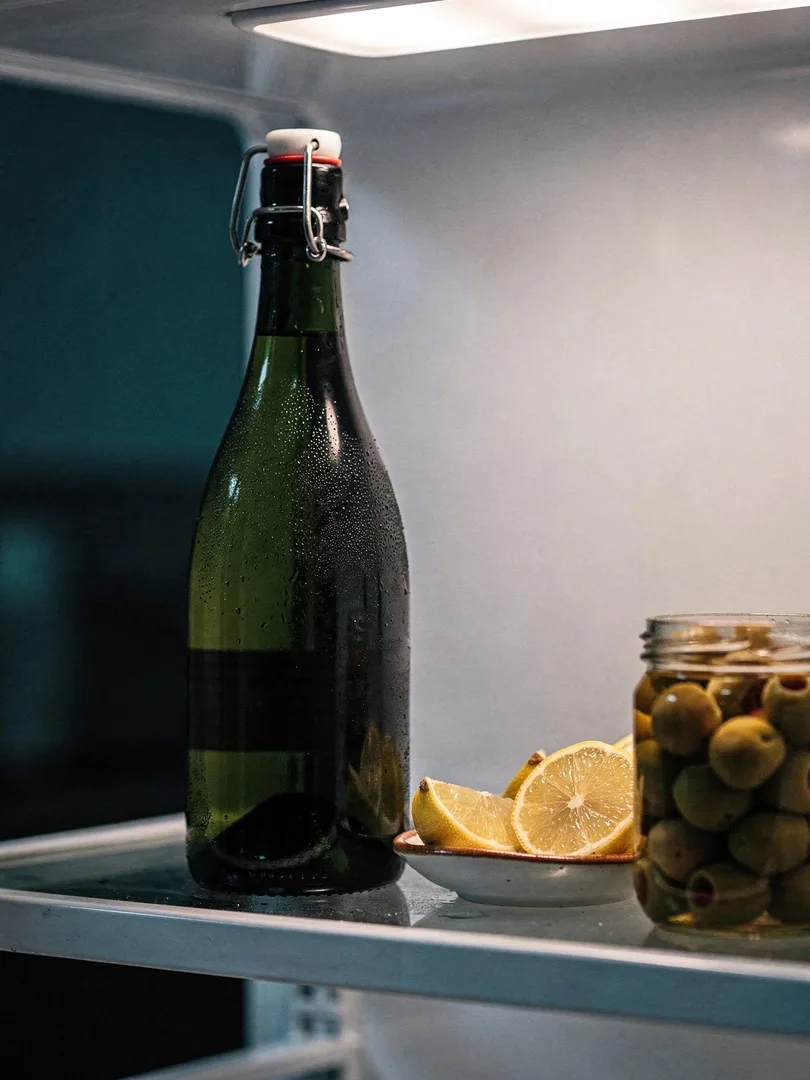
A good sparkling wine stopper has clamps that grip under the lip at the bottle's neck. It can withstand even Champagne's pressure and attaches quickly. What matters is a soft seal that fits snugly all around. Wine pumps that extract air are designed for still wine. With sparkling wine, they actually lower the pressure above the liquid, causing the carbonic acid to escape even faster. The original cork won't fit back in after opening because it has expanded.
How long does opened sparkling wine keep in the fridge?
Cold is the second key factor. Carbon dioxide dissolves better in cold wine, so a sealed bottle in the fridge holds its perlage longer than one at room temperature. It's best stored upright, toward the back where the temperature is most consistent. With a proper seal, sparkling wine typically still tastes lively after one to two days.
After that, it's less the carbonation that fades than the aroma. Oxygen in the air pocket attacks the fresh fruit notes, making the wine taste duller and more like apple peel. A low-pressure sparkling wine with 1 to 2.5 bar has less carbonation to lose from the start and so tends to go flat sooner. A robust, bottle-fermented sparkling wine with high pressure often holds up a bit better under the same conditions, because it has more gas in reserve.
For everyday use, this suggests a simple approach. Reseal the bottle right after pouring, not at the end of the evening. Put it in the fridge, not back into an ice bucket whose ice has long since melted. The next day, open it again while cold and gently, so the remaining gas doesn't escape in one big fizz. If you know a bottle won't be finished, consider reaching for a half bottle (0.375 liters) from the start.
Flat sparkling wine: what to do with it
You don't have to pour out sparkling wine that's gone flat. In the kitchen, it can replace dry white wine, since its acidity remains intact. It gives risotto a bright, fresh note, and works just as well in a sauce for fish or asparagus. A dry sparkling wine also works well for a wine foam like zabaglione or sabayon.
When cooking, much of the alcohol evaporates, but not all of it—that depends on time and heat. Sweet sparkling wines like a Demi-Sec or Asti work better in desserts, for example as a poaching liquid for peaches or berries. The takeaway: reseal a bottle you can't finish right after pouring. Every minute without a stopper costs carbonation that won't come back.