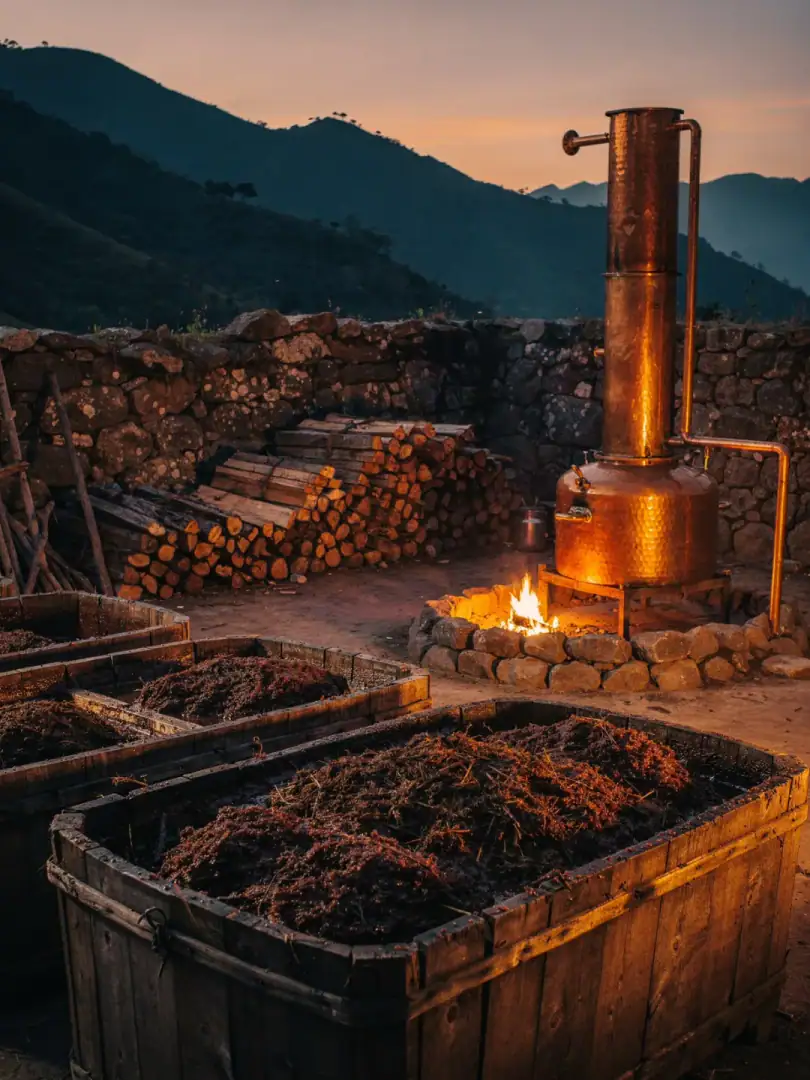
Filipino Alambique
Fermentation & Distillation
Fermentation begins as soon as the crushed, sweet agave meets water in the vats. In the palenques around Chilapa de Álvarez and Mochitlán, these are usually open wooden vats, where wild yeasts from the air and the wood itself do the work, with no cultivated yeast added.
The agave fibers, called bagazo, often remain in the mash. Depending on the palenque, fermentation takes three to eight days, until the sugar has fully converted to alcohol and the mash smells of ripe fruit and smoke.
Distillation typically happens twice. The first run is called "destilado de punta," and the final run "de colas." Both are often returned to the still. Some palenques settle for a single run, calling the result "bronco" or "minero," bolder and rougher in flavor.
The still used in the region is often the alambique filipino, a copper kettle topped with a wooden head. The rough, porous wooden walls allow heavier vapors to condense and flow back into the mash. This acts like a natural reflux, almost like a second distillation. Only in the topmost, copper plate does the vapor mature into finished mezcal, with the copper binding unwanted sulfur compounds along the way.
The result is a distillate typically between 45 and 50% ABV, depending on how the master makes the cut between heads, hearts, and tails. It's precisely this cut, made by hand and through experience, that separates a great palenque from a mediocre one.