Altitude and Dry Season
Altitude & Climate
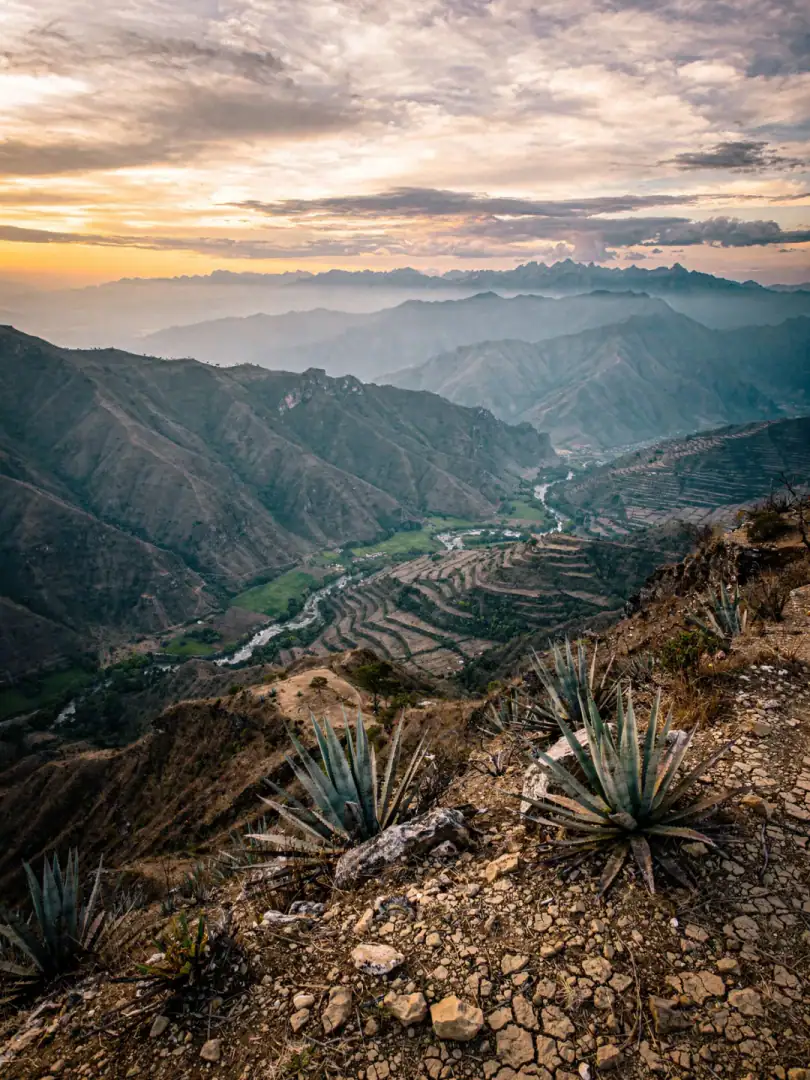
The agave slopes around Chilapa, Zitlala, and Tixtla sit between 1,200 and 1,800 meters in the Sierra Madre del Sur. The terrain is rugged, deep valleys alternate with steep ridges, and the microclimate shifts with every bend. In Mexico, this band is known as "tierra templada," the temperate zone between hot valleys and cold peaks.
The year splits clearly into two halves. From roughly June to September, rain falls, which the agaves channel deep into the ground through their roots. The rest of the year stays dry, sometimes for seven months straight.
During the day, temperatures at this altitude turn mild to warm, while nights cool noticeably. Frost remains rare on the mid-elevation slopes, but occurs in cold winters on the sierra's highest ridges, slowing growth even further there.
Poor, stony soils, a long dry season, and cool nights force the Papalote agave to grow slowly. Rather than shooting up quickly, it stores sugar in its heart, which later becomes mezcal, over eighteen to twenty-five years. Each rainy season adds to the reserve, and each dry season concentrates it further.
You can taste this long journey later in the glass: herbal notes, cooked agave, and a hint of cinnamon, as connoisseurs repeatedly describe mezcal from Cupreata. Without the altitude and the dry season of the sierra, this aroma simply wouldn't exist.