Wild Yeast and Copper Stills
Fermenting & Distilling
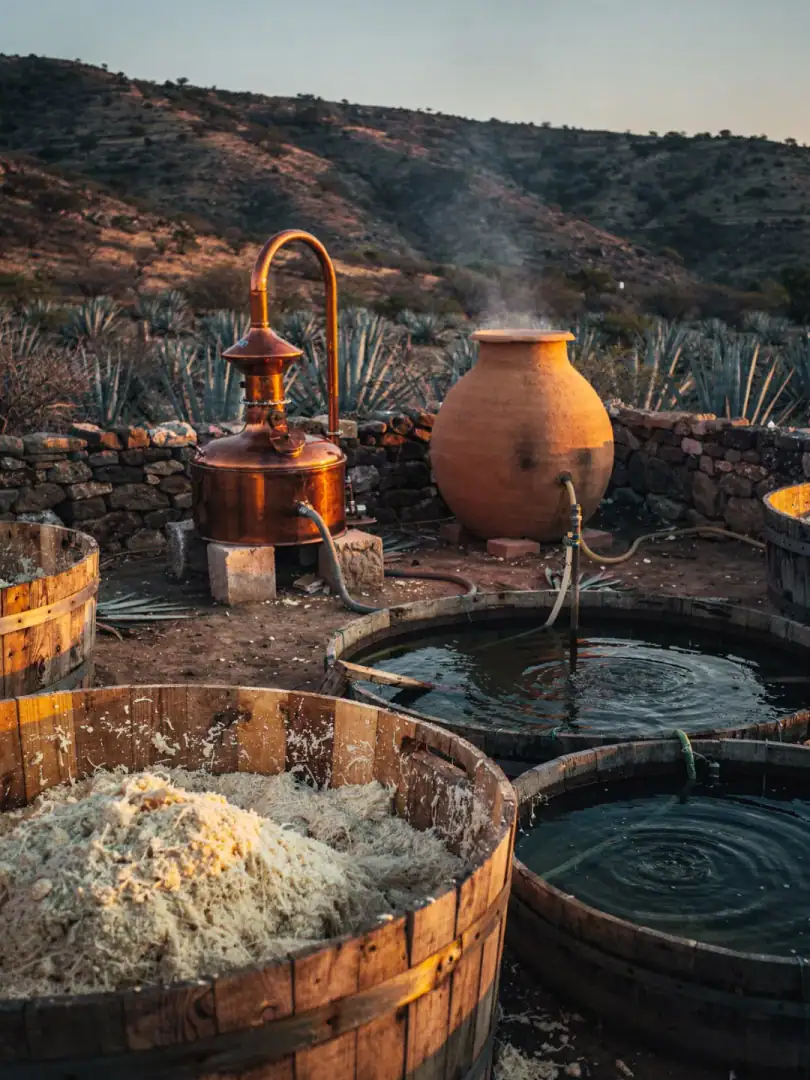
No lab mixes the yeast here. That job falls to the air of the Mixteca itself, as soon as the cooked juice from Papalometl or Pitzometl, along with the crushed fibers, goes into open wooden vats. Wild yeasts from the surrounding area and from the agave itself start the fermentation entirely on their own, with no added yeast strain.
Depending on the weather, this wild fermentation takes several days, sometimes over a week. By the end, the sweet juice has turned into a sour, mildly alcoholic must. The fibers usually stay in the vat. They add extra aroma and make the eventual spirit rounder.
Distillation then takes place over direct fire, in stills made of copper or fired clay. What a palenque in Zapotitlán Salinas or Caltepec owns depends on the family's tradition. Copper is considered more efficient, clay more traditional. Both are explicitly permitted for Mezcal Artesanal.
As a rule, the mash passes through the still twice: once coarse, once fine. The master judges from the taste and the bead pattern in the glass when the spirit is finished. At least one distillation is required by the standard. Anything beyond that is a matter of pride.
What results is a robust spirit, between 35 and 55 percent alcohol by Mexican standard. It's usually bottled without any further dilution with water. It's exactly this rawness that sets the Mezcal from here apart from the more accommodating, often gentler Tequilas from Jalisco.