Earth Pit, Fire, Tahona
Cooking & Milling
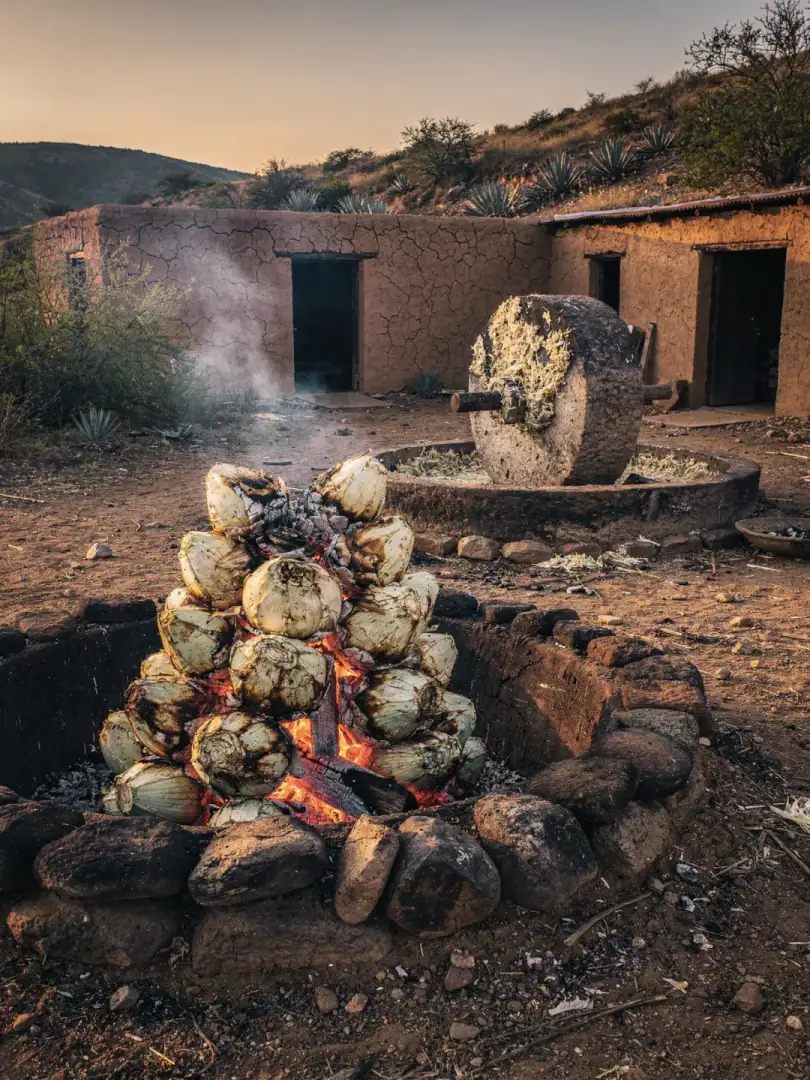
Before the piña becomes Mezcal, it first has to be cooked. In the Mixteca, that's usually decided by a pit in the ground, not a factory. In the palenques around Zapotitlán Salinas and Caltepec, the masters dig a round hole. They fill it with hot stones and firewood, often encino oak or mesquite from the surrounding area, and lay the halved agave hearts on top.
A layer of agave fibers, earth, or tarps covers the pit to trap the heat inside. The piñas cook for several days in their own steam this way, until they turn soft and caramel-sweet. This smoky note within the fiber's flavor is what many people associate with genuine Mezcal — quite different from steamed Tequila.
It's precisely this method that classifies the Mezcal from here as Mezcal Artesanal: the earth pit with direct fire. Anyone using an autoclave or diffuser instead automatically lands in the simpler category of "Mezcal" without that designation. That's permitted, but it isn't the same craft.
For milling, the tahona is often used, a heavy stone wheel. A mule or a small motor drags it over the cooked fibers until the juice emerges. Other palenques crush the piña by hand with the mazo, a wooden mallet. That takes longer, but many masters consider it gentler on the aroma.
Both methods are allowed for Mezcal Artesanal. Not so at the strictest level, Ancestral: there, only the mazo, tahona, or a hand-operated mill may be used. Distillation there happens exclusively in clay vessels over an open flame. Only a few palenques in the region even aim for this standard.