Young, Clear, Raw
Aging
Most Mezcales from the Mixteca Poblana leave the palenque exactly as they come out of the still: clear and unaged. This category is officially called Joven or Blanco. Here, it's the rule, not the exception.
Anyone who does age their spirit usually does so deliberately, as the exception. Reposado requires at least two months in contact with oak wood. Añejo requires at least a full year in a barrel, with a maximum capacity of 600 liters. In the Mixteca, this is rarer to find than among the large, commercial Mezcal brands.
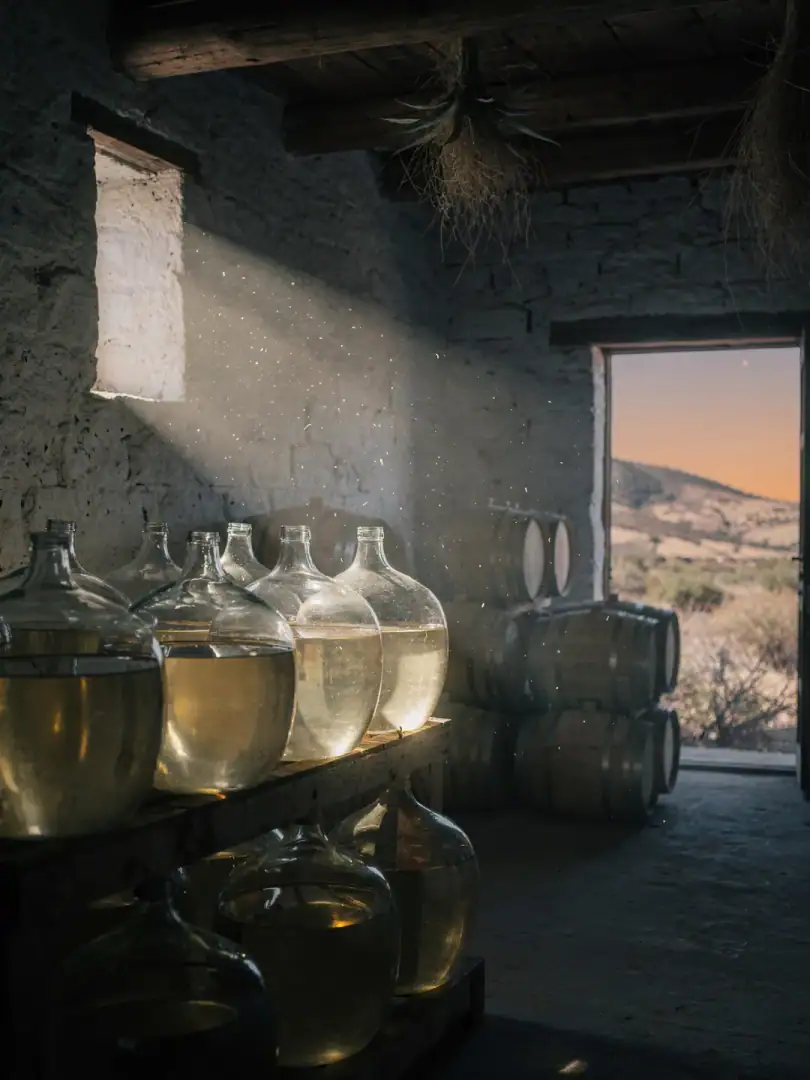
The Madurado en Vidrio class is unusual. Instead of a barrel, the spirit ages for months or years in glass demijohns, often in a quiet, dark spot within the palenque itself. There's no wood, but time still does its work: the Mezcal becomes rounder without picking up vanilla or oak notes.
The label must state what's inside: the category — Mezcal, Artesanal, or Ancestral — the agave used, the aging level, and the alcohol content. For a Mezcal made from Papalometl or Pitzometl, the species name must be included. Things are different with many Tequilas: they simply print "Tequila" on the label, without even naming the agave.
Anyone looking for an aged Mezcal here will find it less often than with Tequila — and that's by design. The palenques of the region want above all to showcase the character of the wild agave, not that of the barrel. For them, the flavor of Papalometl or Pitzometl matters more than any oak note.