The Dry Sierra Heights
Altitude & Climate
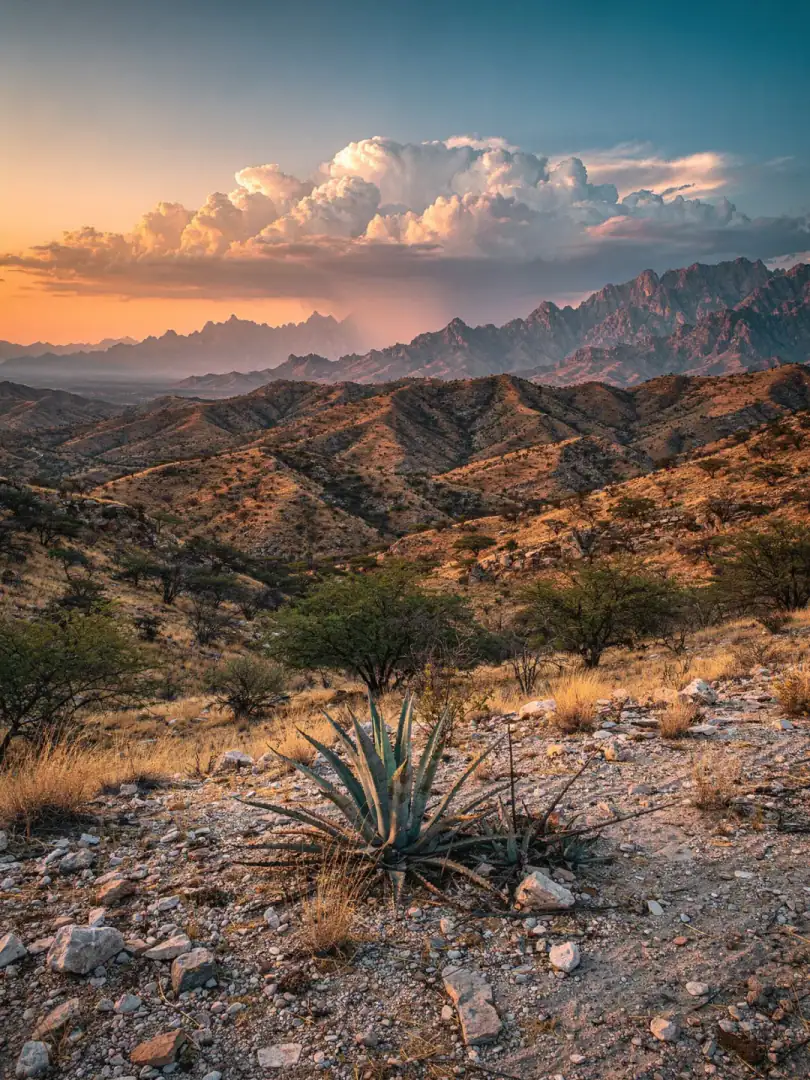
The Bacanora region lies between three hundred and over two thousand meters in elevation. The valley of Ures sits low, while Moctezuma rests at about 677 meters. On a ridge near Arivechi, the terrain climbs as high as 2,200 meters. The municipality of Bacanora itself stretches from 300 to 1,900 meters above sea level. The average annual temperature there is around 21 degrees Celsius.
Rain falls mainly in summer, when monsoon clouds from the Gulf of California push against the Sierra Madre Occidental and release their moisture there. The rest of the year stays dry. At lower elevations it becomes almost desert-like, while higher up the climate is somewhat milder.
In summer, high temperatures in Arivechi climb to an average of over 30 degrees Celsius. In winter, nights at higher elevations can turn bitterly cold, with lows around 12 degrees. This swing between hot days and cool nights puts stress on the wild agave. At the same time, it makes the plant more resilient.
Little water and abundant sun force the agave to build up its sugar reserves slowly. It grows over many years this way, instead of shooting up quickly. The result is a piña with less flesh but more concentrated sugar. The resulting Bacanora tastes earthier and less sweet than many Tequilas from the milder lowlands of Jalisco.
Frost occasionally occurs in the highlands around Arivechi and Yécora, damaging young agaves there. Farmers therefore prefer to leave the plants on sun-facing slopes. In the lower Bacanora valleys, by contrast, summer heat is the bigger problem, drying out the soil again within weeks.