Clay & Copper
Fermentation & Distillation
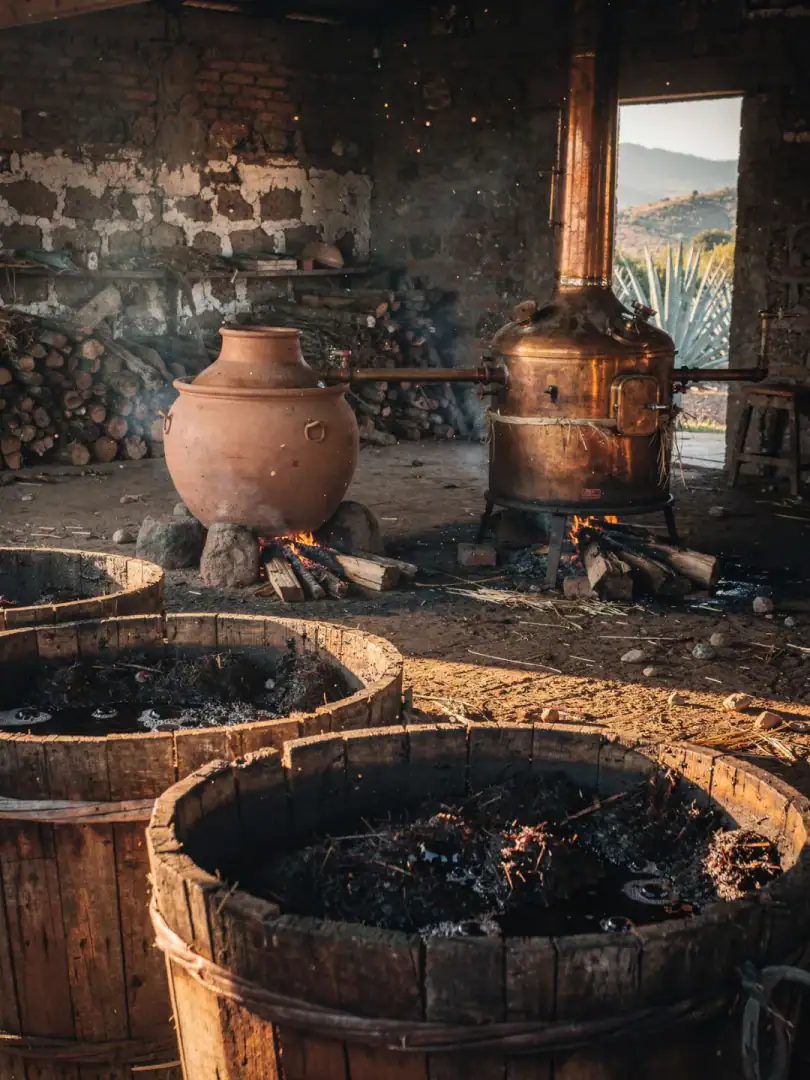
After milling, the crushed agave fiber, along with its juice, goes into open wooden vats. Added yeasts are unusual in the palenques of the Valles Centrales; here the mash ferments spontaneously, driven by wild yeasts from the air and the wood itself, often fermented together with the fiber rather than strained beforehand.
Depending on weather and yeast populations, fermentation takes three to twelve days. Every palenquero can tell by smell and bubbling when the mash is ready. This inherent variability means each batch turns out a little different, even when the same family makes it.
Distillation happens twice. The first, raw run is simply called "Ordinario" here and often goes into the still with the entire fermented fiber still in it. Only the second, clear run becomes the finished, drinkable Mezcal. In Santiago Matatlán, copper stills are most common for this; in Santa Catarina Minas, exclusively fired clay stills, heated directly with wood fire.
The clay still gives Mezcal Minero, as the spirit from Santa Catarina Minas is called, a denser, almost creamy texture, since clay conducts the vapors differently than copper does. What emerges is a clear spirit, usually between 45 and 50 percent alcohol, which every family still checks by the size of the beads when pouring.
In San Baltazar Chichicápam, Faustino García Vásquez and his son Maximino distill using the same methods their fathers once did. If you want to taste where it comes from, you'll find it, among other places, in bottles from the brand Del Maguey, which carries the village's name.