Earthen Pit & Tahona
Cooking & Milling
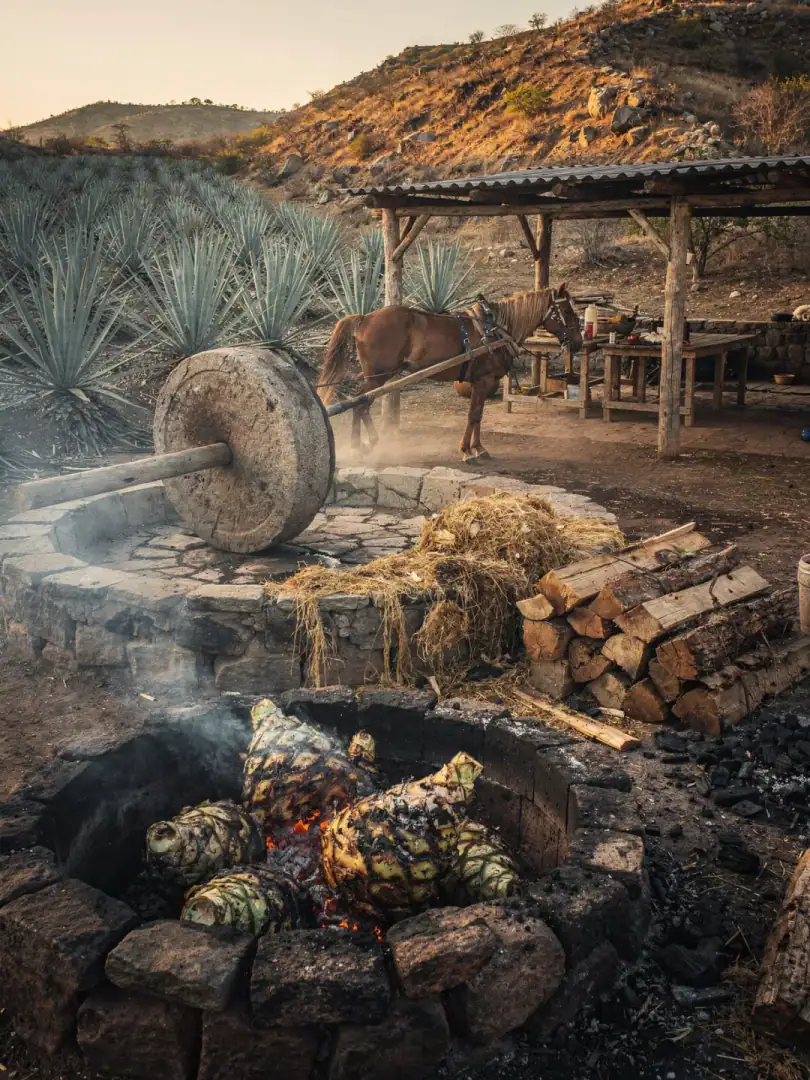
Making Mezcal in the Valles Centrales starts with a hole in the ground. Around Santiago Matatlán, this has often evolved into a stone-lined, conical oven: glowing rocks at the base, topped with the halved piñas, then agave fibers, earth, and tarps to seal it all in. The hearts cook for three to four days in their own steam and smoke.
The smoky character so many people instantly associate with Mezcal comes precisely from this oven, not from the autoclave or diffuser that industrial Mezcal or Tequila are permitted to use. The distinction on the label begins at the cooking stage.
For the strictest category, "Mezcal Ancestral," a stone-lined oven alone isn't enough. The standard demands a plain earthen pit with no masonry, milling done exclusively by hand using a mazo or tahona, and finally a clay still. This is exactly how the Ángeles family in Santa Catarina Minas still works today.
After cooking, the agave is crushed. In many palenques around Santiago Matatlán, a horse or mule pulls the tahona, a massive stone wheel weighing tons, in circles over the piñas until they're reduced to fibrous pulp. This method already qualifies as "Mezcal Artesanal," alongside stills made of copper or clay.
So the fate of the Mezcal's eventual name is sealed right at the cooking and milling stage. Anyone who mills mechanically or steams in an autoclave can only call the result "Mezcal" without qualifier—never "Artesanal" or "Ancestral"—no matter how good the agave tastes.