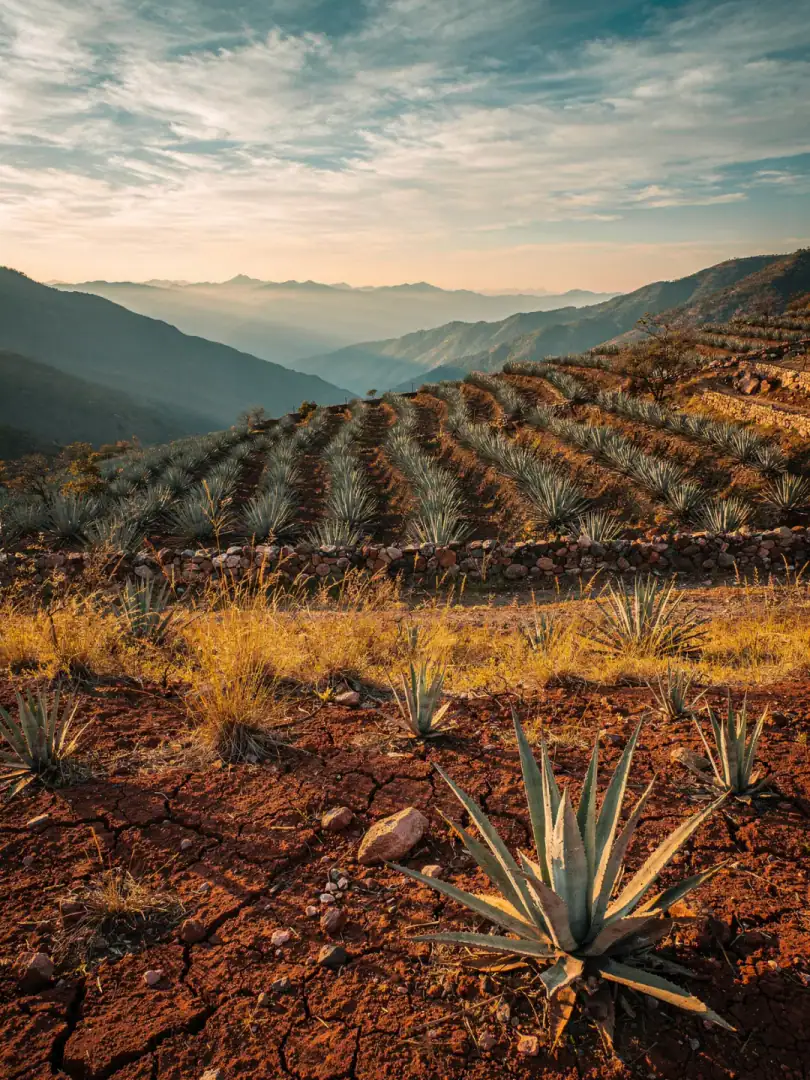
Altitude & Dry Season
Altitude & Climate
Santiago Matatlán sits at roughly 1,700 meters, in the middle of an arid basin within the Valles Centrales. The city of Oaxaca lies about fifty kilometers to the northwest. The air at this altitude is thin. Days burn hot under strong sun, while nights cool down noticeably.
The climate is temperate and dry. Rain falls almost exclusively between May and October. For the rest of the year, the sky stays largely clear. The agaves must then survive on whatever moisture they managed to store in the soil during that brief rainy season.
Frost is rare in the valleys. At higher elevations, though, temperatures can still drop close to freezing on clear winter nights. But the real challenge isn't frost—it's the long dry season, which keeps every plant running on minimal reserves for months at a time.
This combination of altitude, intense sun, and prolonged drought slows the agave's ripening. Over the years, Espadín from the Valles Centrales concentrates sugar and aromatic compounds within the piña. A faster-growing plant in a wetter lowland simply can't achieve that same density.
In the higher, rockier terrain around San Baltazar Chichicápam, where Tobalá and Tepeztate grow wild, this effect intensifies. These plants grow sparser and slower than Espadín does down in the valley. That's what gives their Mezcal a more floral, layered character later on.
Drive through the valleys and the contrast is immediate. Below, dense rows of Espadín stretch out; higher up in the hills, only scattered wild agaves dot the gray rock.