Smoke & Jícara
Tasting
Espadín from the Valles Centrales typically tastes smoky, earthy, and slightly vegetal. Connoisseurs trace the extra mineral note back to the sparse limestone soil. Anyone tasting Mezcal Minero from Santa Catarina Minas often notices a denser, almost oily texture, a legacy of the clay still used in its production.
Tobalá and Tepeztate, by contrast, taste more floral and herbal, sometimes with a hint of tropical fruit. This results from their slow, wild growth in the steep hills around San Baltazar Chichicápam and San Dionisio Ocotepec.
Three names come up again and again in this region. Del Maguey brought the first Mezcal from its founder Ron Cooper to the international market with "Chichicapa," sourced from San Baltazar Chichicápam. Real Minero from Santa Catarina Minas has distilled in clay for generations, led by the Ángeles family. Lalocura, meanwhile, was founded in 2014 by Eduardo "Lalo" Ángeles from the same family. He had previously spent years working at Real Minero before later specializing in rare wild agaves like Tobalá and Tepeztate.
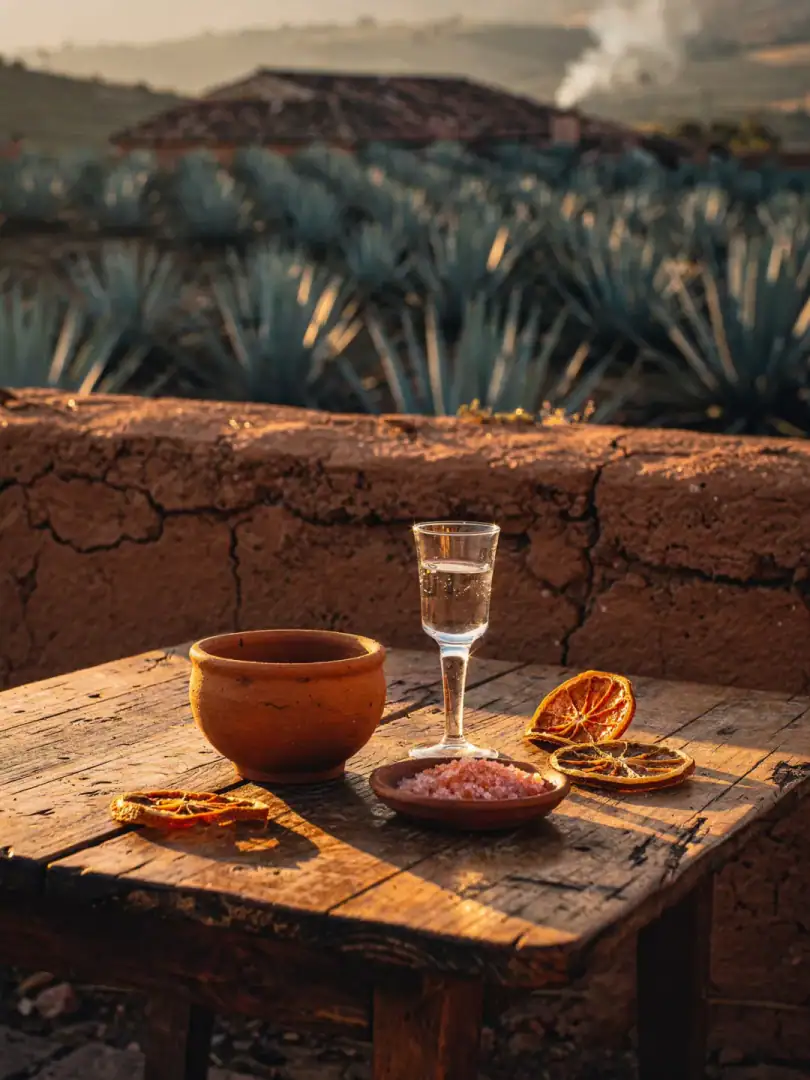
Tasting here doesn't happen from a shot glass. The custom is to use a jícara, a small bowl made from dried gourd shell, or a simple copita, a small glass with a wide opening. Both release the smoke before you even take a sip.
You smell first, then sip in small amounts. You let the Mezcal rest briefly in your mouth rather than knocking it back like a shot. In some palenques, a bowl of Sal de Gusano is served alongside, a blend of salt, dried chilies, and ground worm. It's a ritual, not a magic potion, but simply part of the slow way of drinking here.