Beyond Scotland
Peat around the world
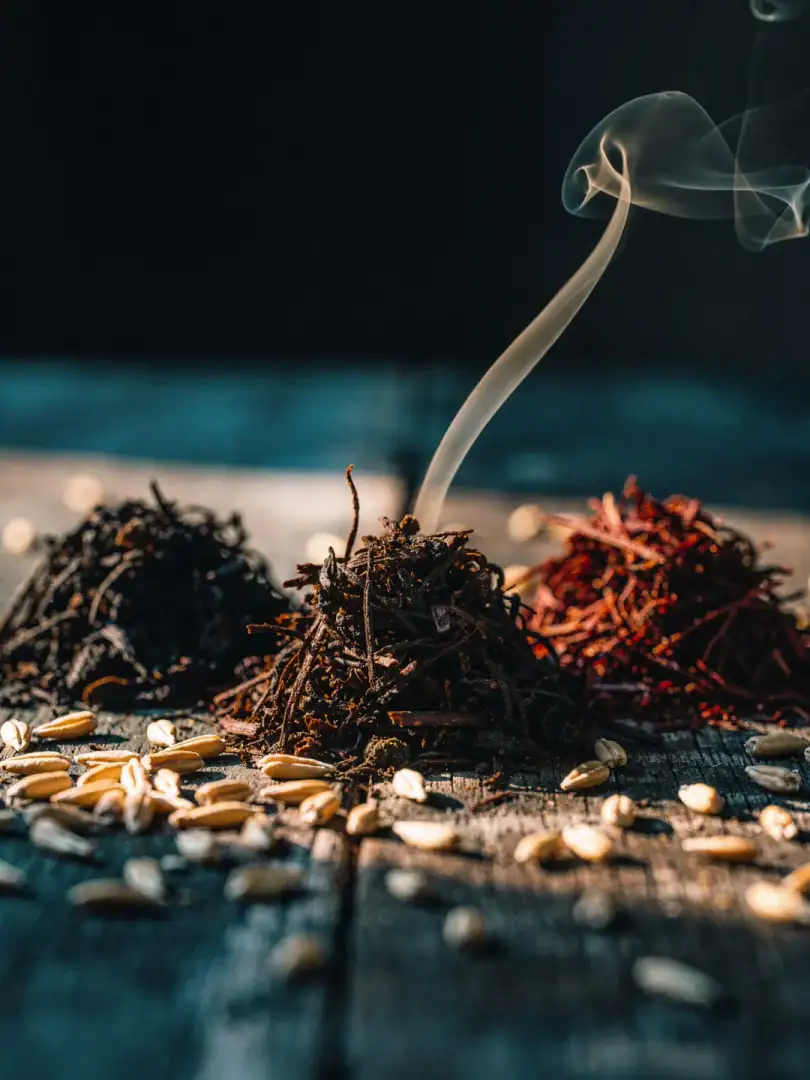
Scotland has no exclusive claim on smoky whisky. From Ireland to Scandinavia to Japan, distillers draw on local or imported peat and develop their own smoke styles, often quite different from the Islay archetype.
Ireland: an old tradition returns
Historically, Irish whiskey was often smoky: peat remained the island's cheapest fuel for centuries. With industrialization and the switch to coal, this smoke note largely disappeared from the standard Irish style. Today, individual distilleries such as Connemara deliberately produce peated bottlings again, drawing on this older practice.
Irish peat usually differs from Scottish peat: less shaped by the coast, but often by the island's central bogs, which gives an earthier, less salty tone.
Japan: its own peat, its own rules
Japanese distilleries such as Yoichi also use peated malt, frequently following the Scottish model, sometimes even with imported Scottish peat. Some now also use domestic peat deposits, for instance on Hokkaido, which gives the smoke its own, often more mineral note.
The Japanese approach often combines this smoke note with very precise distillation and long cask maturation, which makes the aromas overall feel softer than in many Scottish counterparts.
Scandinavia and other regions
In Sweden, Denmark, or Finland, young distilleries operate their own peat bogs or buy local peat, often as a deliberate counterpart to the imported Scottish standard. The plant composition of these northern bogs differs from that of Islay, leading to distinctive smoke profiles, sometimes resinous, sometimes milder.
Smaller distilleries in Germany, the US, and Australia are also experimenting with local peat or imported material. The result shows: smoky whisky is a global craft with many regional answers, not a protected Scottish specialty.
Where else peat still burns
Besides Ireland, Japan, and Scandinavia, smaller distilleries in countries such as France, Wales, or New Zealand also use peat, usually in small quantities and with a local connection. Some deliberately import Scottish peat to achieve a familiar smoky character, others deliberately rely on material from their own surroundings.
This diversity shows that peat smoke isn't a fixed recipe, but depends on the available bogs and the decisions made by each individual distillery. Anyone comparing internationally will find very different whiskies under the word smoky.
How peat is imported
Not every distillery outside Scotland has access to its own peat, which is why a small, specialized trade in dried or already malted peated malt has developed. Scottish maltings export peated malt specifically to distilleries in Japan, Scandinavia, or North America that want to create a familiar, Islay-reminiscent smoky character without owning a bog themselves. Transport usually takes place as finished smoked malt, more rarely as raw peat, because malt can be shipped more easily and without loss of quality over long distances.
Other distilleries deliberately decide against importing and instead rely on local alternatives, whether their own peat or a completely different smoking material. This decision often shapes the style of a young whisky scene more strongly than any single recipe, because it determines whether a country develops its own smoky character or follows the Scottish model.
Briefly explained: three countries, three styles
Scotland remains the benchmark for peat smoke. Ireland shows a milder, earthier variant. Japan refines the Scottish style with its own precision and long maturation. Scandinavian distilleries often rely on local, more resinous bogs. Each country brings its own emphasis, none simply copies the other.
Anyone comparing internationally shouldn't just look for the strongest smoke. What's more interesting is the difference in character: salty, earthy, or mineral, depending on the peat's origin. This diversity makes smoky whisky exciting worldwide, far beyond Scotland. Anyone curious enough to try will find a different answer to the same basic idea in every region.
This diversity can hardly be measured in a single number. Every country brings its own preferences and its own raw materials. Anyone who stays open-minded and tries beyond Scotland will discover smoke styles that might never have emerged in their own country.