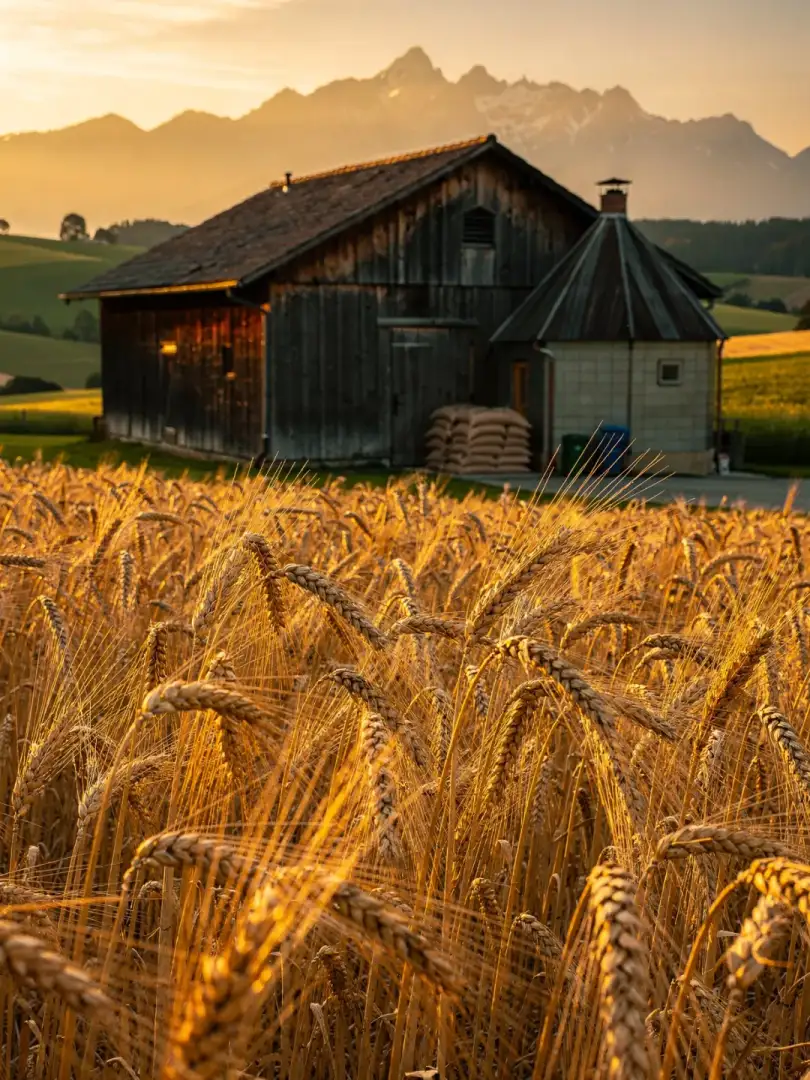
Barley from the Land
Malt & Grain
Barley is the backbone of Oberland beers, with wheat only entering the picture for the Weissbier. Ayinger describes its brewing barley as regional without naming specific growing areas; beyond that claim, we have no further documentation. The Bavarian brewers' Reinheitsgebot requires barley or wheat malt, and sugar has no place in Bavaria.
Malt is made when grain begins to germinate in water and is then kilned with heat. Pale malt is dried gently so it gives off almost no color and tastes of bread and honey. Darker malt is kilned longer and hotter, producing roasted notes like crust and caramel.
A Helles often needs just a single pale malt. For Dunkles and Starkbier, brewers blend in dark malts as well, which give the beer color and fullness. Whether the Oberland brewers kiln their own malt or buy it in is undocumented for most of them.
Helles tastes of bread crust and honeyed loaf, while Dunkles leans more toward nut and cocoa. Taste both side by side, and you'll feel just how much kilning alone can change.
The mash, meaning the mixture of crushed malt and warm water, also plays its part. During mashing, enzymes convert the malt's starch into sugar, which the yeast later ferments. How long the mash rests and at what temperature decides whether the beer turns out crisply dry or full and sweet. The Oberland brewers generally keep their Helles on the drier side, so you're tempted to order a second glass.