Barley and Roasted Notes
Malt & Grain
What malt is Kellerbier brewed from? Barley malt, as with every bottom-fermented beer in Germany, and it's the brewer who decides on the blend. Pale Pilsner malt lends body and a straw-like color, Munich malt brings notes of bread crust and honey, and a touch of caramel malt tints the beer amber.
Malt is germinated barley that's then dried. On the kiln, a heated drying floor, the temperature determines how dark and how roasty the malt will taste later on. For a deep-colored Landbier, the kiln runs hotter than for a pale Seidla.
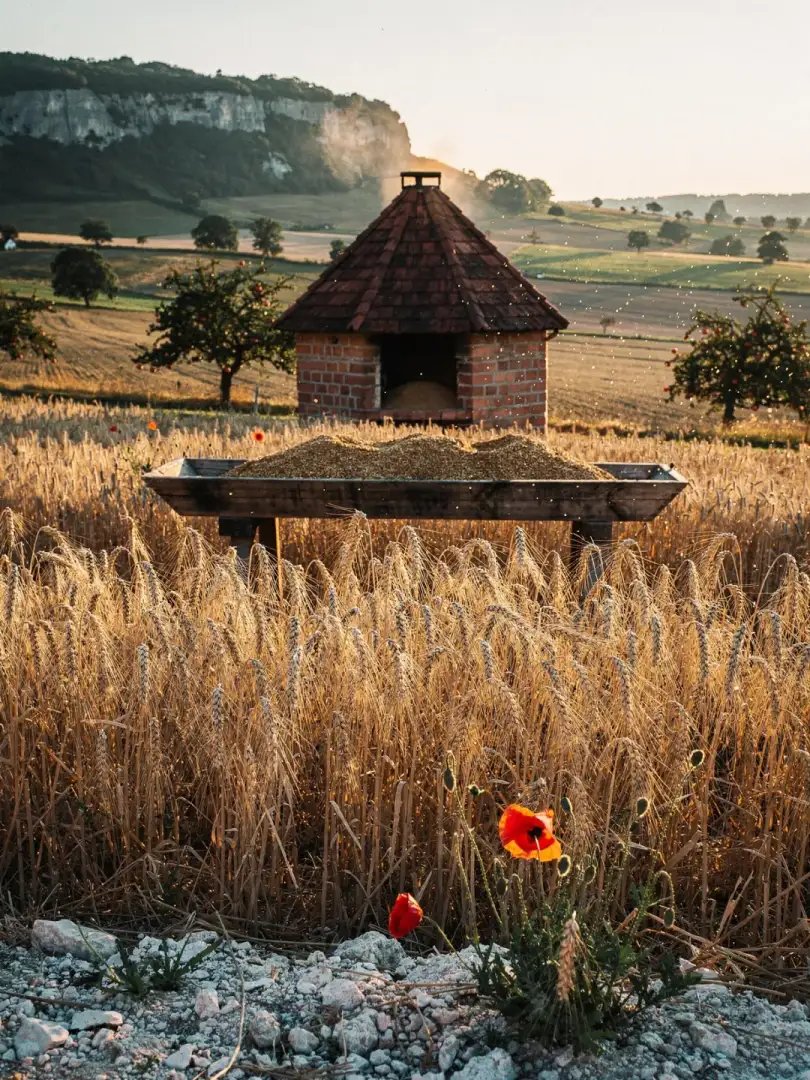
The fields of Franconian Switzerland lie on limestone soils, and the lean high plateaus are stony. Barley has grown here for a long time, yet hardly any village brewery still runs its own malthouse today. Most of the small breweries buy in their malt, and it's the recipe that makes the difference you taste from house to house.
How much malt ultimately ends up in the beer shows up in the original gravity: the proportion of dissolved substances in the wort before fermentation, measured in degrees Plato. The higher it is, the more malt goes into each liter, and the more full-bodied the beer becomes. For a Helles, the value typically sits around eleven to twelve degrees.
Wheat, rye, and sugar have no place in Franconian Kellerbier. It's a pure barley beer, and that's exactly what defines its character: malt on the nose, bread on the palate, nothing else added.