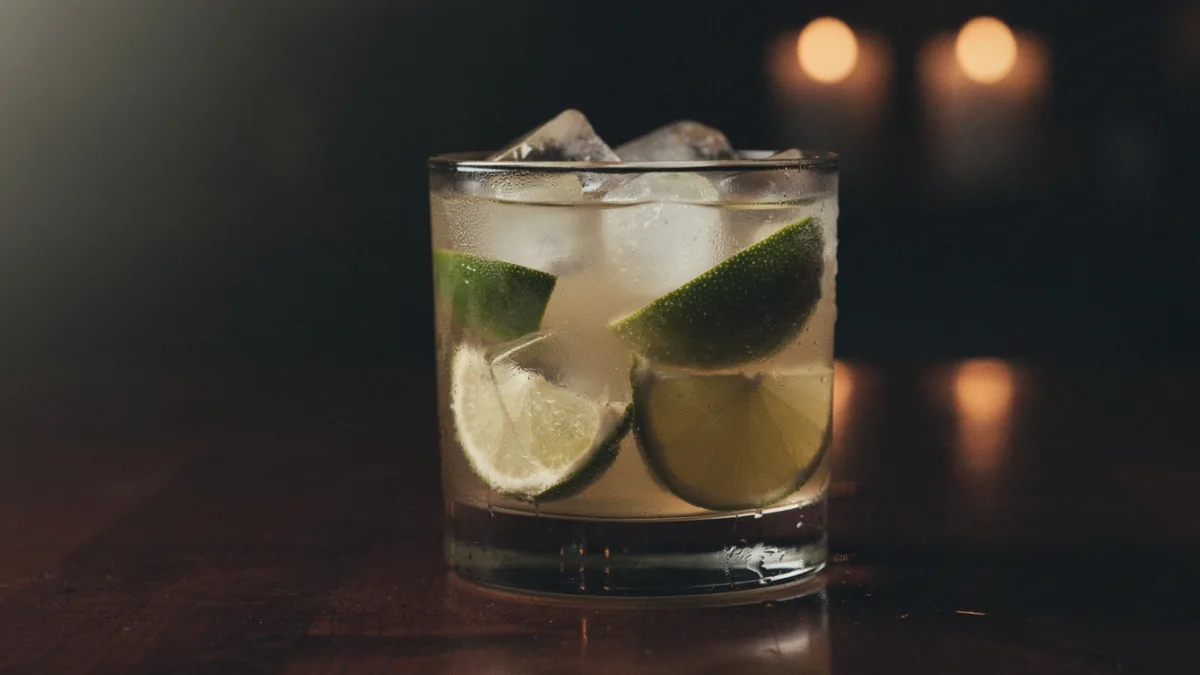
Preparation
- Gently muddle the lime wedges and sugar in the tumbler until the juice releases.
- Fill the glass with coarsely crushed ice and add the cachaça.
- Stir from bottom to top so the sugar, juice and spirit combine.
What does it taste like?
First you taste the lime. It's clearly sour, since you press the juice directly from the wedges. The sugar catches this acidity without masking it. Behind that comes the cachaça, and it stays clearly recognizable. It pushes forward rather than disappearing under the fruit. With 60 milliliters of spirit and no juice or soda to top it up, the Caipirinha drinks strong. A subtle bitterness comes through from the lime peel. The crushed ice melts quickly, so the drink becomes softer and milder toward the end.
When does it work best?
The Caipirinha suits warm evenings and the start of a night out. Beginners handle it well, since lime and sugar taste familiar. Still, don't underestimate it: the glass holds 60 milliliters of spirit, diluted only with ice. If you don't like acidity, you're better off with something else. It doesn't pair well with food, but works great beforehand.
What matters
Muddle the lime wedges only gently. If you crush them into a pulp, too much bitterness comes out of the peel and into the drink. A few gentle presses are enough to release the juice. Then stir from bottom to top. Otherwise the sugar stays at the bottom, and the first sip tastes sour while the last one tastes sweet.
Where the drink comes from
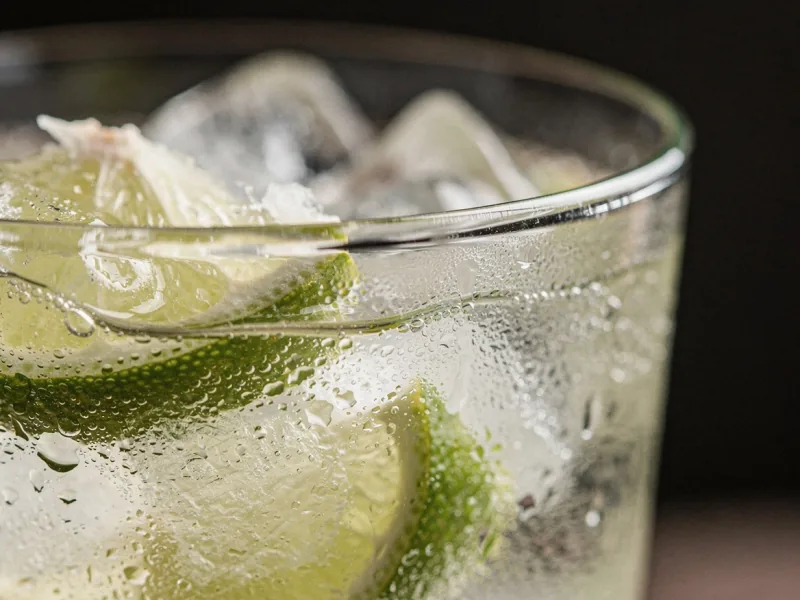
The Caipirinha comes from Brazil. It's closely tied to the rural areas around São Paulo and to cachaça itself. Who invented the drink can't be said with certainty. Several stories exist, including ones where the mixture was said to cure illness. None of this is documented, and there's no fixed date either. What's certain is what it represents: Brazil's culture of sugarcane spirits. Lime and sugar meet a spirit that already brings plenty of flavor on its own.