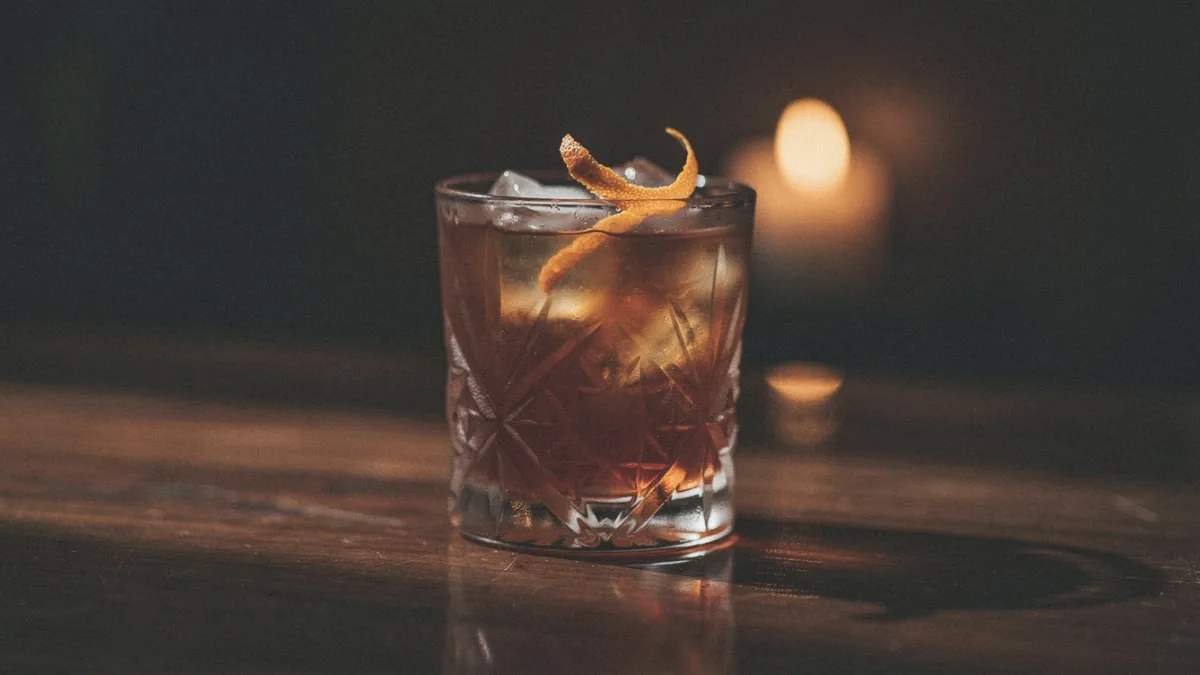
Preparation
- Fill the serving glass with large, solid ice cubes.
- Add the measured ingredients.
- Stir gently until the drink is cold and the ingredients are combined. Leave a little room at the top for the garnish.
- Finish with a garnish: orange zest.
What does it taste like?
The first thing you taste is bitterness. It comes from the Cynar, a dark bitter liqueur, and it's meant to be there. Right behind it stands the cachaça, a spirit distilled from sugarcane, bold and spicy. The red vermouth lays down sweetness and herbal notes underneath, softening the edges. Two dashes of Angostura add a spicy accent. No juice goes in—every ingredient here is alcoholic. That's why the drink tastes concentrated at first and only softens as the ice melts. The orange zest smells sweetly floral and makes that bitter opening more approachable.
When does it work best?
Drink the Rabo de Galo before a meal or slowly through the evening. It's one for experienced drinkers: bitter, strong, and with no fruit to hide behind. Beginners often find it too harsh the first time. If you love Negronis or Campari, you'll feel right at home here. Take your time with it—it's not a drink to knock back quickly.
What matters
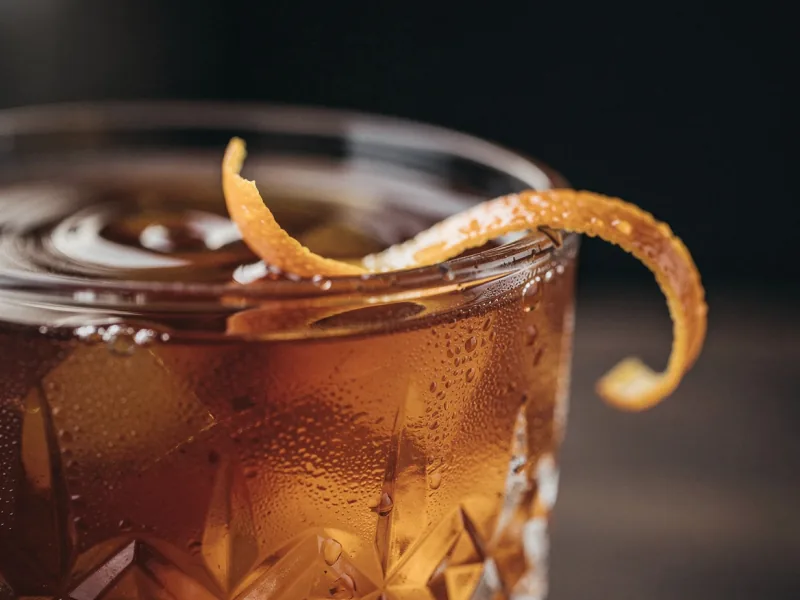
Cynar is its own distinct bitter liqueur, not another name for Campari. Swap it out and the whole herbal, bitter profile shifts. Use large, solid ice cubes and stir only briefly until cold—stirring too long will water it down. Express the orange zest over the glass so the oils land on the surface.
Where the drink comes from
The Rabo de Galo belongs to Brazilian bar culture. Combining cachaça with red vermouth was long just a simple everyday mix. It spread widely, especially in São Paulo during the 1950s. The name literally means 'rooster's tail,' playing on the word 'cocktail.' Which bitter liqueur to use and how to serve it was never fixed. Only later did cocktail bars turn it into the carefully measured version you see here. The core idea, though, has always stayed the same.