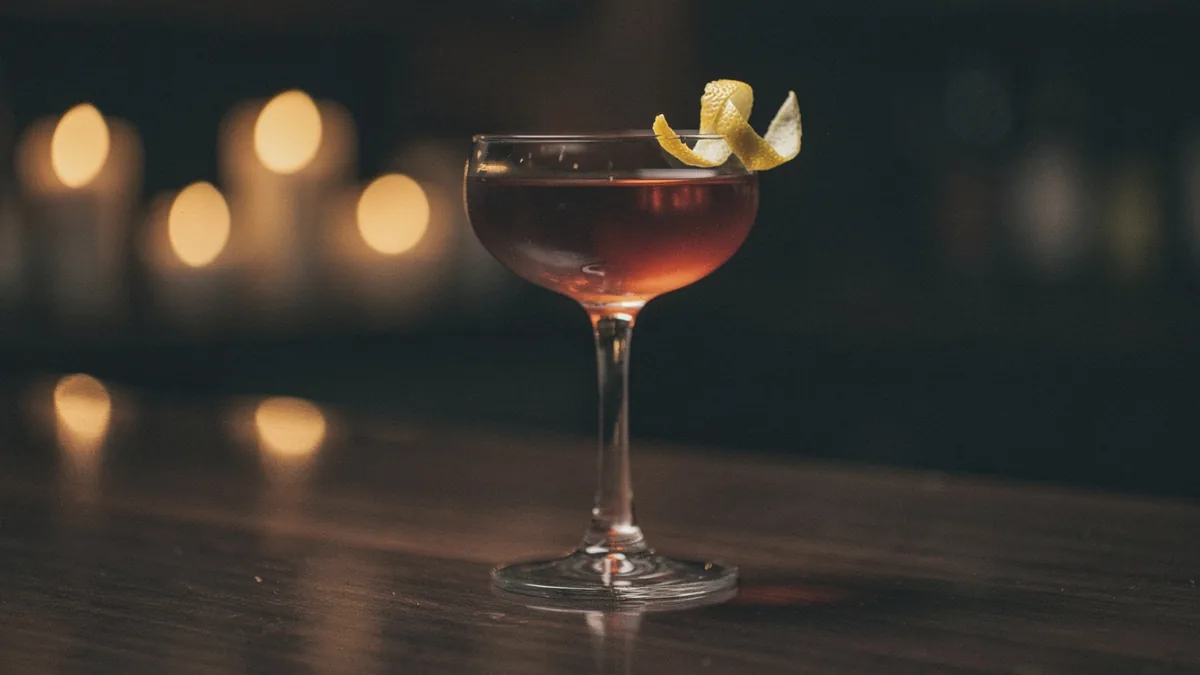
Preparation
- Chill the serving glass beforehand. Add all the ingredients with plenty of ice to a mixing glass.
- Stir with a long spoon until the mixture is well chilled and lightly diluted, about 20–30 seconds as a starting point.
- Strain into the chilled glass through a bar strainer, leaving out the mixing ice.
- Finish with garnish: lemon zest.
What does it taste like?
Bitterness is the base note, yet it stays restrained. Ten milliliters of Campari is enough for color and a touch of bite, not for a wall of bitterness. Gin leads with its juniper character. The dry vermouth adds herbs and a bit of acidity, but barely any sweetness. That's why the Cardinale feels lean and very dry. All three ingredients are alcoholic; no juice is added, only the water from the stirring ice. So the drink tastes concentrated and warms the throat. The lemon zest lays a fresh scent over the first sip.
When does it work best?
The Cardinale belongs at the start of an evening, before dinner. For beginners it's not an easy entry point: nothing here cushions the alcohol, neither juice nor syrup. If you know the Negroni and wish it were less sweet, this is exactly right for you. Expect a small, strong glass, not a long thirst-quencher.
What matters
Be sure to use genuinely dry vermouth, not the sweet bianco style. That one bottle decides whether you end up with a Cardinale in the glass or almost a Negroni. Also stir long enough, about 20 to 30 seconds. The drink contains gin, dry vermouth and Campari. Only the meltwater from the stirring ice makes it soft enough to drink.
Where the drink comes from
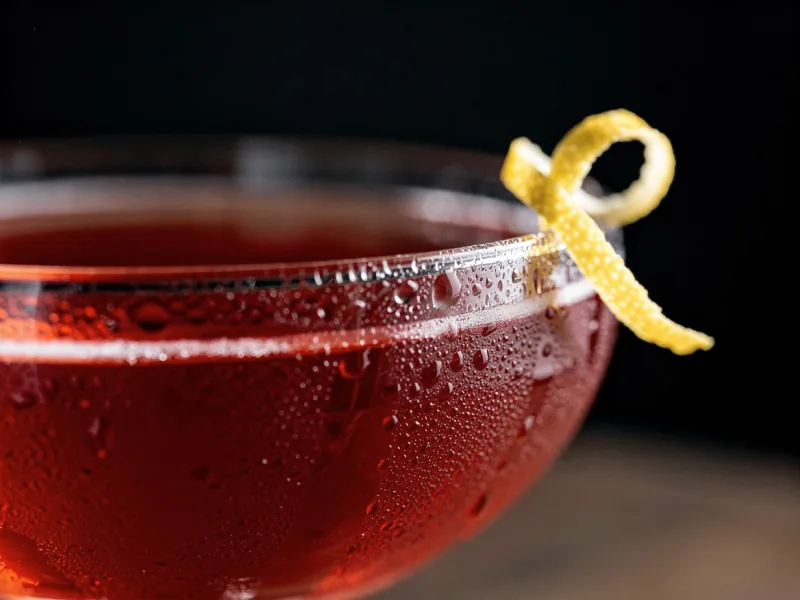
The most common story places the Cardinale's creation around 1950 at the Hotel Excelsior in Rome. The tale names bartender Giovanni Raimondo. This isn't firmly documented, as other accounts exist regarding its origin. The recipe itself has also shifted over time. Early versions are said to have included wine where dry vermouth stands today. That's no small difference, since vermouth brings an herbal complexity that plain wine lacks. It's a good example of how a cocktail name can stay the same for decades while the ingredients beneath it quietly change.