Preparation
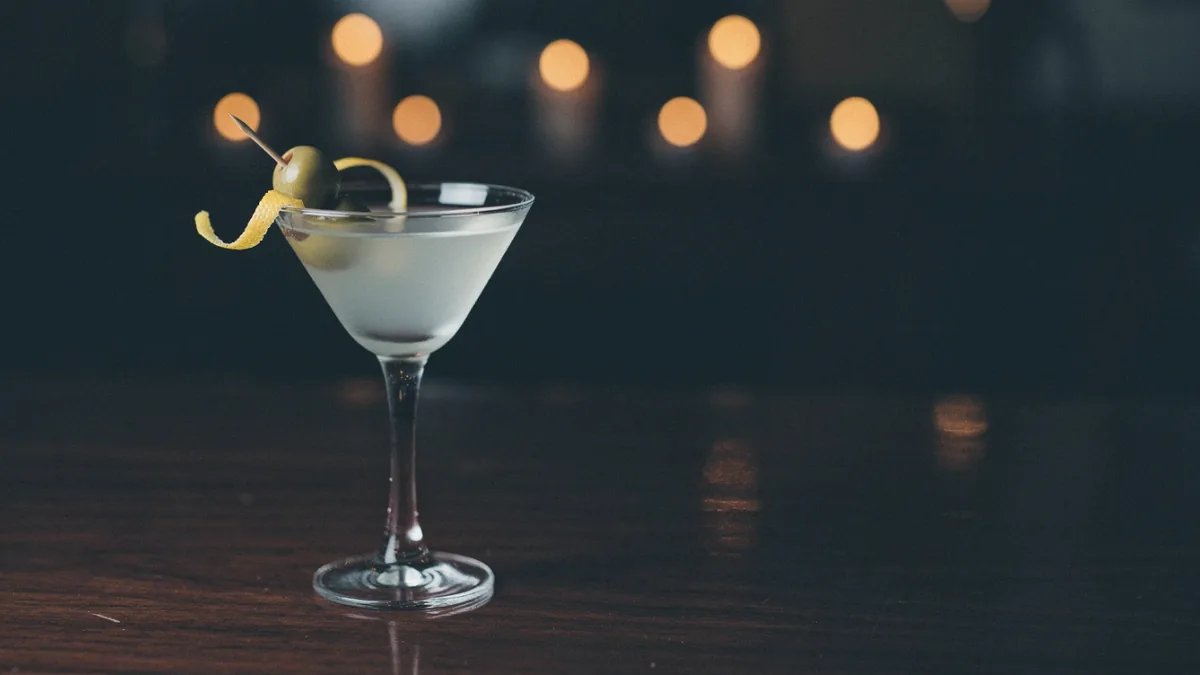
- Chill the serving glass. Add all ingredients with plenty of ice to a mixing glass.
- Stir with a long spoon until the mixture is well chilled and slightly diluted, roughly 20–30 seconds as a starting point.
- Strain through a strainer into the chilled glass, leaving the stirring ice behind.
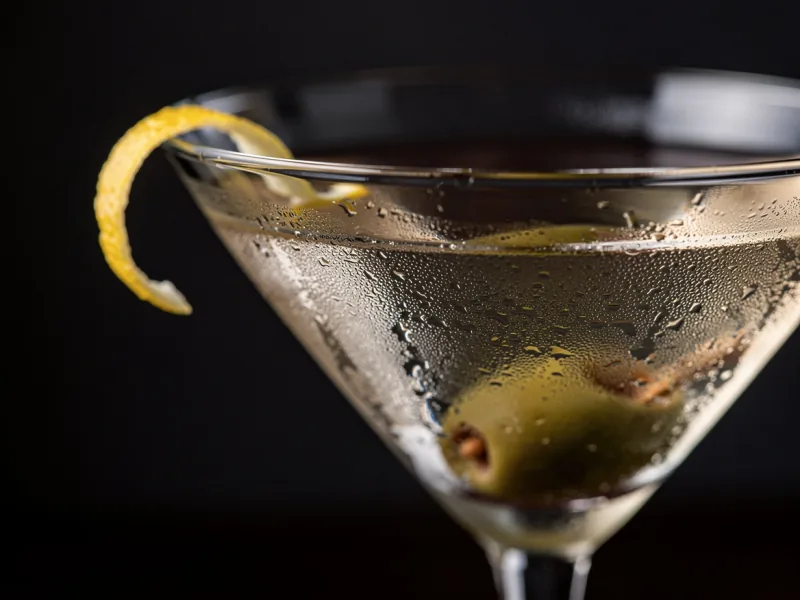
- Garnish to finish: lemon zest or green olive.
What does it taste like?
Before stirring, 60 ml of gin and 10 ml of dry vermouth are measured out; stirring adds meltwater on top of that. The first sip is correspondingly bold. You taste the juniper from the gin, followed by the herbal notes of the vermouth. Sweetness is almost entirely absent, and so is acidity, since there's no juice in the recipe. What remains is a dry, slightly bitter impression that lingers in the mouth. The garnish plays a role too: a lemon zest adds aroma and a fresher character, while an olive makes the drink saltier and more savory. Served cold, it's smooth; once it warms up, it burns.
When does it work best?
The Martini is served before a meal and stimulates the appetite. It's not a good starting point for a cocktail journey: without juice or sugar, the alcohol stands fully exposed. If you enjoy gin straight, you'll love it. Drink it very cold and in small sips, and it feels smoother. Most people find that a second one is more than enough.
What matters
The most common mistake sits right there on the shelf: vermouth is wine, and it spoils after opening. Store the bottle in the refrigerator and use it up within a few weeks. Old vermouth tastes musty, and with only two ingredients, that flaw stands out immediately. Also, "dry" doesn't mean leaving out the vermouth entirely. Start with the 10 milliliters and adjust the ratio only once you know how it tastes to you.
Where the drink comes from
The Dry Martini evolved from earlier mixtures of gin and vermouth. There's no inventor—at least none that can be verified. Over time, the taste shifted toward less vermouth, while the gin portion increased. That's why there's still no single "correct" number for this recipe today. The 60-to-10-milliliter ratio mentioned here is just one of many possible versions. It's well suited for learning what cold and dilution do to the drink. Once you understand that, you can adjust the ratio to suit your own taste.