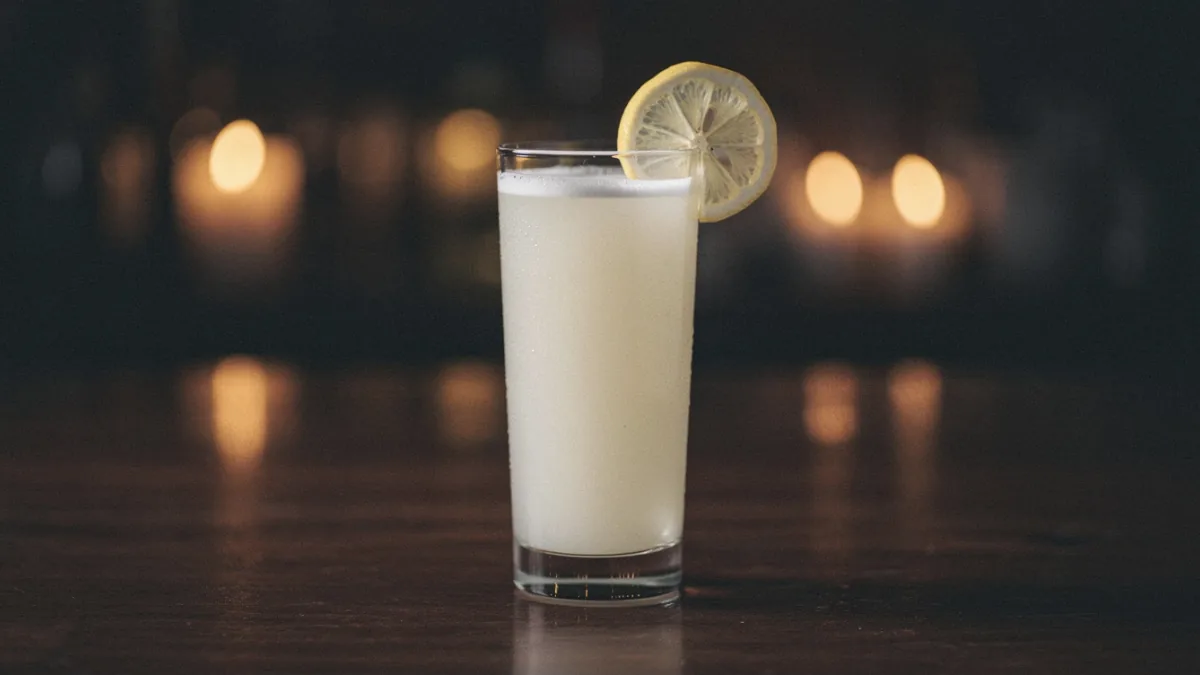
Preparation
- Shake the gin, lemon juice, and syrup with ice. Hold back the soda.
- Strain into a pre-chilled narrow glass without the shaking ice.
- Add a small splash of cold soda and serve immediately without any additional serving ice.
- Finish with a garnish: lemon wheel or twist.
What does it taste like?
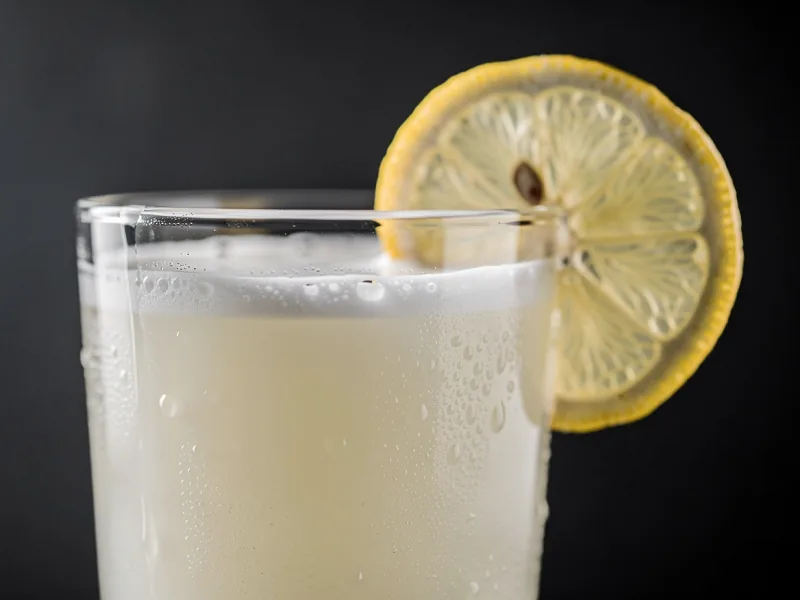
Lemon takes the lead. 30 milliliters of juice meet just 10 milliliters of syrup, so the Fizz tastes distinctly sour. Gin sits behind it at 45 milliliters, bringing juniper and a bit of spice. Shaking whips air into the mix, then comes the soda, and together they create a fine, short-lived foam cap. It fizzes on the tongue, and the drink feels dry and lean. Since there's no ice in the glass, nothing dilutes it further. It stays as sour to the last sip as it was at the start, though it warms up quickly.
When does it work best?
A drink for hot days and early evenings. It's refreshing and not sweet, which makes it appealing even to people who find soda too sticky-sweet. Beginners handle it fine, as long as they enjoy the acidity. It's less suited to food, since the lemon overwhelms everything else. Drink it quickly, because without ice and with only a little soda, the magic fades within a few minutes.
What matters
The glass really needs to be cold, best to pop it in the freezer beforehand. You don't need serving ice, the drink is already chilled from shaking. Add just a small splash of soda, otherwise the Fizz loses its lift. Then get it to the table quickly: the foam cap collapses after a short time. A Collins, by contrast, stays on ice in the glass and can sit a while.
Where the drink comes from
The Gin Fizz belongs to the Fizz family, a whole group of old drinks. The pattern is always the same: spirit, citrus, and sugar go into the shaker, soda goes into the glass afterward. Recipes like this already appear in books from the 19th century. Part of the idea is drinking it right away, while it's still fizzing. It's often said that the difference from the long Collins comes down to a single ingredient. That's not quite right: it's the structure and the way it's served that set the two drinks apart.