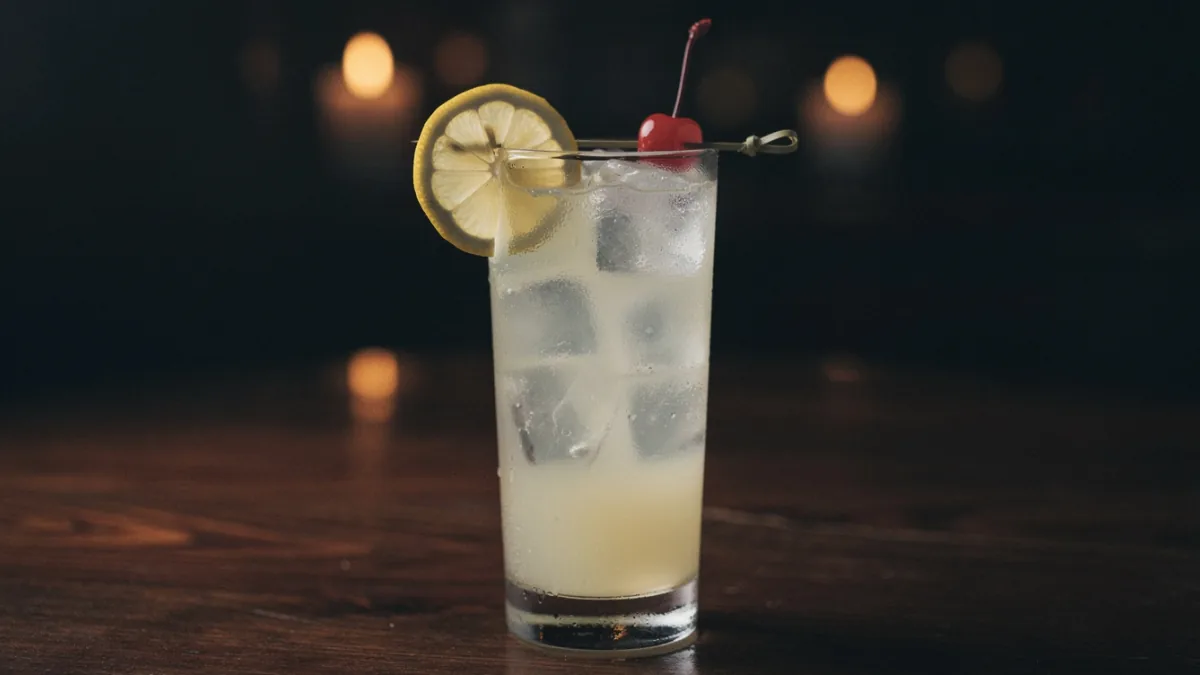
Preparation
- Fill the serving glass with solid ice cubes.
- Add the measured ingredients. Soda goes in last and is poured slowly so the carbonation is preserved.
- Stir gently until the ingredients combine. When topping up with mixers, leave a bit of room for the garnish.
- Garnish to finish: lemon slice and cocktail cherry.
What does it taste like?
Lemon sets the tone. The acidity hits you first, and the sugar syrup immediately softens it. Still, a noticeable freshness remains, since twice as much lemon juice as syrup goes into the glass. The gin stands behind it with its juniper character, spicy and dry. The soda makes the drink long and fizzy, diluting it noticeably. That's why it tastes lighter than a sour in a small glass, even though it contains forty-five milliliters of gin. Toward the end, as the ice melts, it becomes even milder.
When does it work best?
A classic for hot afternoons and for those getting started with gin drinks. It's long, fresh, and doesn't feel heavy. Guests who usually drink lemonade or wine spritzers will get along well with it. If you prefer something short and strong, go for a Martini or a Gin Sour without soda instead. It pairs well with food, as long as the food isn't sweet.
What matters
Stir only briefly and gently. Any vigorous stirring drives the carbonation out of the soda, leaving the drink flat. Build it directly in the glass over full ice, as half-full glasses melt faster. Squeeze the lemon fresh, since bottled juice stands out immediately here. With Old Tom gin, the John Collins becomes a Tom Collins. Leave some room when topping up for the garnish.
Where the drink comes from
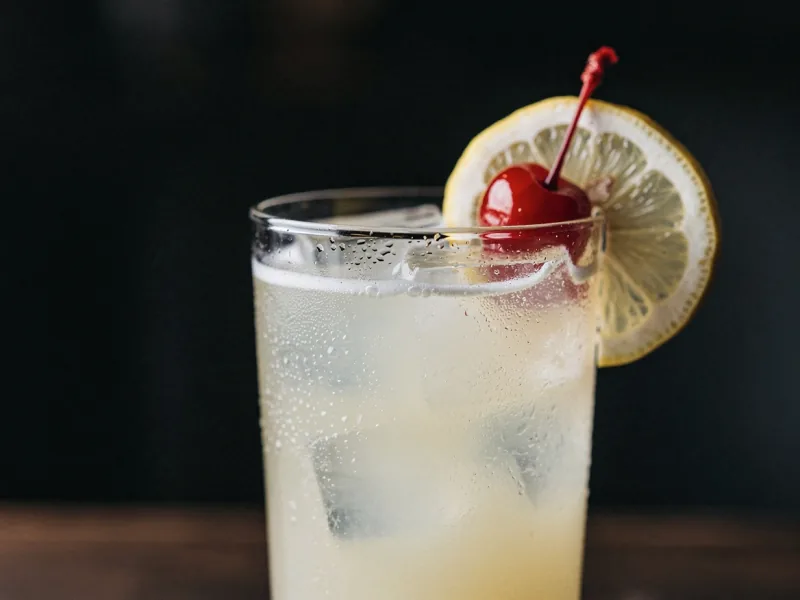
The name traces back to John Collins of London's Limmer's and the gin punch tradition there. How the John Collins became the Tom Collins, and which type of gin was used in each, is told differently across sources. What's certain is only the principle: a long drink made of gin, lemon, sugar, and soda. Many long drinks follow this pattern. Old Tom gin explains one common version of the Tom Collins. Both names essentially mean the same basic structure.