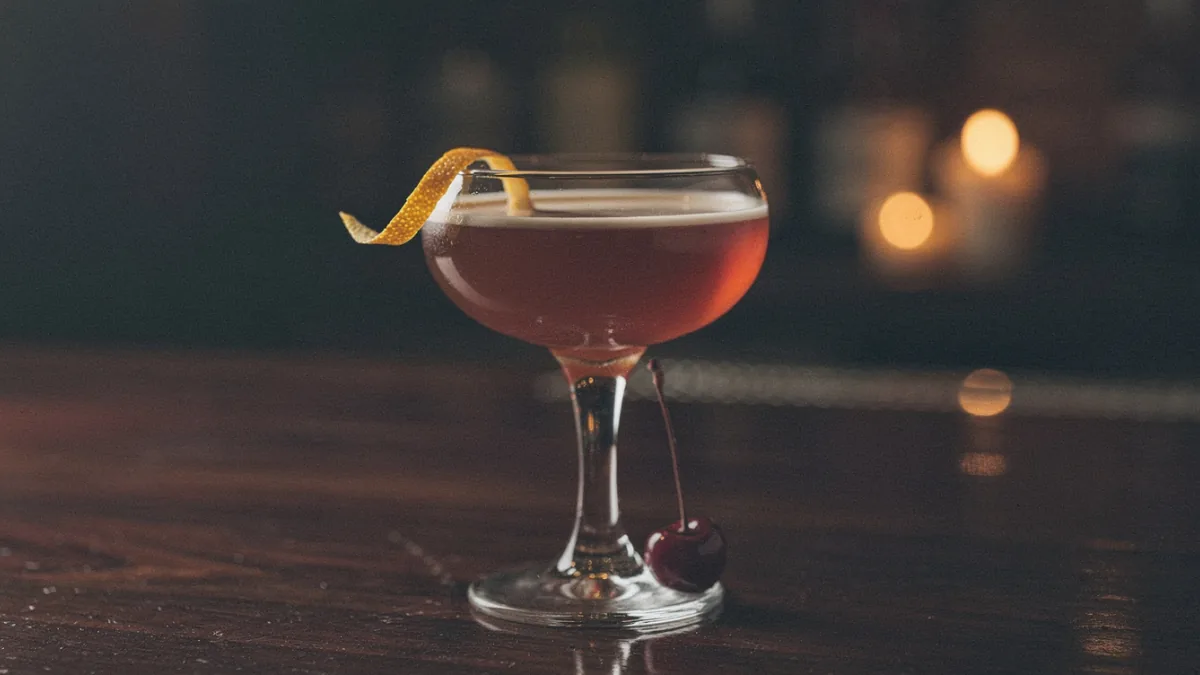
Preparation
- Pre-chill the serving glass. Add all ingredients to a mixing glass with plenty of ice.
- Stir with a long spoon until the mixture is well chilled and slightly diluted, about 20–30 seconds as a starting point.
- Strain through a bar strainer into the chilled glass, leaving the stirring ice behind.
- Finish by garnishing: orange zest and cocktail cherry.
What does it taste like?
The drink is bold and warming. First you taste the rye whiskey with its peppery spice, close beside it stands the Cognac with soft fruit notes from the grape. Sweet vermouth is a wine infused with herbs; it rounds everything out and adds a touch of sweetness. A bar spoon of Bénédictine lays honey and herbal tones over the top. The bitters add a light bitterness and plenty of spice. Because no juice is added, everything stays concentrated. Stirring chills the cocktail and dilutes it in a controlled way with melting ice. In the end, a spicy warmth lingers on the palate.
When does it work best?
This suits the late evening, after dinner, with no rush. The base is 30 ml each of whiskey, Cognac, and vermouth. Add Bénédictine, bitters, and the melt water from stirring. Anyone who enjoys sipping whisky or Cognac neat will find much that's familiar here. Beginners are better off easing in slowly. The drink is only sweet at the edges, the herbs stand out clearly, and one glass is usually enough.
What matters
Bénédictine is sweet and richly spiced. One bar spoon ties whiskey and Cognac together; two spoons push both aside and make the drink cloying. So really measure the liqueur carefully. Stir for 20 to 30 seconds with plenty of ice, until the glass frosts on the outside. Stirred too briefly it tastes sharp, too long and it turns thin.
Where the drink comes from
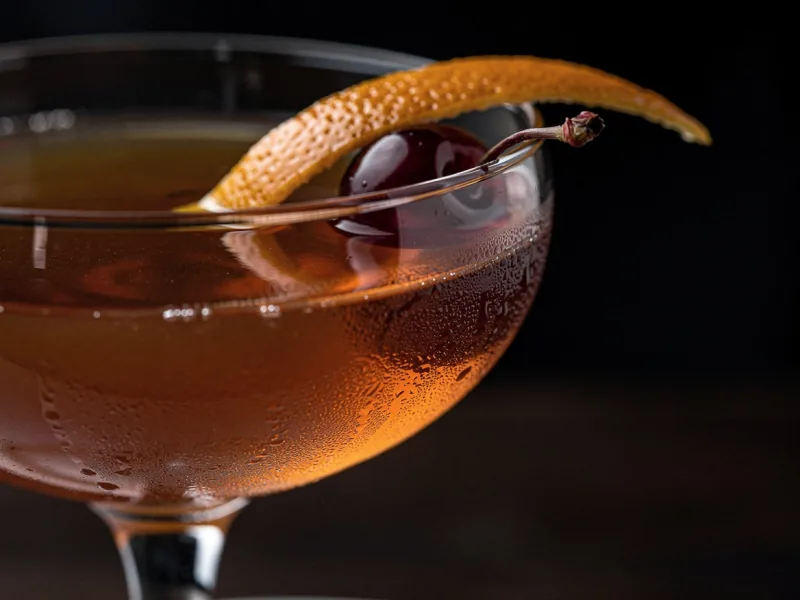
The Vieux Carré comes from New Orleans. Walter Bergeron of the Hotel Monteleone is credited as its creator; the recipe is documented from the 1930s. Its name refers to the French Quarter, a neighborhood of this city. That grain spirit and brandy stand side by side in equal measure in the glass reflects the bar tradition it comes from. Today's versions differ from one another, for instance in the bitters and the glassware. This changes little about the basic idea: three equal parts, tied together by a spoonful of liqueur.