Preparation
- Cut the half citrus slices into quarters. Add them to the shaker with the sherry and sugar.
- Shake briskly with ice.
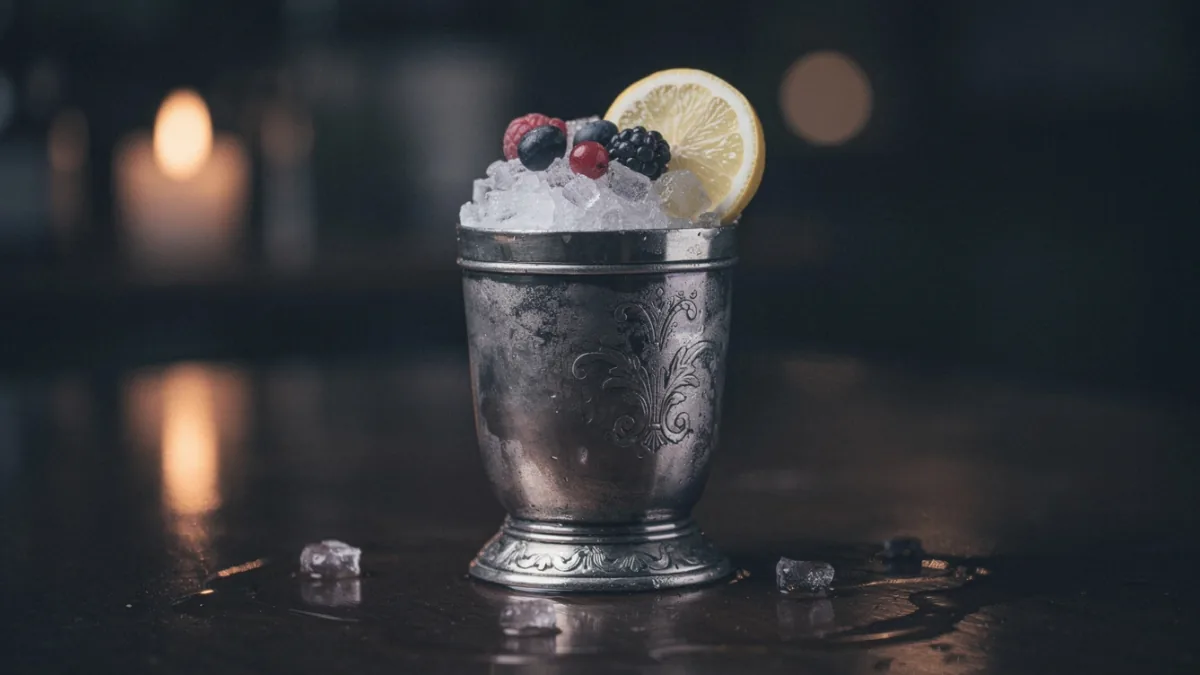
- Strain through a bar strainer into a cup filled with crushed ice.
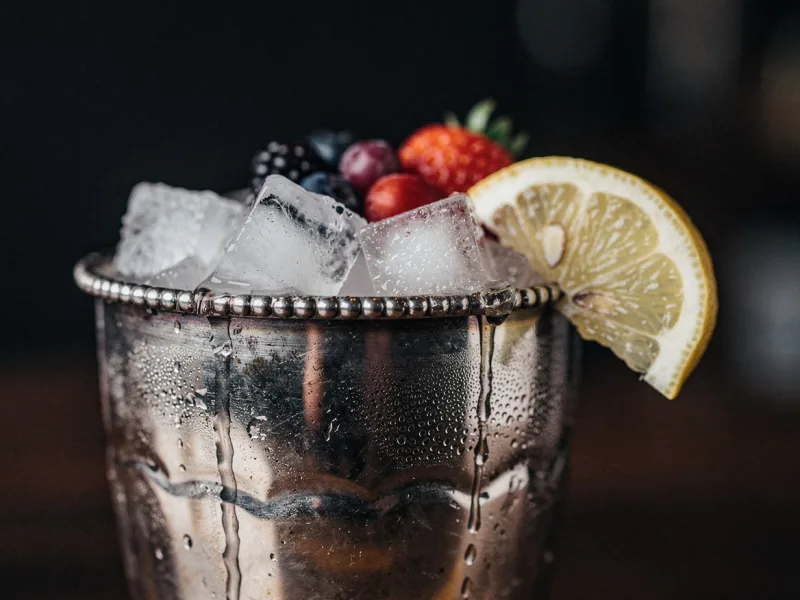
- Finish with a garnish: fresh berries plus orange and lemon quarters.
What does it taste like?
Dry and nutty—that's how this cocktail begins. Both sherries bring this character, as neither is a sweet wine. A teaspoon of sugar only rounds off the edges, without making the glass sweet. The orange and lemon pieces release juice and a bit of zest oil, giving the drink a fresh, lightly bitter quality. Crushed ice melts quickly, and that's exactly the point: the Cobbler grows thinner and colder the longer you drink it. With 90 ml of sherry and no added spirit, it stays comparatively light.
When does it work best?
A Cobbler suits the afternoon, pairs well with food, and makes a fine opener for the evening. It's noticeably lighter than most cocktails since wine forms its base. Beginners handle it well, as long as they enjoy dry drinks. Anyone seeking sweetness will be disappointed. It tastes especially good on warm days, with plenty of crushed ice in the cup.
What matters
Stick with dry sherry styles. Sweet varieties like PX combined with the sugar create a completely different drink—much heavier and more syrupy. Cut the half citrus slices really small so they release more juice and oil during shaking. Shake briskly and not too long, or the sherry becomes diluted. Feel free to be generous with the ice: the cup should be filled to the brim.
Where the drink comes from
The Sherry Cobbler became well known in the USA during the 1830s. It was one of the first drinks to make heavy use of ice, and it achieved international success. Wine, sugar, fruit, and crushed ice were a genuine alternative back then to the strong, spirit-forward cocktails of the era. Its popularity is even reflected in the literature of the time. The lavish presentation remains part of the drink today: a mound of crushed ice, berries piled on top, citrus quarters at the rim. Here, the eye is deliberately meant to drink along.