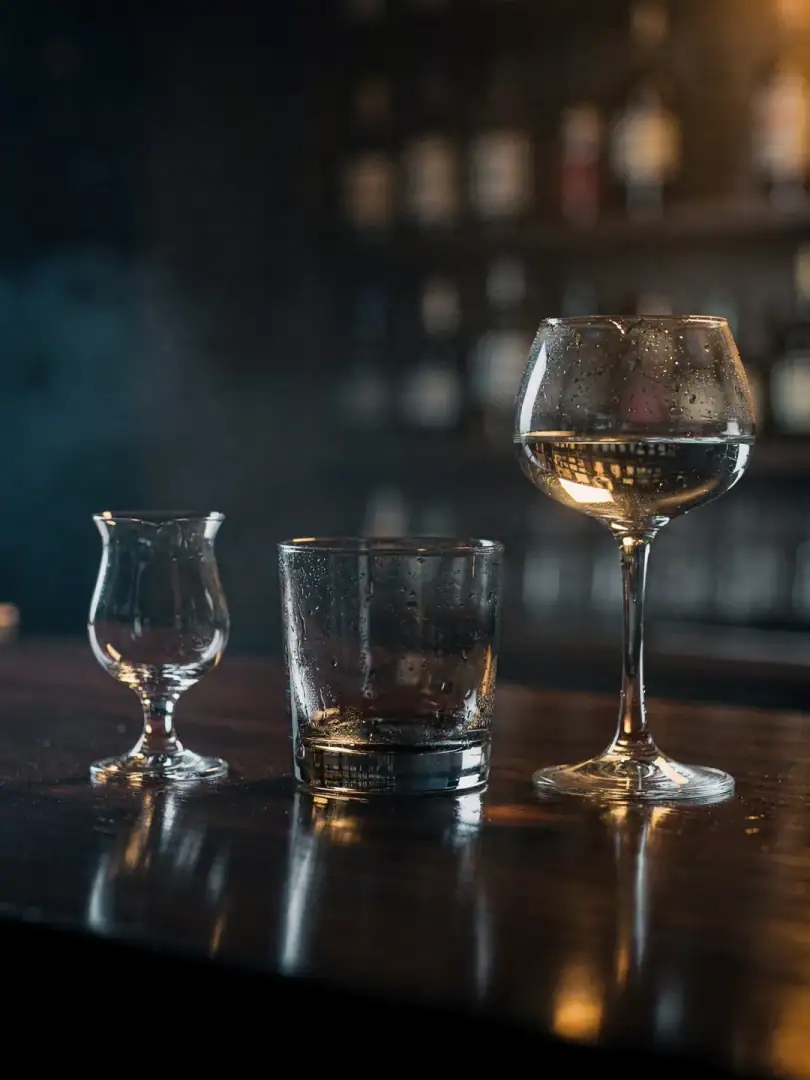
Nosing Glass, Tumbler, Copa
Glassware
The glass you choose changes how strongly you smell the aromas and how warm the gin stays. Nosing glasses, tumblers, and copas each serve very different purposes.
The Nosing Glass for Concentrated Tasting
A nosing glass — often a small, tulip-shaped glass similar to a whisky nosing glass — narrows toward the top. This shape concentrates the vapors at the opening and directs them toward the nose. As a result, you can smell much more clearly which botanicals are present in the gin: juniper, citrus, coriander, or even finer notes like iris or cardamom. For a serious tasting, where you want to analyze a gin closely, this glass is the best choice.
The downside: a nosing glass is impractical for everyday use, since it's small and only suited for neat samples. Nobody drinks a whole gin and tonic from one. It serves a single purpose — concentrated analysis — and that's exactly why tasters and distilleries use it during quality tastings, when details would otherwise get lost in a larger glass.
Tumbler and Copa for Everyday Enjoyment
The tumbler is the classic, straight-sided glass without a stem, familiar from whisky or gin and tonic. It's sturdy, easy to handle, and works well for gin served over plenty of ice, since it's wide enough to hold several ice cubes or a large ice ball. Its downside: the wide opening lets aromas escape quickly, especially when a lot of ice pushes cold air upward.
The copa — a bulbous, stemmed glass named after the Spanish word for goblet — has become the go-to choice for gin and tonic, because it combines both qualities: enough room for ice and garnish, plus a slightly narrowing opening that concentrates the aromas somewhat before they escape. The stem also keeps your hand away from the bowl, helping the gin stay cooler longer. For a relaxed round of gin and tonic with friends, the copa is often the most practical choice.
Which Glass Suits Which Occasion
If you want to seriously judge a gin for the first time, reach for a nosing glass, or failing that, a regular wine glass with a slightly narrowing shape — the key is that the opening is narrower than the bowl. For a relaxed evening gin and tonic, a tumbler or copa is perfectly sufficient, since drinking comfort matters more here than analytical precision.
Some distilleries and bars even use both glasses in sequence during official tastings: first the nosing glass for the neat analysis, then the copa or tumbler for the finished drink. This makes it possible to compare how a gin changes from the concentrated tasting to the mixed drink — and how much of the finer aromas still come through in the finished glass.
Consider Capacity and Fill Level
The size of the glass matters too. A glass that's too small fills up almost entirely with ice, leaving hardly any room for the actual gin. This quickly leads to over-dilution. A glass that's too large, on the other hand, tempts you to pour more gin than intended. For a tasting, two to four centiliters is usually enough; for a finished gin and tonic, aim for around four to six centiliters, topped up generously with ice and tonic water.
The material of the glass matters as well. Thick-walled glasses hold the cold longer, while thin-walled ones transfer temperature changes faster, warming the gin more quickly. For a pure aroma tasting, this barely matters. But for a longer drink over ice, a slightly thicker glass is worth choosing, as it preserves the chill longer and prevents the drink from watering down too quickly.