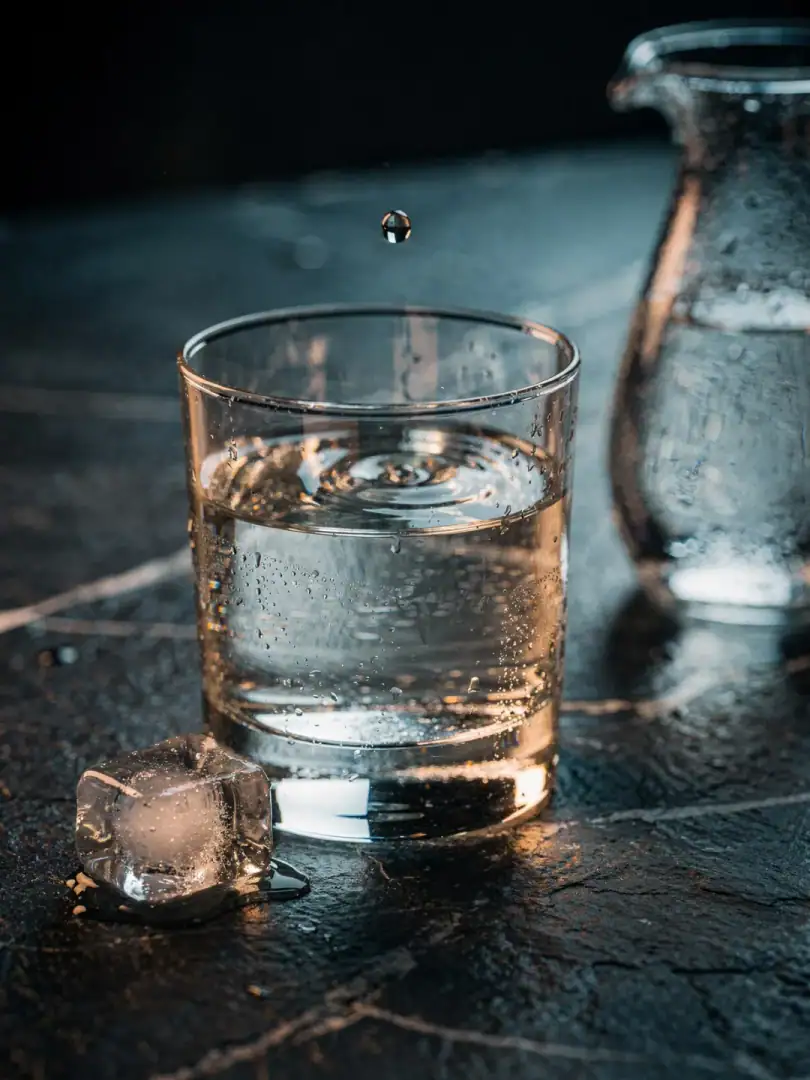
Room Temperature, Ice, a Drop of Water
Temperature & Water
Temperature and a single drop of water change how strongly you smell the aromas and how sharp the alcohol feels. Both are part of a mindful tasting.
Why Room Temperature Reveals More Aromas
Cold suppresses aromas. An ice-cold gin smells and tastes flatter, because low temperature slows the evaporation of aromatic compounds — the very molecules responsible for scent and flavor become sluggish in the cold. That's why tasters try a new gin at room temperature first, usually around 64–68°F (18–20°C). At this temperature, juniper, citrus, and finer botanicals show themselves most clearly.
This doesn't mean gin should be drunk at room temperature — in a gin and tonic or neat over ice, chill is more pleasant for many drinkers, and cold also masks some sharpness. But for analysis, when you want to know what a gin can truly deliver, the slightly warmer tasting is the more honest test.
What Ice Does to the Flavor
Ice both chills and dilutes at the same time. As soon as it melts, water mixes into the gin, changing the balance: alcohol sharpness decreases, some aromas become rounder as a result, while others get lost. Large ice cubes or an ice ball melt more slowly than crushed ice and therefore dilute less quickly — one reason why bars often favor large, dense ice formats.
During a tasting, ice should therefore be used with caution. Tasting a gin over ice means you're no longer measuring the pure gin, but a constantly changing mixture. Ice is hardly suitable for an initial assessment — only once you already know the neat flavor does tasting over ice show how the gin behaves in the finished drink.
The Drop of Water: A Taster's Trick
A single drop of still water, added directly to the glass, can practically open up a gin. This method comes from whisky tasting but works for gin too: the water slightly lowers the alcohol content, reducing the sharpness that would otherwise mask finer aromas. Afterward, you can often pick up notes that were previously hidden behind the alcohol, such as delicate floral tones or spices.
Dosage matters here: one or two drops is usually enough — more water quickly dilutes the gin and blurs the very nuances you're trying to uncover. It's best to taste the gin first without water, then add it drop by drop, smelling and tasting again after each one. This way, you'll notice exactly the point at which the gin shows itself most clearly, before it becomes too thin.
Distinguishing Serving Temperature from Storage Temperature
The temperature at which you taste is different from the temperature at which you store the gin. For storage, room temperature in a dark place is entirely sufficient, since gin, as a high-proof spirit, doesn't mature further like wine and remains stable even in warmth over many months. For tasting itself, though, the rule still holds: a gin straight from the fridge shows less than it could. If you keep a bottle chilled, let it sit at room temperature for a while before a serious tasting.
Ten to fifteen minutes outside the fridge is usually enough for the gin to approach room temperature. After that, the full range of aromas comes through much more clearly than straight from the cold. This short wait is especially worthwhile when judging a new gin for the first time and seeking as honest an impression as possible, before enjoying it chilled or over ice later on. If you're testing several gins in a row, make sure all samples are roughly the same temperature. Otherwise, you end up comparing not the gins themselves, but glasses of different warmth, which skews the results of the whole tasting.