Origin of the Word
Rumbullion and Kill-Devil: Where Does Rum Get Its Name?
The word "rum" is probably a shortened form of "rumbullion," a Devonshire word for great tumult. "Rumbullion" is documented in Barbados in 1651, with the short form "rum" appearing shortly after. This derivation isn't proven, but the known alternatives are supported by even weaker evidence.
Rumbullion: The Oldest Record from 1651
The earliest known reference comes from Giles Silvester, a planter in Barbados. In 1651 he wrote that the chief drink for getting drunk, which was made on the island, was called Rumbullion, alias Kill-Divill. This sentence reveals a lot about the state of things at the time. Rum was an intoxicant of the island, not a product for enjoyment, and it already had two popular names.
"Rumbullion" was a word used in southwest England, especially Devonshire, for a great tumult or uproar. Many of the early settlers in Barbados came from this region. The explanation seems obvious: a spirit that causes an uproar gets named after a riot. Etymologists consider this the most likely derivation. However, no document explicitly makes this connection.
Kill-Devil: The Devil-Killer from the Sugar Kettle
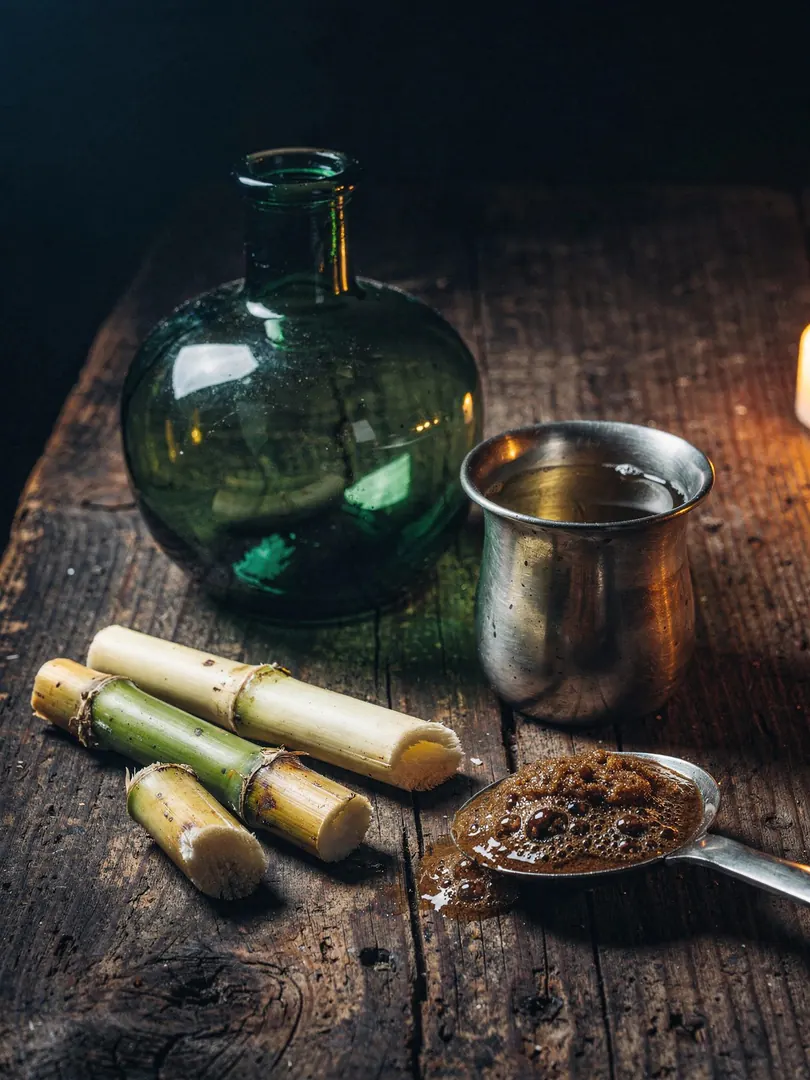
The second name sounds more drastic and was just as widespread in the early decades. Richard Ligon lived in Barbados from 1647 to 1650 and published a description of the island in 1657. In it, he mentions the island's drink, made from the foam of the copper kettles in which sugar is boiled, calling it Kill-Divell. This is also one of the earliest descriptions of how alcohol was made from sugarcane in Barbados.
How harsh this early spirit must have been is shown by an order from New England. In 1654, the General Court of the Connecticut Colony ordered the seizure of all Barbados spirits commonly called rum, kill-devil, and the like. This provides written evidence of the short word "rum" by that year at the latest. "Kill-Devil" later disappeared from English, while "rum" prevailed.
Whether the name Kill-Devil meant that the spirit itself could kill the devil, or rather its drinkers, remains unclear. Both readings fit what is known about early rum. It was drunk fresh from the still, unaged, very strong, and full of fusel oils—unwanted byproducts of fermentation. It had little in common with today's aged rum.
Saccharum, Rummer, Römer: Which Derivations Lack Evidence
Other explanations circulate online and on bottle labels. One derives "rum" from the final syllable of the Latin "saccharum," the botanical name for sugarcane. A second points to the drinking glass "rummer," the German and Dutch Römer glass. A third sees the origin in the old English slang word "rum," meaning good or splendid.
None of these variants has any evidence that is older or closer to Barbados than "rumbullion." They should therefore be read as speculation. To be precise, one should write: the name probably comes from "rumbullion"; all that's certain is that it appears in Barbados around 1650.
Why do these weaker explanations persist so stubbornly? "Saccharum" sounds learned and seems to fit the raw material, while the Römer glass offers a nice image for labels and bar menus. Both seem plausible, but both were searched out after the fact to explain the name. "Rumbullion," on the other hand, has the advantage of appearing in exactly the right place and time when the drink emerged, and it aptly describes the character of the early spirit.
Rhum, Ron, Tafia: What Is Rum Called in Other Languages?
From the English "rum," other colonial languages developed their own forms. The French write "rhum" with an h, while Spanish-speaking countries say "ron." Today, these spellings are more than just translations—they often signify a style. "Rhum" is associated with the French islands and juice-based rum, "ron" with light, aged molasses rums from Cuba, Puerto Rico, or Venezuela.
In the French colonies, there was also the word "tafia" for simple, usually unaged sugarcane spirit from the plantations. It lives on in German statistics: the German Spirits Industry Association still lists its market figures today under "Rum, Arrak, Taffia." The 19th-century American temperance movement's battle cry "Demon Rum" also shows how firmly the name had come to stand for liquor in general.