Rum and Slavery
Sugar, Rum, and Enslavement: The Atlantic Triangular Trade
Rum was part of the Atlantic slave trade. Sugarcane was grown and processed on plantations by enslaved people, and rum from New England and the Caribbean was traded for human beings along the West African coast. What is documented—and what the triangle model oversimplifies.
Who Produced the Sugar Used for Rum?
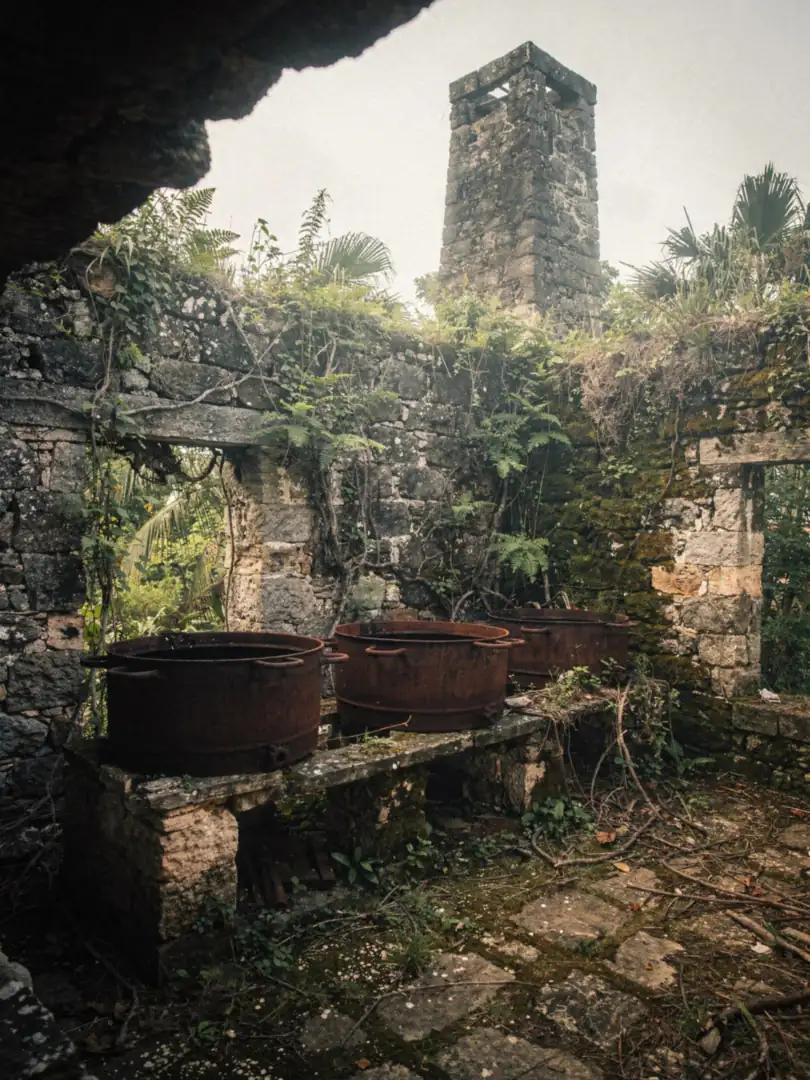
In the 17th and 18th centuries, sugar was one of the world's most valuable trade goods. Plantations arose in Barbados and later in Jamaica, Saint-Domingue, Martinique, Guadeloupe, and Cuba, operated almost exclusively by enslaved people from Africa. They cut the cane, powered the mills, tended the boiling coppers, and also worked in the distilleries.
The work was hard and dangerous; during harvest season, mills and coppers often ran day and night. Many people died after just a few years, and plantations replaced them with newly trafficked people. Rum was not a side issue in this system. It made use of the molasses that would otherwise have been waste, making the plantations even more profitable. In some cases, it was also given out to the enslaved people themselves.
Barbados shows how quickly a society could be transformed by this. When the island switched to sugar in the 1640s, planters increasingly replaced white indentured servants from Europe with people trafficked from Africa. Within a few decades, the majority of the island's population was enslaved. The model of the sugar island—plantation, mill, boiling house, and distillery—was later adopted in Jamaica and the French islands.
What Was the Triangular Trade?
Textbooks like to describe the Atlantic trade as a triangle. Ships carried goods such as textiles, metal goods, weapons, and spirits to West Africa. There, people were purchased and transported across the Atlantic—a crossing known in English as the Middle Passage. In the Americas, the survivors were sold, and the ships returned with sugar, molasses, and rum.
The database SlaveVoyages has reconstructed how many people were affected, using ship registers. According to this data, over roughly 366 years, slave ships carried about 12.5 million people from Africa out to sea, and about 10.7 million arrived in the Americas. Around 1.8 million people died during the crossing alone.
The triangle itself is a simplification. Many ships only sailed two legs back and forth, for example between New England and the Caribbean, and many slave ships returned without cargo or with bills of exchange instead of sugar. The model helps explain the overall web of connections, not every individual voyage.
Rum as a Trade Good: Guinea Rum and the Rum Men
Rhode Island illustrates especially clearly what rum was used for in the slave trade. Merchants from this small New England colony outfitted at least 934 slaving voyages to Africa between 1709 and 1807, trafficking an estimated 106,000 people. Their most important trade good was a particularly strong rum made from Caribbean molasses, known as Guinea rum. The captains were called Rum Men.
Prosperity in Europe was also tied to rum. Flensburg, for example, traded in rum and sugar from the Danish West Indies starting in 1755, whose plantations relied on enslaved labor. The city has addressed this history in exhibitions. More on this in the chapter on rum in Central Europe.
One important point of context: rum was not the cause of the slave trade, nor was it the only trade good. Textiles, metal goods, and weapons made up the larger share of cargo at many coastal trading posts. But rum linked the chain together. It was produced through the labor of enslaved people, it paid for new abductions, and its raw material, molasses, flowed into the distilleries of New England.
When Did Slavery End in Rum-Producing Countries?
Britain banned the slave trade in 1807; slavery itself ended in the British colonies in 1834, followed by several years of forced apprenticeship. France and Denmark abolished it in 1848, Cuba in 1886, Brazil in 1888. Afterward, plantations in Guyana, Trinidad, and Mauritius brought in indentured laborers from India, who worked under harsh conditions.
The industry has since become more open about this history. The brand Plantation has been called Planteray since January 9, 2024, following a debate over the word "plantation" that began in 2020. For readers, this means: behind many old distilleries and brand names lies a history of enslavement, and it deserves to be told honestly, without romanticizing it.