Rum in the dough
Baking with rum: which rum for stollen, Herrencreme, rum balls?
For baking, a flavor-forward rum at 40 percent or higher works best: dark molasses rum, Inländerrum, or in small amounts, an ester-rich Jamaica rum. Rum-Verschnitt is common but brings less rum flavor. What matters most is whether the dough goes into the oven or the rum stays raw in a cream or rum ball.
Which rum for baking? Flavor beats age
Subtle barrel notes get lost in the oven. A twelve-year-old rum with delicate oak is wasted in dough, since butter, sugar, and spices will overpower it. What's needed is a rum loud enough to be heard: a dark molasses rum with caramel, a Jamaica rum with fruity esters, or an Austrian Inländerrum with its distinctive essence.
Jamaica distills so-called high-ester rums, sold commercially as Continental Flavoured. They contain roughly 700 to 1,600 grams of esters per hectoliter of pure alcohol, while ordinary drinking rum typically runs 80 to 150. These rums mainly serve as flavoring rum for blending, used in baked goods and confectionery across Europe. That's why old recipes often specifically call for Jamaica rum: just a few drops deliver a lot of aroma.
Color is no measure of quality here. Brown rum can be colored with caramel coloring, which changes essentially nothing about the taste in dough. In Germany, the note “mit Farbstoff” (with coloring) on the label reveals that color has been added.
Rum, Rum-Verschnitt, Inländerrum, rum flavoring: what's the difference?
Rum-Verschnitt is a German specialty. It's blended from rum and agricultural ethyl alcohol, meaning flavor-neutral alcohol. Only a minimum of five percent of the alcohol must come from rum. Legally, it's a spirit drink, not rum, and the word Verschnitt must appear on the label just as large as the word Rum. It's common for baking, though its flavor is noticeably weaker.
Inländerrum from Austria is a protected geographical indication among other spirit drinks. Since January 1, 1999, all of its alcohol has come from rum, flavored with Inländerrum essence, itself distilled from rum distillate in Austria. Before that, it was an imitation rum made from diluted neutral spirit. It holds at least 38 percent alcohol and is the standard in Austrian pastries and baked goods.
Rum flavoring in small bottles isn't rum at all. According to the ingredient lists of common products, it consists of flavor compounds in water and propylene glycol, a carrier substance, and contains no alcohol. It smells like brown rum because it contains similar esters. For baked goods that children will eat too, it's a practical solution, though the flavor stays one-dimensional.
Stollen with rum: soaking the fruit rather than drenching the dough
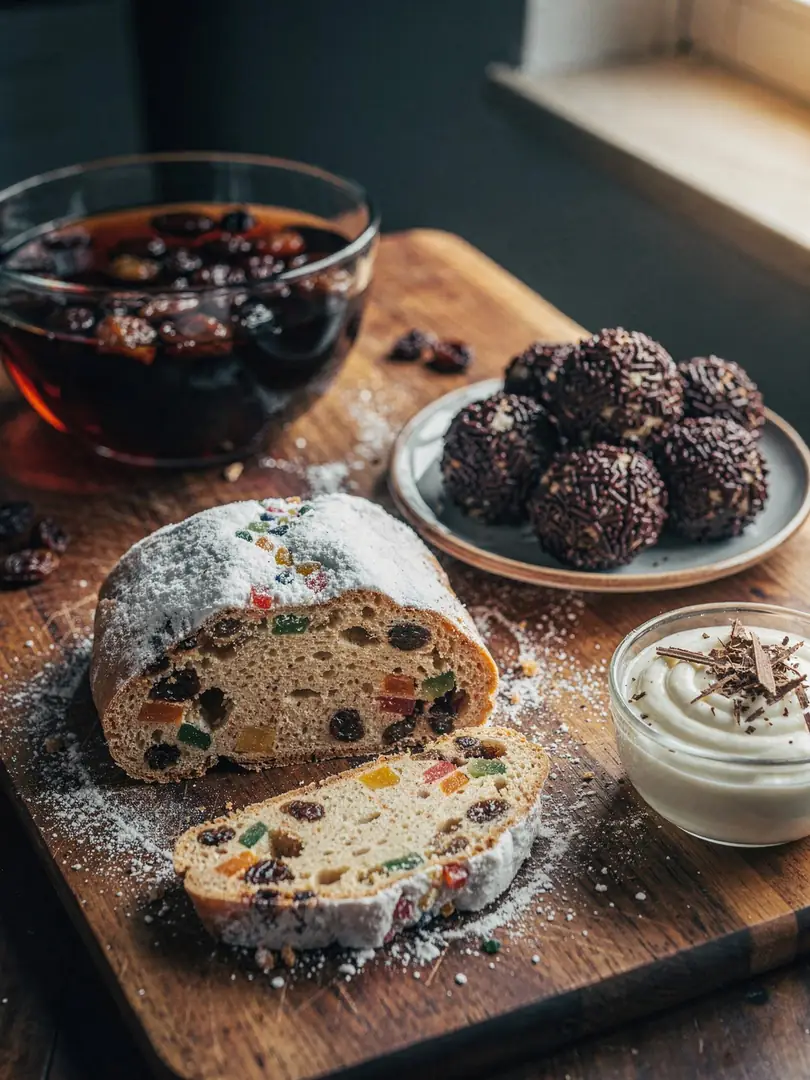
In stollen, the rum does most of its work in the fruit. Raisins, candied orange peel, and candied lemon peel are soaked in rum the day before so they absorb it fully. During baking, they then stay juicy and don't pull moisture from the dough. The fruit should soak up the rum completely; whatever's left over makes the dough wet and heavy.
A Jamaica rum or Inländerrum at 40 to 54 percent gives stollen a clear aroma even weeks into storage. A mild white rum, by contrast, disappears almost without a trace. Long baking evaporates part of the alcohol, but not all of it. How much remains depends on baking time and shape, covered in more detail in the chapter on cooking with rum.
Herrencreme and rum balls: rum with no oven involved
Herrencreme, a dessert from Westphalia, consists of vanilla pudding, whipped cream, chocolate shavings, and rum. The rum goes into the cold cream, so its alcohol stays fully intact. That's why every flaw shows here. A mild, aged rum works better than a sharp young one, and an overproof rum at 60 percent or higher is too much of a good thing.
Rum balls are made from leftover cake or melted chocolate, butter, powdered sugar, and rum, then rolled in chocolate sprinkles. They too see no oven. For a version suitable for kids, use rum flavoring or orange juice instead. With store-bought rum balls, the ingredient list reveals whether real rum, Rum-Verschnitt, or just flavoring is inside.
The basic rule: the less heat a recipe involves, the more alcohol survives, and the better the rum needs to taste on its own.