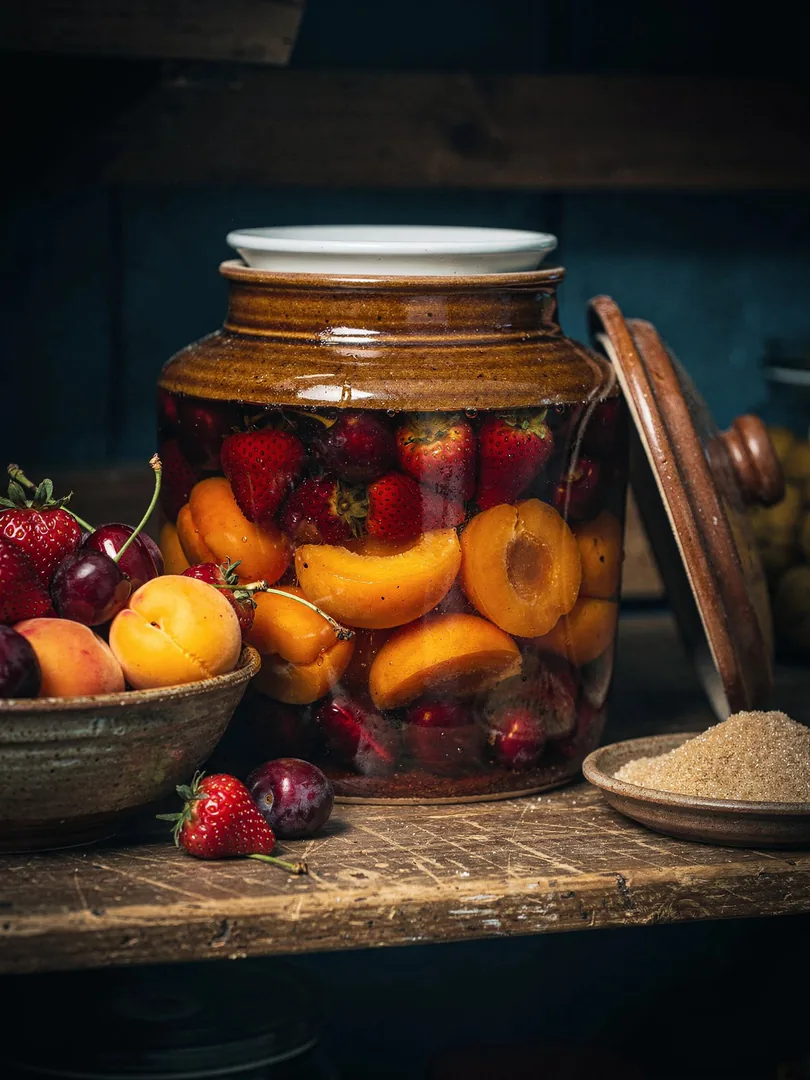
Summer in a stoneware crock
Rum pot: which rum, what proof?
For a rum pot, most recipes call for rum or Rum-Verschnitt at 54 percent, since the fruit releases juice that dilutes the alcohol over months. At 40 percent, it gets risky. The fruit must always stay submerged, and most recipes call for 250 grams of sugar per 500 grams of fruit.
Which rum for a rum pot? Why 54 percent
A rum pot is a method of preservation. From June through autumn, seasonal fruits are layered with sugar and rum in a vessel, layer by layer, and left to steep until winter. The alcohol does the job that heat or vinegar would otherwise do: it keeps yeasts, molds, and bacteria in check, as long as there's enough of it in the pot.
The challenge is water. Strawberries, peaches, or plums are mostly juice, and with the help of sugar, they release that juice into the rum. With every added layer, the alcohol content in the pot drops. That's why most recipes call for rum at 54 percent: it has enough reserve strength that, even after months, enough alcohol remains to prevent any yeast from fermenting again. At 40 percent, this only works if you top it up generously along the way.
When it comes to flavor, a brown molasses rum with caramel is the usual choice, because it lets the fruit take center stage. A strongly ester-driven Jamaica rum dominates quickly and turns every fruit into banana. A rhum agricole brings grassy, peppery notes that not everyone enjoys in a rumtopf.
Rum blend, domestic rum, or genuine rum for the rumtopf?
On the shelf, bottles at 54 percent often sold for rumtopf are, strictly speaking, rum blends. This is permitted and common, but not rum in the legal sense. Only at least five percent of the alcohol comes from rum, the rest is neutral alcohol of agricultural origin. The rumtopf then tastes mainly of fruit and sugar, less of rum.
Genuine rum at 54 percent gives more depth—caramel, molasses, and a touch of wood. Domestic rum also comes at this strength. It brings the aroma familiar from Austrian pastries and noticeably changes the character of the rumtopf. Overproof at 70 or 80 percent isn't necessary. It tastes harsh, numbs the fruit, and makes the result needlessly strong.
Anyone with a choice should smell the glass beforehand. A rum that seems unpleasantly sharp or hollow neat won't improve after six months with plums. The fruit takes on the flavor—it doesn't mask it.
Starting a rumtopf: sugar, fruit, order
The classic begins in June with strawberries. Most recipes call for 250 grams of sugar per 500 grams of fruit; some use equal parts sugar and fruit for the first layer. The fruit is washed, dried thoroughly, pitted, and cut into pieces, mixed with the sugar, and left to macerate briefly. Then enough rum is added to the pot to cover everything well.
Over the summer, cherries, currants, apricots, peaches, pears, and plums follow, each variety as its own layer. Fruit floating on top is pressed down with a small plate, since anything exposed to air can mold. Many recipes advise against bananas, apples, rhubarb, and citrus fruits, as they fall apart, stay hard, or are too sour. Blueberries turn the whole pot dark.
Traditionally, a lidded stoneware crock serves as the vessel, keeping out light. It's kept cool and dark. Metal containers are unsuitable, since fruit acid can attack the metal. The layers are not stirred together, so the fruit stays whole.
When is the rumtopf ready, and how much alcohol does it contain?
After the final layer in autumn, the pot needs at least four more weeks to rest. Traditionally, it's opened on the first Sunday of Advent. By then the fruit has absorbed the flavors, and the juice has turned dark and syrupy. It's served over vanilla ice cream, semolina pudding, or pancakes, with the juice also enjoyed as a small digestif.
Both fruit and juice contain a good deal of alcohol, and the sugar masks it. A scoop of ice cream with rumtopf fruit is no harmless fruit dessert, even though it tastes like one. Children, pregnant women, and anyone planning to drive should abstain. When serving guests, say what's in the bowl.
If foam, bubbles, or a sour fermentation smell appear, the alcohol level has dropped too low. Topping it up quickly with high-proof rum helps. Mold on the surface, however, is reason to discard the pot. Well-covered, the fruit often keeps until spring, though it softens over time.