Island cuisines at a glance
Caribbean cuisine and rum: Jerk, Accras, Colombo, Flying Fish
In the Caribbean, each island's own rum usually accompanies its food: a robust Jamaica rum, lengthened with ginger or lime, for Jamaica's jerk; an agricole for accras and colombo on Martinique and Guadeloupe; a mild molasses rum for flying fish on Barbados. Neat rum is usually reserved for after the meal.
What do people eat in the Caribbean with rum?
There's no single unified Caribbean cuisine. Each island combines indigenous ingredients, African cooking techniques, European trade goods, and later Indian and Chinese influences in its own way. Sugarcane was grown and processed on plantations by enslaved people. Many dishes emerged from what they were allotted or what they grew themselves on small plots.
What the cuisines share is bold seasoning, the acidity of lime, and the heat of chili. This is why rum is rarely drunk neat with the main course there. Common instead are punch, rum with water or soda, or rum worked straight into the marinade. Neat rum tends to follow the meal, once the heat has faded.
A thread linking many islands is saltfish, dried and salted cod. It arrived as a durable good through Atlantic trade and became a plantation staple. Today it appears in accras, in saltfish fritters, and in Jamaica's national dish, ackee and saltfish.
Jamaica: jerk and a rum with edges
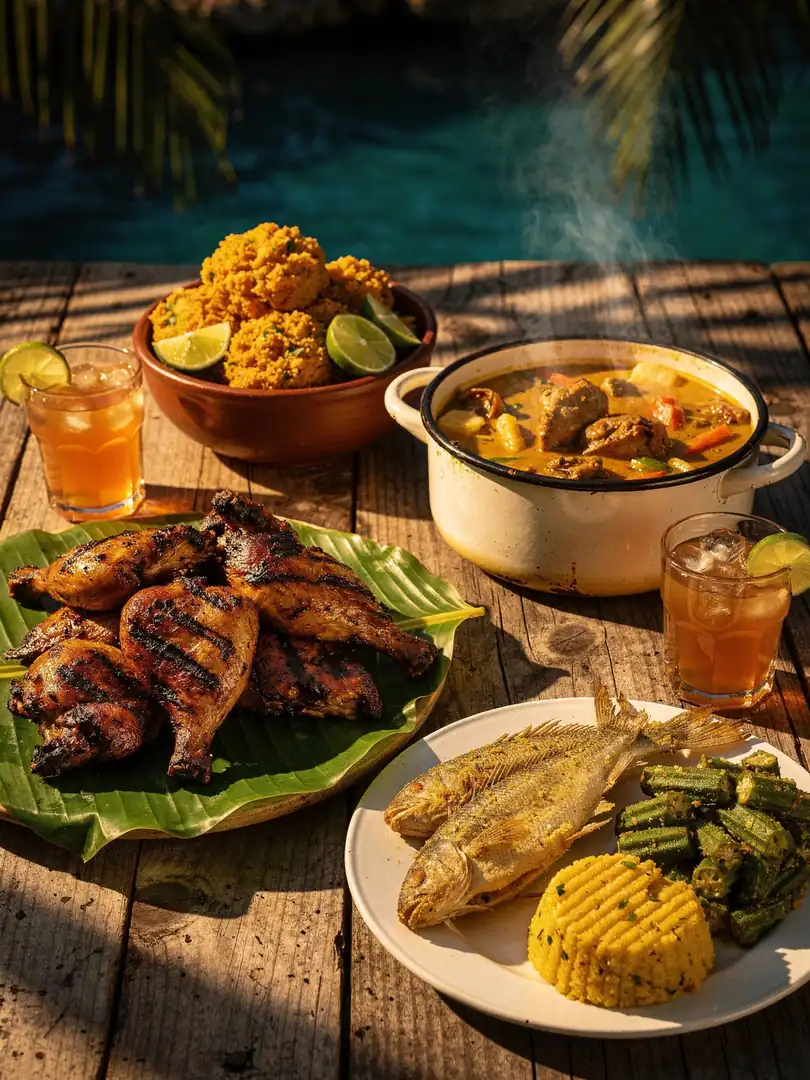
Jerk is a seasoning method. Meat, usually chicken or pork, is marinated in a paste of allspice, Scotch bonnet chili, thyme, and scallions, then slow-cooked over wood, traditionally the wood of the allspice tree itself. Allspice, also called pimento in English, is native to Jamaica. Tradition holds that the method traces back to the Maroons, people who had fled slavery into the mountains.
A robust, unsweetened Jamaica rum pairs well, best lengthened with ginger soda or soda water and lime. Its notes of banana and ripe pineapple stand opposite the allspice seasoning, and the cold, fizzy mix tames the chili. Neat and at full strength, the alcohol would only intensify the burn.
Martinique and Guadeloupe: accras, colombo, and agricole
Accras de morue are fried fritters made of batter, flaked saltfish, herbs, and chili. They're served before the meal, often alongside a Ti' Punch made of rhum agricole blanc, lime, and cane sugar. The grassy, dry cane-juice rum cuts through the frying fat, and the lime refreshes the palate.
Colombo is both a stew and the name of its spice blend of turmeric, coriander, cumin, fenugreek, and mustard seed. It arrived with contract laborers from South India, brought to the islands after slavery was abolished in the French colonies in 1848. An agricole aged élevé sous bois for at least twelve months in wood pairs well with chicken or goat colombo. It brings a touch of roundness without masking the spices.
Barbados, Guyana, Trinidad: flying fish, pepperpot, black cake
The national dish of Barbados is flying fish with cou-cou, a firm porridge of cornmeal and okra, served with a spicy sauce. The fish is delicate, so a mild, aged Barbados rum with vanilla and banana suits it better than a loud rum. Rum is an everyday fixture on the island, and rum shops are part of the landscape in many villages.
In Guyana, pepperpot is cooked at Christmas, a dark meat stew made with cassareep, a reduced cassava juice. It is bitter, sweet, and savory all at once. The country's heavy Demerara rums, some distilled in old wooden pot stills, have the depth to match.
In Trinidad, Jamaica, and many other islands, black cake is a Christmas tradition. For this dark fruitcake, raisins, prunes, and cherries are often soaked in rum and sweet wine for weeks or even months. Burnt sugar gives it its near-black color. More on the individual islands and their distilleries can be found in the Rum Journey regions.