Raw material, fermentation, cask
Aromas in Rum: From Banana to Leather, and Where They Come From
The aromas in rum come from three sources: the raw material, sugarcane; fermentation and distillation, which create fruity esters and other congeners; and the cask, which contributes vanilla, coconut, spice, and, over time, leather and tobacco notes. Knowing the source lets you place every note.
Banana, Pineapple, Glue: Fruit Aromas from Fermentation
When a rum smells like overripe banana, it's usually isoamyl acetate at work. This ester forms during fermentation, when yeast converts sugar into alcohol and acids and alcohols react with each other along the way. Ethyl butyrate recalls pineapple, ethyl acetate in small amounts suggests pear, and in large amounts, nail polish remover.
How much of this forms depends largely on fermentation. Long, open fermentations with wild bacteria yield more acids and therefore more esters. Jamaican distilleries like Hampden rely on dunder, meaning the residue left in the still, and on bacteria-rich liquid from muck pits, to achieve this. The type of still then determines how much of it survives into the distillate: a pot still lets more through than a tall column.
Exactly how these processes unfold is covered in the journeys through fermentation and distillation. For tasting purposes, the rule of thumb is enough: fruit, glue, and solvent notes come from the fermentation room and the still, not from the cask.
Grass, Pepper, Olive: What the Raw Material Lets You Taste
The second group consists of aromas that come from the raw material itself. Rum made from fresh sugarcane juice often smells green and vegetal: cut grass, green bell pepper, black pepper, sometimes brine or olives. These notes survive because Rhum Agricole on Martinique is distilled to only 65 to 75 percent alcohol, retaining many congeners in the distillate.
Rum made from molasses, the dark syrup left over from sugar refining, tastes different. Here you're more likely to find brown sugar, caramel, licorice, toasted almond, toffee. The molasses has already been heated intensely, and some of its roasted notes carry over into the distillate. In a young, unfiltered molasses rum, these tones are easy to spot.
Vanilla, Coconut, Clove: What the Cask Contributes
Most rums age in used bourbon casks made of American white oak. The wood releases vanillin, the main component of vanilla, which forms from lignin, a wood component. Alongside this come oak lactones, reminiscent of coconut, and eugenol, which smells of clove. A 2016 analysis of two commercial rums published in the Journal of Agricultural and Food Chemistry found vanillin and whisky lactone among the strongest aromatic compounds.
This explains why many aged rums smell similarly of vanilla and coconut, no matter which island they come from. The cask shapes them powerfully. In tropical warehouses, wood extraction happens faster than in Europe, so even a few years can bring pronounced wood notes. Casks that previously held wine, sherry, or cognac additionally contribute dried fruit and nut notes.
Leather, Tobacco, Dried Fruit: Aromas of Long Aging
After many years in the cask, notes emerge that can't be directly traced to either of the first two sources. Leather, tobacco, coffee, dried plums, old furniture polish. These form through slow oxidation, meaning reactions with the oxygen that penetrates through the wood, and through compounds bonding between wood components and the distillate. In the cognac world, this tone is known as rancio.
Such aromas aren't guaranteed. A rum left too long in overly active wood can turn bitter, drying, and overly woody instead of complex. A good aged rum keeps the balance: the fruit from fermentation is still present, with wood and maturity layered over it.
Why Two People Smell Different Things in the Same Rum
Smelling is individual. Some people perceive certain compounds strongly, others barely at all, and everyone connects smells with their own memories. Someone who ate a lot of banana bread as a child might pick up that note faster. That's why there's no wrong answer in tasting, as long as you describe what you yourself perceive.
An aroma wheel helps here, a disc with terms arranged from broad to specific. You start at the outer ring with fruit and work your way inward to banana or pineapple. This builds your vocabulary, and with it, your ability to tell rums apart.
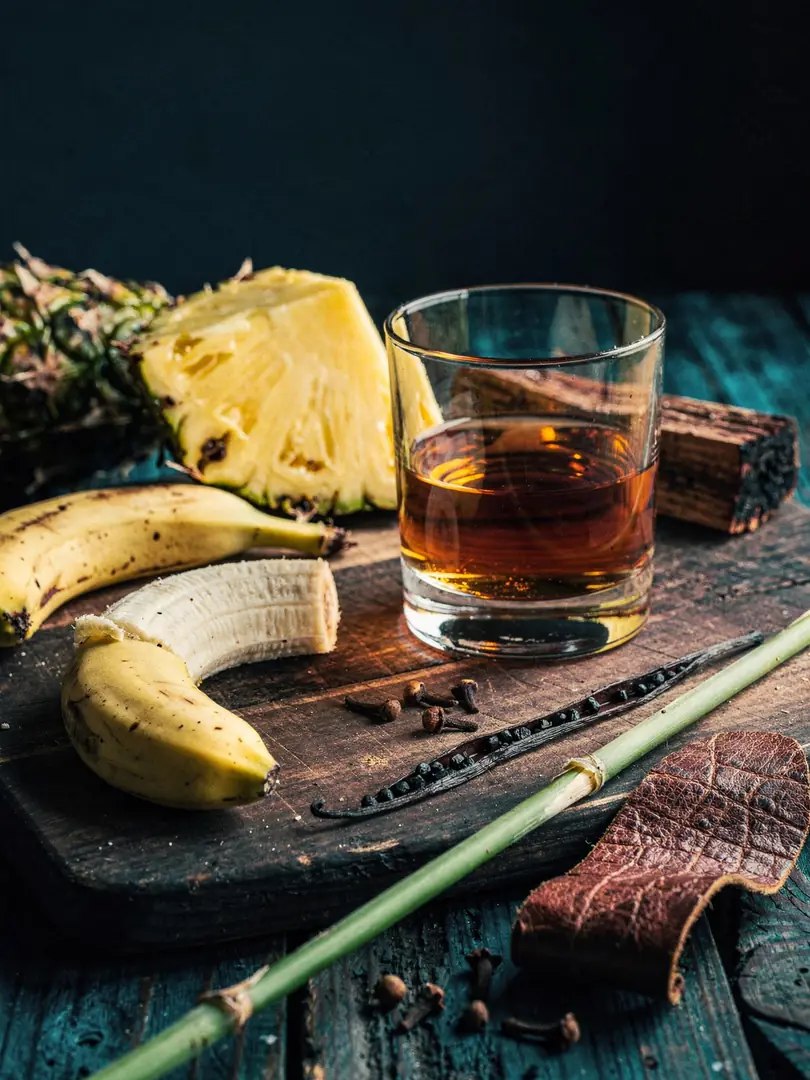
A simple exercise works without rum at all: smell banana, pineapple, vanilla pod, clove, and a piece of leather, and commit the impressions to memory. Once you know the template, it's easier to find it again in the glass. Professionals train exactly this way, with real foods instead of technical terms.