What deceives
Solvent notes, sugar heaviness, vanilla bomb: pitfalls in tasting
The three most common pitfalls in rum tasting are a solvent-like smell, which can be either a flaw or deliberate ester richness; added sugar, which masks sharpness and weaknesses; and dominant vanilla, which reveals more about the cask than about the distillate. Add to that palate fatigue and expectation.
Does the rum smell of solvent: flaw or style?
A smell like nail polish remover startles many tasters. Behind it is usually ethyl acetate, an ester that smells of pear and fruit in small amounts and of solvent in large amounts. In Jamaican rum from high ester classes, this note is intentional and part of the style. It then appears alongside ripe fruit and becomes rounder with air and time.
If, on the other hand, the rum stays one-dimensional, sharp, and hollow, that can indicate a poorly separated foreshot—the term for the first part of the distillate, which contains many volatile compounds. A sharp note of green apple in a young rum likewise suggests an unclean distillate rather than style. What matters is the overall picture: solvent alongside fruit is character; solvent with nothing else is usually a flaw.
Tasting sugar in rum: sugar heaviness
Since May 25, 2021, rum sold in the EU may contain up to 20 grams of sugar per liter; before that, there was no limit. Sugar content doesn't have to appear on the label. Even so, added sugar is noticeable when drinking. Typical signs include a syrupy, almost sticky texture, lips that feel slightly tacky after a sip, and a finish that ends sweet before abruptly falling flat.
Sugar masks alcoholic sharpness and small flaws. That's why sweetened rums often come across as more pleasant to beginners. Compared side by side with an unsweetened rum, the unsweetened one can seem harsh, even though it may be the better distillate. One trick: a drop of rum rubbed between two fingers stays noticeably sticky if there's a lot of sugar, while unsweetened rum evaporates almost without a trace.
More precise figures only come from lab analyses, such as those published by the Finnish alcohol monopoly Alko, or from measurements with a hydrometer. Comparing measured alcohol content against the stated figure allows an estimate of sugar content. More on this in the encyclopedia article on sugar in rum.
Recognizing a vanilla bomb and wood dominance
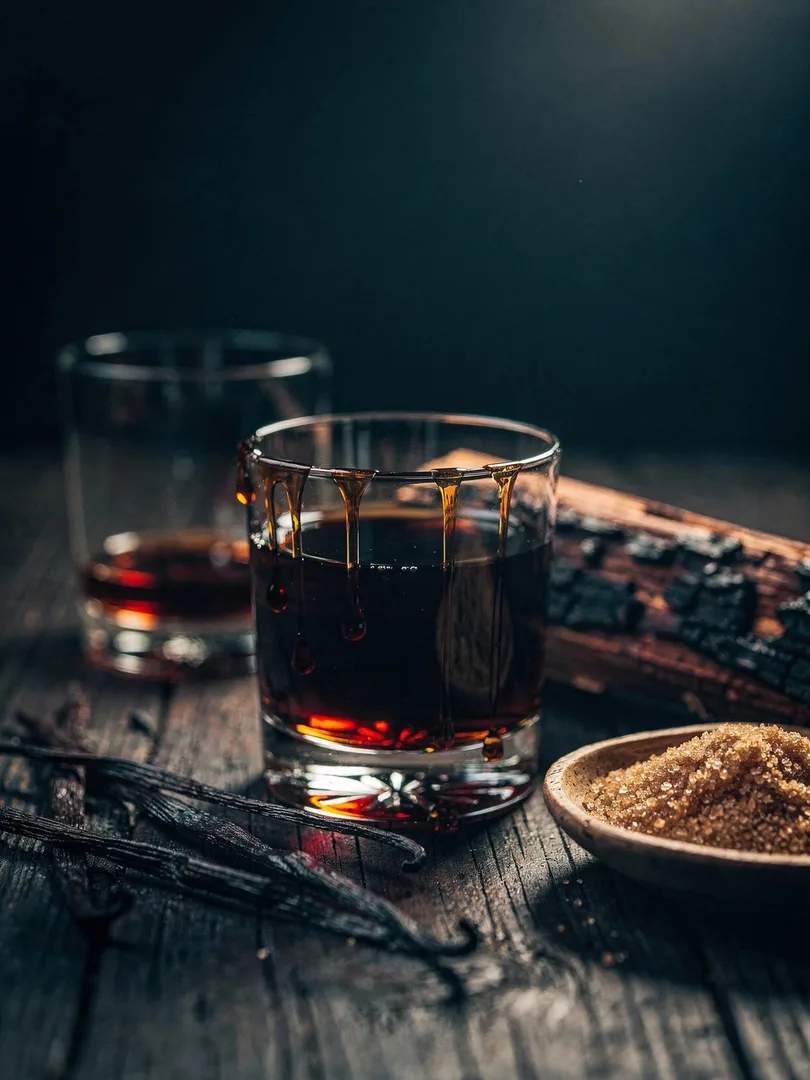
Vanilla is a pleasant aroma, but not a mark of quality. In genuine rum, it comes from the cask. A rum that smells almost exclusively of vanilla and coconut tells you more about active wood and tropical climate than about fermentation and still. In the EU, rum may not be flavored. In a rum-based spirit, such as a spiced rum, however, the vanilla can be added.
The flip side is too much wood. Then the rum turns bitter, dry like black tea steeped too long, and the finish tastes of pencil shavings. Here, the empty-glass test helps: if the glass smells only of wood and vanilla the next day, the cask overpowered the rum.
Palate fatigue, order, and the label in your head
After the fifth or sixth rum, perception declines. Alcohol numbs the mucous membrane, and strong aromas overshadow subtle ones. An overproof at the start ruins the samples that follow. That's why light rums come before heavy ones, lower strengths before higher ones, unsweetened before sweetened. Water and neutral bread between samples help.
Sharpness alone, by the way, isn't a flaw. A young, unsweetened rum at 50 percent burns more than a sweetened one at 40, without being worse. The question is what follows the sharpness. If fruit, spice, and a long finish follow, it's part of a bold rum. If nothing remains after the burn, substance is missing. A few drops of water often sort this out quickly: a good rum gains from it, while an empty one just becomes thinner.
The quietest pitfall is in your head. Anyone who knows the label tastes what they expect. A high price or an impressive age statement makes the rum seem better in the judgment. Blind tastings switch this effect off and are therefore more honest, even if they sometimes strip the magic from a favorite bottle.