From the Cask
Tapping Beer: Cask, Wooden Barrel, Tap and the 7-Minute Pour
Beer is tapped from a cask under pressure: in a modern keg, carbon dioxide pushes the beer through a chilled line to the tap, while a wooden cask relies on its own pressure from secondary fermentation. How well it arrives in the glass depends on pressure, temperature and clean lines.
What Happens When a Wooden Cask Is Tapped?
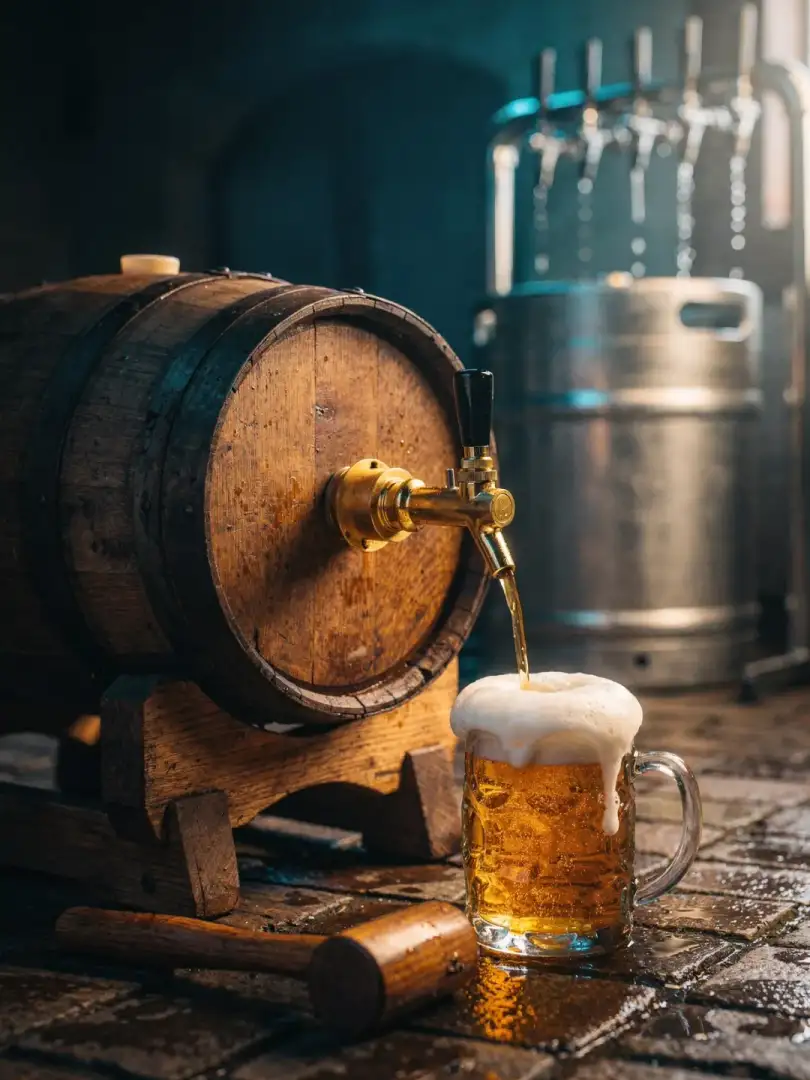
When tapping, a wooden mallet drives a brass or wooden tap into the sealed bunghole at the head of the cask. The bung is driven inward, and the beer flows out through the tap. It's under only the pressure built up by secondary fermentation in the cask, and reaches the glass without added gas. That's why beer from a wooden cask often feels softer and less fizzy. Once tapped, the cask should be emptied quickly, since air gets drawn in with every glass poured.
The tapping ceremony at the Munich Oktoberfest is famous. Since 1950, the mayor has tapped the first cask in the Schottenhamel tent and called out “O'zapft is!” (“It's tapped!”). Thomas Wimmer, who started the tradition, needed 17 strikes the first time; the record stands at two. In the everyday life of taverns and breweries, however, the wooden cask has become the exception. These days the vast majority of casks are made of stainless steel.
Keg and Tap System: How Does Beer Get Out of the Tap?
The standard cask is the keg, a stainless steel container with a riser tube in the middle and a valve on top, called the fitting. The tap head sits on top of that. Carbon dioxide or a mixed gas presses down on the beer from above, pushing it through the riser tube into the line. Along the way, an in-line cooler or a cold room chills the beer before it reaches the tap. Because no outside air gets into the keg, a tapped keg stays fresh much longer than a wooden cask.
The pressure has to match the beer. If it's too low, carbonation escapes into the line, the glass overflows with foam, and the beer eventually goes flat. If it's too high, extra carbon dioxide presses into the beer, making it fizzy and tingly. How much pressure is needed depends on temperature, line length, the height difference between the cellar and the bar, and the carbonation level of the style. Good publicans adjust their system individually for each beer.
The Seven-Minute Pilsner: Is the Saying True?
"A good Pilsner takes seven minutes" is a saying, not a rule. There's no standard or evidence behind this timeframe. The saying harks back to a pouring method in which a highly carbonated Pilsner was poured in several stages: pour, wait for the foam to settle, top up, wait again. How long that actually takes depends on the equipment, temperature, and carbonation—not the clock.
Modern compensator taps control the flow with great precision. With them, the beer pours into the glass with almost no foam, and the head is deliberately added at the end. This way, a Pilsner with a firm, tight head can be achieved in a fraction of the proverbial time. A glass that sits on the bar for a long time doesn't get any better for it: it loses carbonation and warms up. If you're waiting a very long time for your Pilsner today, you're probably just in a busy pub.
Why does draft beer sometimes taste bad?
The most common cause is a dirty line. Protein, yeast residue, and beerstone—a hard crust of minerals and organic matter—build up inside beer lines. Bacteria and wild yeast multiply in these deposits, giving the beer off-flavors that have nothing to do with the brew itself. That's why draft systems are cleaned regularly, chemically with caustic and acid solutions and mechanically with sponge balls pushed through the line.
Whether draft beer tastes fresher than bottled beer often comes down to the publican. Both usually come from the same batch at the same brewery. What makes the difference in the glass is temperature, carbonation, line maintenance, and the hand on the tap. A well-maintained draft system beats the bottle, while a neglected line ruins any beer. How to recognize and name off-flavors is part of tasting, and it has its own chapter there.