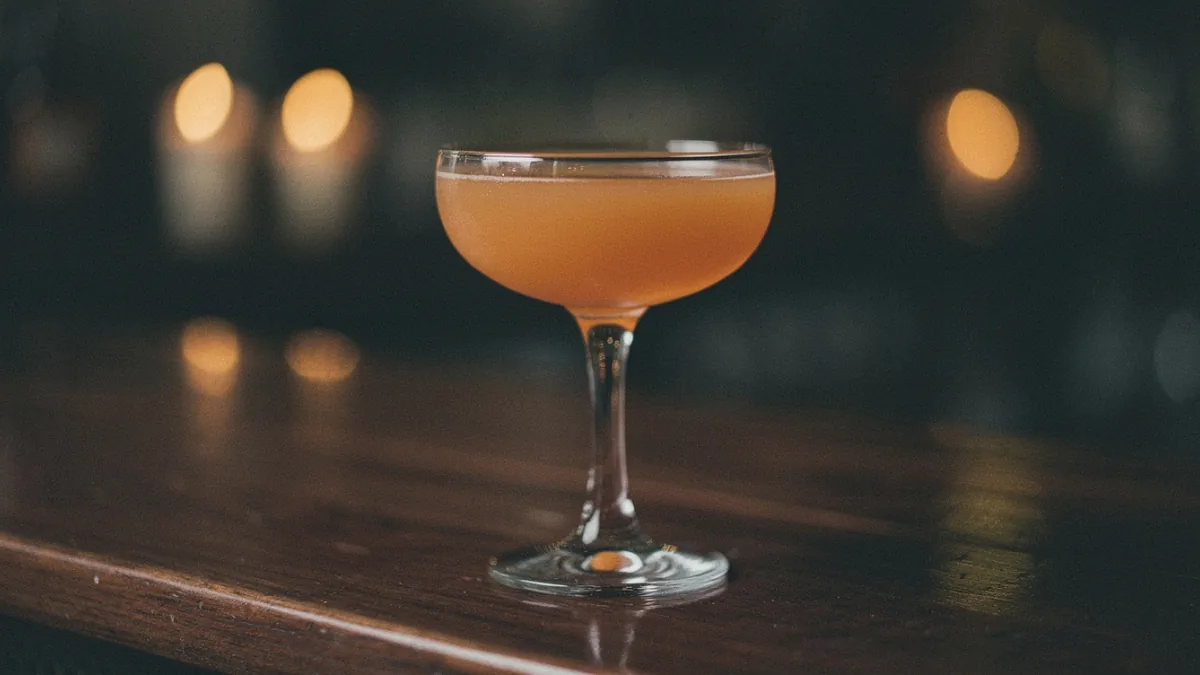
Preparation
- Pre-chill the serving glass. Add the measured ingredients to a shaker.
- Add plenty of solid ice cubes and shake vigorously for about 10–15 seconds.
- Strain through a strainer into the pre-chilled glass; the shaken ice stays in the shaker.
What does it taste like?
First you taste orange: juicy, sweet, with a touch of acidity. Then comes the anise from the absinthe, which is bold in this version. A full tablespoon is a lot, so the anise settles over everything else. The grenadine brings sweetness and a red hue. The gin pushes back with juniper, but stays behind the orange and anise. Gin and orange juice are in a 1:1 ratio, with absinthe and grenadine added on top: the drink is strong, yet the juice keeps it smooth. Anyone who doesn't like anise will notice immediately.
When does it work best?
The Monkey Gland isn't for your first cocktail night. Anise divides opinions: some love it, others can't stand it. If you like licorice and anise, you'll warm to this quickly. Everyone else should try it in a small amount first. Serve it short and cold, good before a meal or out of curiosity in between.
What matters
This version uses a full tablespoon each of absinthe and grenadine. That's a lot, and it tastes correspondingly bold. Other recipes work with just a few dashes—the difference is significant. Ease into it: start with less absinthe and add more if needed. Squeeze the orange juice fresh and shake hard with plenty of ice. Chill the coupe beforehand, since the drink is served without ice in the glass.
Where the drink comes from
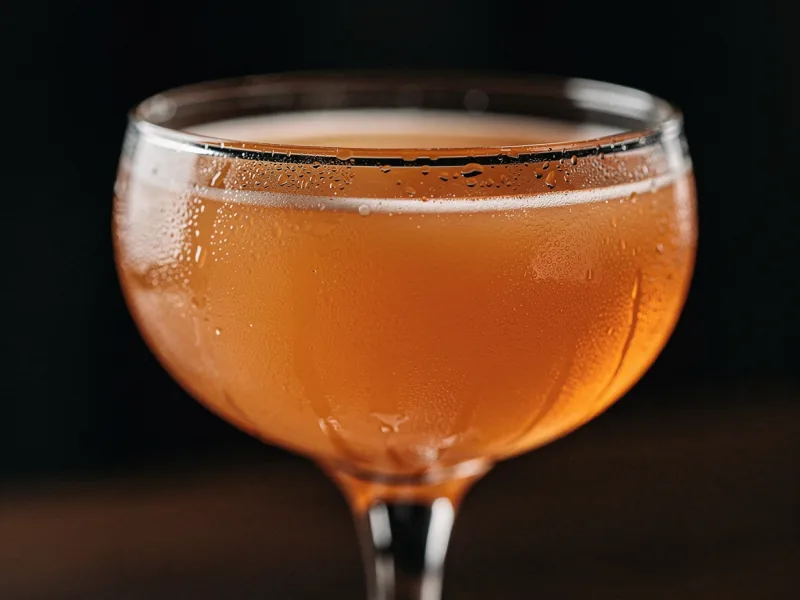
Harry MacElhone and Parisian bar culture are linked to the Monkey Gland. Recipes are documented from the early 1920s. The odd name references rejuvenation experiments involving monkey glands, which were publicly discussed at the time. It's a nod to the era, not a promise—the drink can't deliver on any of that. The amounts of absinthe and grenadine vary considerably between historical versions. That's why a Monkey Gland tastes quite different from one bar to the next.