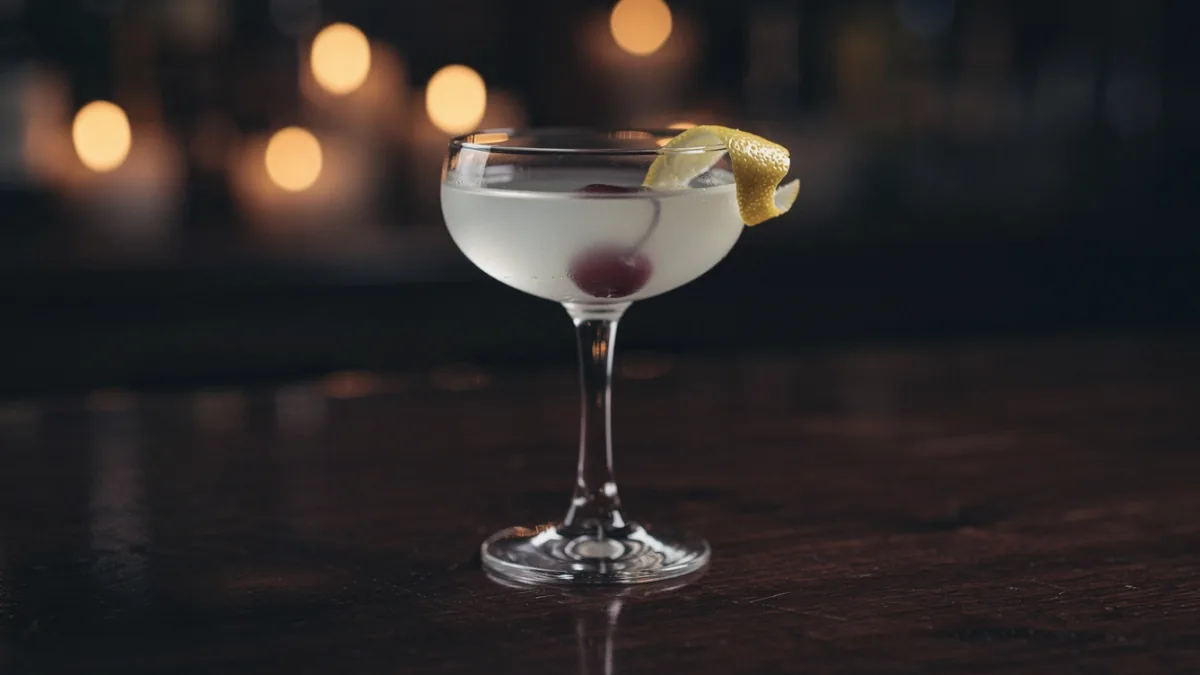
Preparation
- Pre-chill the serving glass. Add all ingredients to a mixing glass with plenty of ice.
- Stir with a long spoon until the mixture is well chilled and slightly diluted, about 20–30 seconds as a starting point.
- Strain through a bar strainer into the chilled glass, leaving the stirring ice behind.
- Finish by garnishing: cocktail cherry and lemon zest.
What does it taste like?
The Tuxedo tastes dry, but not austere. Juniper and herbs from the gin come first, alongside the dry vermouth with its light bitterness. Old Tom Gin is slightly sweetened, so the drink feels softer than a straight Dry Martini. Half a bar spoon of Maraschino brings a small cherry note, sweet and almond-like. The Absinthe is just a quarter bar spoon, yet still noticeable: anise settles over everything like a veil. The orange bitters add a fresh citrus point. Sixty milliliters without a drop of juice make for a concentrated, cold drink.
When does it work best?
The Tuxedo is an aperitif for the experienced. Drink it before the meal, ice cold and in small sips. It contains no juice. Maraschino brings a bit of sweetness; still, the drink stays strong and aromatic. Anyone who likes a Martini and wants more spice will find exactly that here. Beginners may struggle: dry, herbal, with anise lurking behind. You have to want that.
What matters
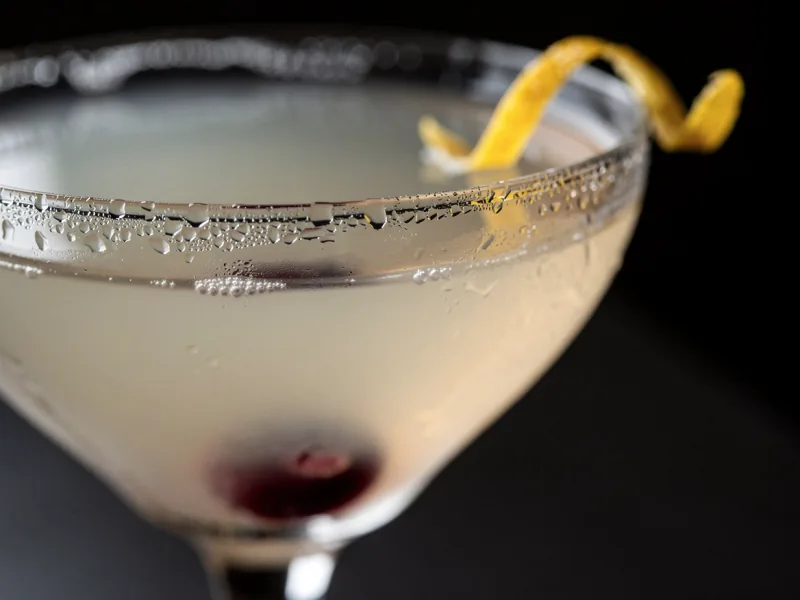
Really measure out the small amounts, even if it feels fussy. Half a bar spoon of Maraschino and a quarter bar spoon of Absinthe are accents, not building blocks like the vermouth. Even a splash of Absinthe straight from the bottle will dominate the whole drink. Afterward, stir for 20 to 30 seconds with plenty of ice, until the glass frosts on the outside.
Where the drink comes from
The Tuxedo is associated with the club of the same name in New York and belongs to the cocktail culture of the late 19th century. Over time, quite different recipes have circulated under this name. Two bars might mean two different drinks by it. This version relies on gin and dry vermouth in equal parts, with Maraschino, Absinthe, and orange bitters set alongside. That places it in the family of the Martini. But it has more edges and more aromas than its famous relative.