The short answer
Cold brew steeps in cold or cool water, but for a long time. Coffee that's brewed hot and then cooled is a different thing entirely. Both end up cold in the glass, but they get there by different routes.
Time doesn't replace every other setting
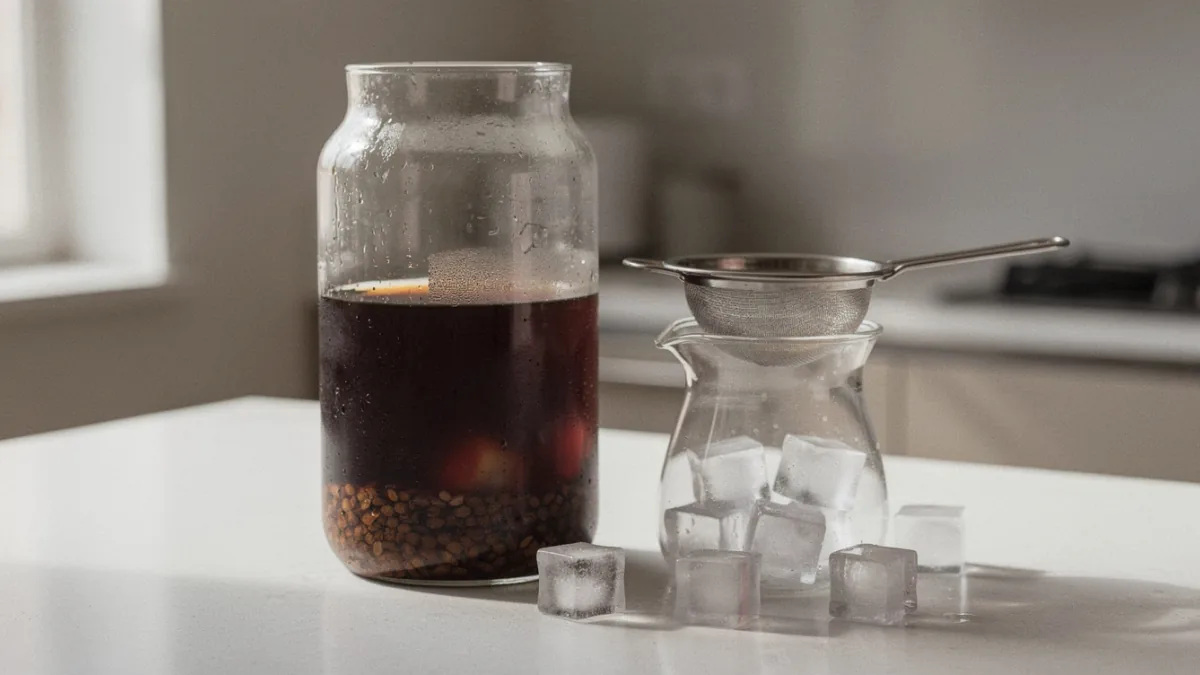
The National Coffee Association, or NCA, names a coarse grind and long contact time as the typical starting point. Contact time means how long the water and coffee sit together in the container. With cold brew, that's a long stretch. The extended time partly makes up for the lack of heat, but it doesn't replace every other setting.
Coarse and long go together. The longer the water sits on the coffee, the coarser the grind can be. Fine grounds over many hours would release far too much.
Cold water pulls different compounds out of coffee than hot water does. Some of the acids and bitter compounds stay behind in the grounds. That's exactly where the smooth, sometimes even sweet-tasting, character comes from.
There's no trick behind it. Simply less gets extracted than with hot brewing. In a hot cup, that would be a flaw — here, it's the whole point.
In stores, you'll come across two kinds of cold brew. One is ready to drink. The other is a concentrate meant to be diluted with water or milk before drinking.
Never judge a concentrate the way you'd judge a finished cup. Check the packaging first. If it lists a mixing ratio, you haven't got the actual drink in front of you yet.
Work from a clear recipe
For your first attempt, use the instructions that came with your brewer. A fully written-out recipe works just as well. The important thing is that it actually includes every detail.
Write down your coffee dose, water amount, grind size, and steep time. Next time, change just one of these variables. That way you'll see what actually made the difference, instead of guessing.
This kind of note-taking really pays off with cold brew. A batch takes many hours, so a failed attempt costs you a whole day. If you write down the details, you won't waste a repeat attempt for nothing.
Cold-brewed doesn't mean caffeine-free. It also doesn't mean cold brew is automatically healthier. A smooth taste says nothing reliable about caffeine content — smoothness and strength are two different things.
If you buy ready-made cold brew, read the label carefully. Is dilution intended? And how should the bottle be stored once opened? The manufacturer's instructions always trump some generic timeframe you found online.
Telling cold brew and chilled coffee apart
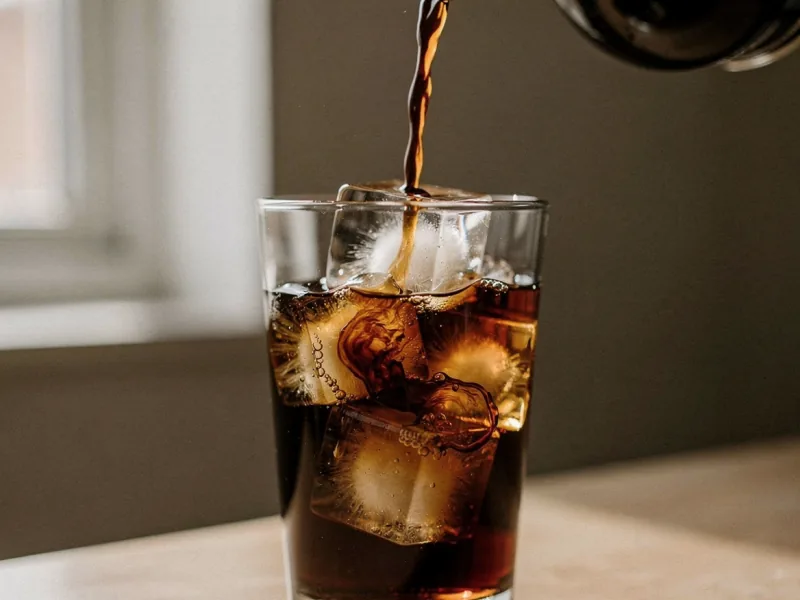
Cold-steeped and hot-brewed-then-cooled are two different paths to a cold cup of coffee. They differ in preparation, taste, and shelf life.
The difference isn't the temperature in the glass — it's the temperature during extraction. Both drinks end up cold. Only the path there is different, and you can taste that difference.
Stores often slap the same word on both bottles anyway. If you want to taste the difference for yourself, use the same bean and brew both side by side. After that, you won't need anyone telling you which method is supposedly better.
| Preparation | What happens |
|---|---|
| Cold brew | Cold or cool extraction over an extended time |
| Hot-brewed coffee, then chilled | Extraction with hot water, followed by cooling |
| Your own comparison | Use the same bean and note the differences, rather than declaring one method universally better |