The short answer
Green tea doesn't have to taste unpleasantly bitter. Start with the instructions on the package. Water temperature, leaf amount, and steeping time all strongly affect the result, and all three are within your control.
Don't treat every variety the same
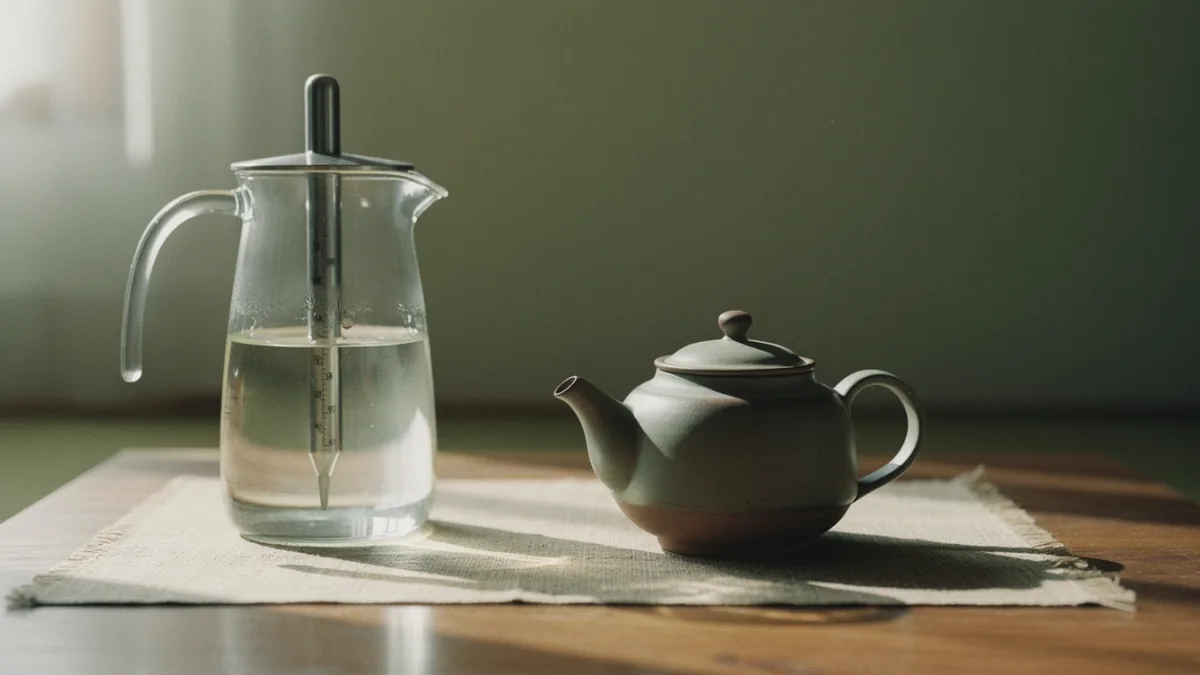
The UK Tea & Infusions Association cites roughly 80°C (176°F) as a general guideline for green tea. In the same breath, it points you toward the manufacturer's instructions. Some varieties need different settings.
"Roughly" is meant literally here. The number marks a starting point, not a limit beyond which the tea is ruined. A few degrees more or less won't spoil anything.
So a blanket rule like "always use boiling water" doesn't suit every package. The package knows more about the tea inside it than any general number does.
Why brew cooler at all? Boiling water pulls out bitter compounds quickly and in large amounts. At 80°C, some of that stays behind in the leaf. The finer aromas still make it into the cup.
Bitter compounds aren't a bad thing, by the way. They're naturally in the leaf, and a bit of them belongs there. It's just a question of how much you extract.
If your kettle can't set a specific temperature, just let the water sit uncovered for a few minutes after boiling. That's plenty for a start, and you don't need a new appliance for it.
What you change in the second infusion
Change only one single variable for the next infusion. Steeping time is the simplest candidate. Keep the leaf amount and water quantity fixed.
If you adjust everything at once, you won't know afterward what actually helped. The tea might be better, but you won't be able to repeat it.
Strain off the water completely after the intended time, or remove the infuser. Leaves left sitting in the cup keep steeping. The last sip ends up harsher than the first.
Water quantity also counts as its own variable. More water dilutes the infusion and pushes bitterness into the background. This makes the tea milder, but through a different route than a shorter steeping time.
You'll learn the most from a direct comparison. Set up two infusions of the same tea side by side, one shorter and one longer. You'll taste the difference immediately, and no one needs to explain it to you.
Write down the steeping time you liked directly on the packaging. Next time you'll start there instead of from square one.
It's also worth noting the attempts that didn't taste good. They tell you just as clearly which direction not to go. After a few infusions, you'll know your ideal settings for this particular tea.
When green tea tastes bitter
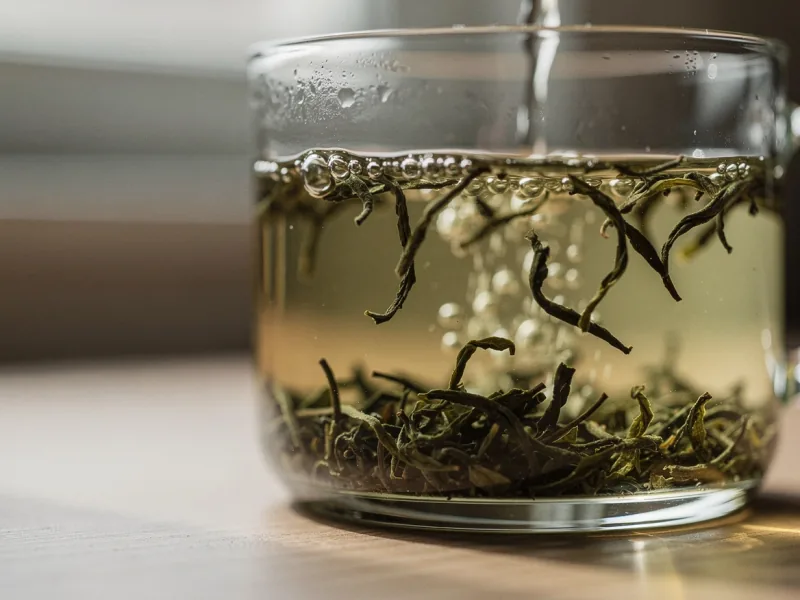
A bitter green tea usually isn't a flaw in the tea itself. It's almost always a setting that can easily be changed.
Only ever change one of these at a time. Changing two things at once might give you a better cup, but it won't answer the question of what actually caused it.
The packaging is always your first reference point. Only once you've truly followed its instructions does it make sense to deliberately deviate from them.
| Check | Possible next attempt |
|---|---|
| Package instructions | Start with the recommended amount and temperature listed there. |
| Steeping time | Steep for a shorter time while keeping all other variables unchanged. |
| Multiple changes at once | Go back to the starting point and change only one variable. |