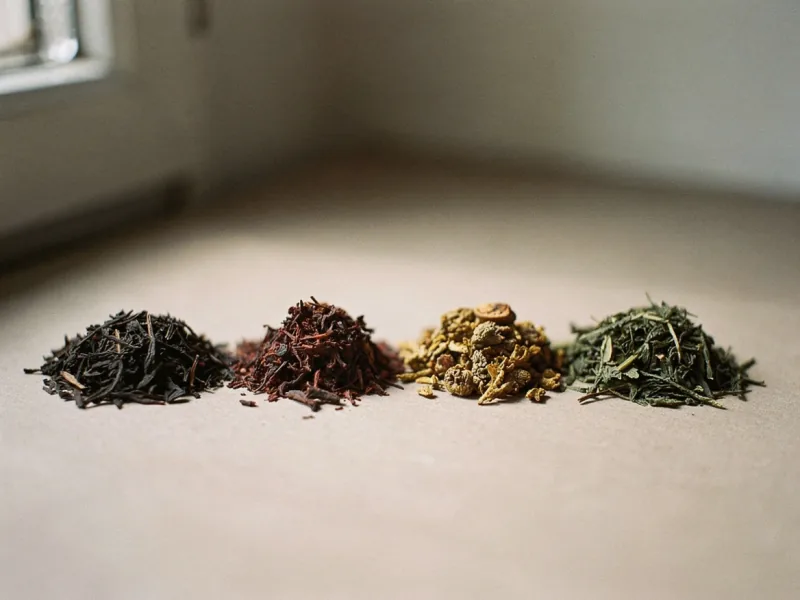
The short answer
Green, black, and white tea, along with oolong, all come from the same plant, Camellia sinensis. The only difference lies in what happens to the leaves after harvest. Herbal and fruit infusions, on the other hand, come from entirely different plants.
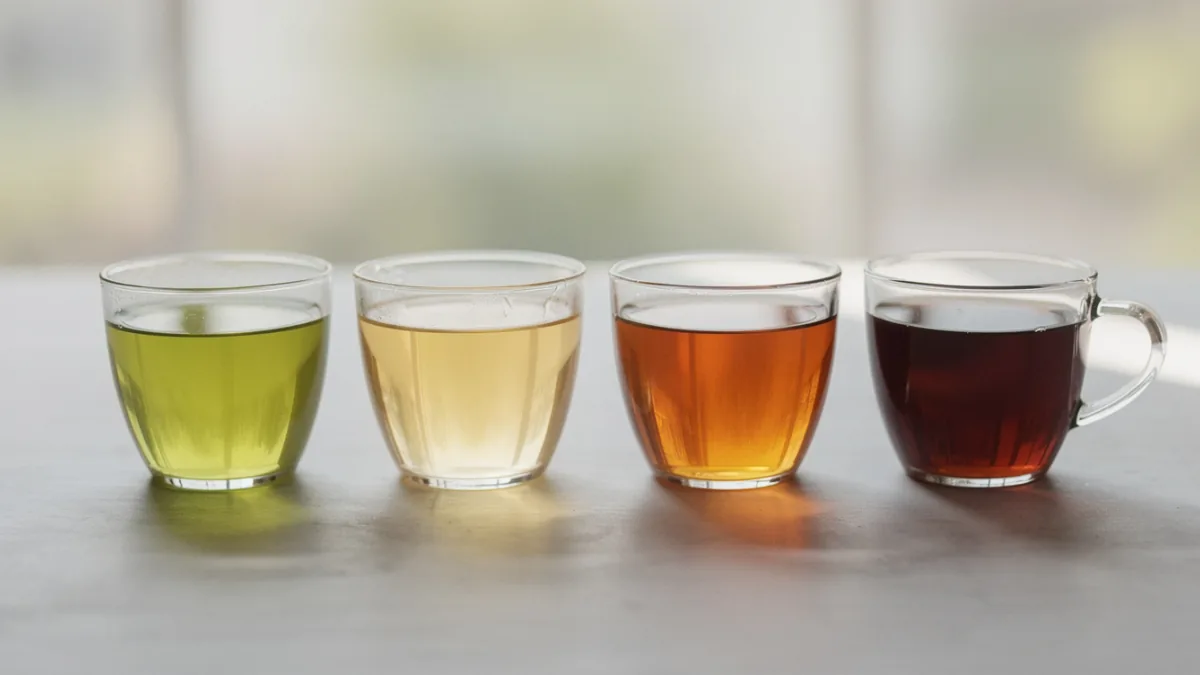
One plant, different processing methods
Four names, one plant. Green tea, black tea, white tea, and oolong all grow on Camellia sinensis. What ends up tasting so different is decided only after the leaves are picked.
The key factor here is oxidation. It's the same process that turns a cut apple brown. Compounds in the leaf react with oxygen in the air. Color and aroma change noticeably as a result.
With green tea, this process is cut short early. The leaves are heated shortly after harvest, and after that barely any oxidation takes place. That's why the leaf stays green.
Black tea gets exactly the time green tea is denied. Oxidation is allowed to run its full course before the leaves are dried. Oolong sits in between, since oxidation is deliberately stopped halfway.
White tea follows its own separate process. It's barely handled at all. It isn't heated early like green tea, nor is it deliberately left to fully oxidize like black tea. It's left as close to its natural state as possible.
So a single plant produces wildly different drinks. What matters is the moment someone decides to stop the oxidation.
Peppermint, chamomile, and rooibos don't belong in this lineup. They come from different plants and, strictly speaking, aren't tea at all. In everyday speech, everyone calls them tea anyway, and that's not really a problem. Where the difference becomes practical is caffeine: what can even be present in the infusion depends on the plant, not the word on the package.
The category alone doesn't dictate the flavor
The category tells you how the tea was processed. It doesn't tell you how your particular cup will taste. Origin, leaf material, and preparation all have a say in that too.
The claim "green tea always tastes bitter" is just as imprecise as "black tea is always strong." Even within one category, results vary widely. Two green teas from different origins can taste very different from one another.
To start, brew one clearly labeled variety of each type, following the package instructions exactly. Clearly labeled means the package states the amount, water temperature, and steeping time. If those are missing, you don't have a real starting point for comparison.
It's best to compare them on the same evening. Our sense of smell works far more precisely side by side than it does across two separate days.
While tasting, pay attention to aroma and mouthfeel. Does the infusion smell bright and fresh, or dark and deep? Does it feel smooth, or does it pucker in your mouth? Observations like these will get you further than chasing health claims.
After each tasting, write down a single sentence. After a few varieties, you'll start to see your own pattern. That pattern will get you to the right shelf in the store faster than any tea encyclopedia could.