The short answer
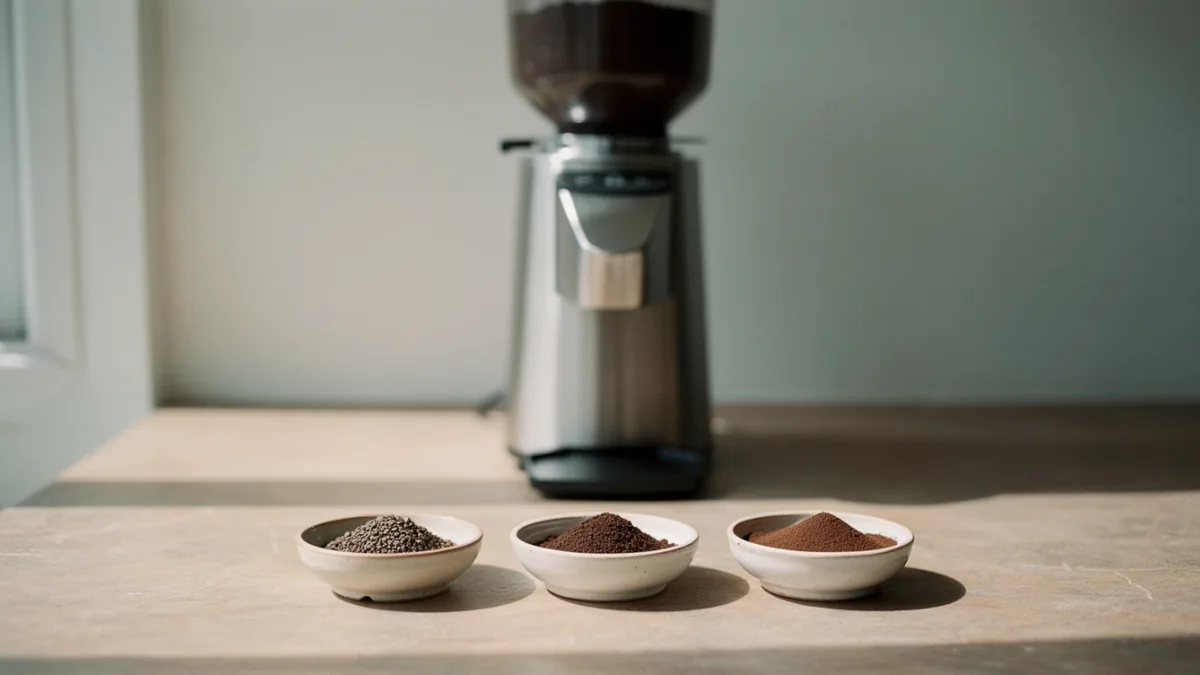
The right grind size depends on the brew method. Espresso usually needs a finer grind than a pour-over. For a long, cold extraction, you typically start much coarser. There's no single grind number that means the same thing on every grinder.
No universal grind number
Every grinder has its own scale. Setting seven means something different on your machine than on your neighbor's. So a number from a forum post rarely gets you very far.
The National Coffee Association, or NCA, categorizes grind sizes by brew method. From there, it recommends fine-tuning based on your own results. The method gives you a starting point; your cup gives you the fine-tuning.
Why does it depend on the method at all? The reason is contact time — how long the water and coffee spend together. The finer the grounds, the bigger the surface area the water can act on. And the bigger that surface area, the faster things dissolve out of it.
Espresso has about 25 seconds. A lot has to happen in that short window, so you grind fine. Cold brew, on the other hand, sits for twelve hours. Fine grounds there would release far too much, so you grind coarse.
Every other method falls somewhere in between on the grind scale too. The longer the water stays in contact with the coffee, the coarser it can be.
How to make a change meaningful
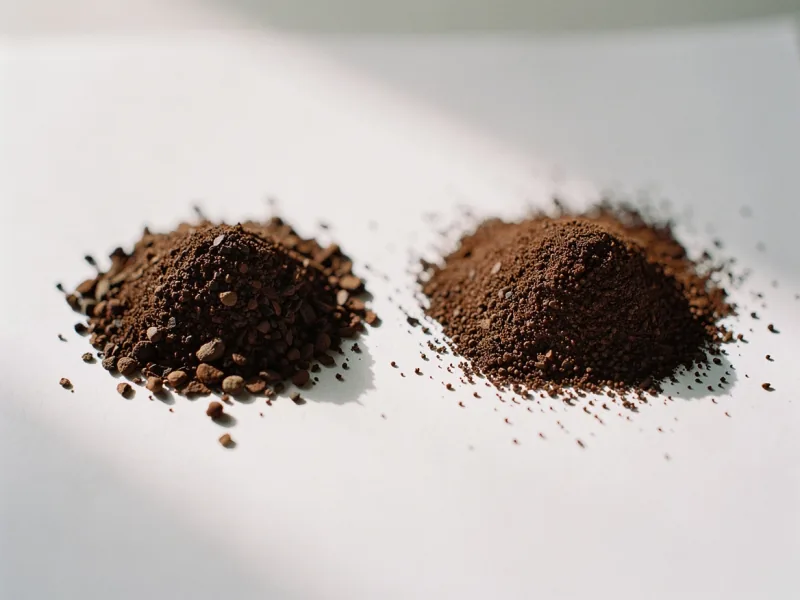
Keep your coffee dose, water amount, and process the same. Change only the grind size, and only by a small step. Then note the brew time and the taste. That note is the real payoff of the experiment.
If you change the dose, use hotter water, and open a new bag of beans all at once, you won't learn anything. The cup might taste better, but you won't know why. Next time, you're back to square one.
A small step is all you need. Jump from very fine to very coarse and there's nothing left to compare. You'll end up with a different drink, not an answer to your question.
There's a simple rule of thumb for direction. Too sour usually means too coarse or too short a brew time — not enough has been extracted. Too bitter usually means too fine or too long. With that rule in mind, you'll find the right direction by your second attempt, not your tenth.
Don't rely on it blindly, though. A sour or bitter taste doesn't necessarily have just one cause. The roast plays a role too, as does an unevenly poured brew. Work with observations, not a fixed diagnosis.
If you buy ground coffee, tell the seller your brew method by name. Let them know whether you use a pour-over, an espresso machine, or something else. That's the fastest way to a usable starting point.
Adjusting grind size in a way you can track
Three steps separate an experiment you actually learn from, from one that just gives you another cup.
What you get isn't a universal scale number — because that doesn't exist. What you get is something better: your own notes, which will still apply to your grinder tomorrow.
Keep these notes in one fixed place. After a few weeks, you'll have a record of which setting suited which bean and which method. That's worth more than any number someone else gives you.
| Step | How to keep the comparison meaningful |
|---|---|
| Record your starting point | Note the bean, dose, water, and brew method. |
| Change only the grind size | Don't change temperature and ratio at the same time. |
| Compare the result | Look at taste and brew time, then choose your next small step. |